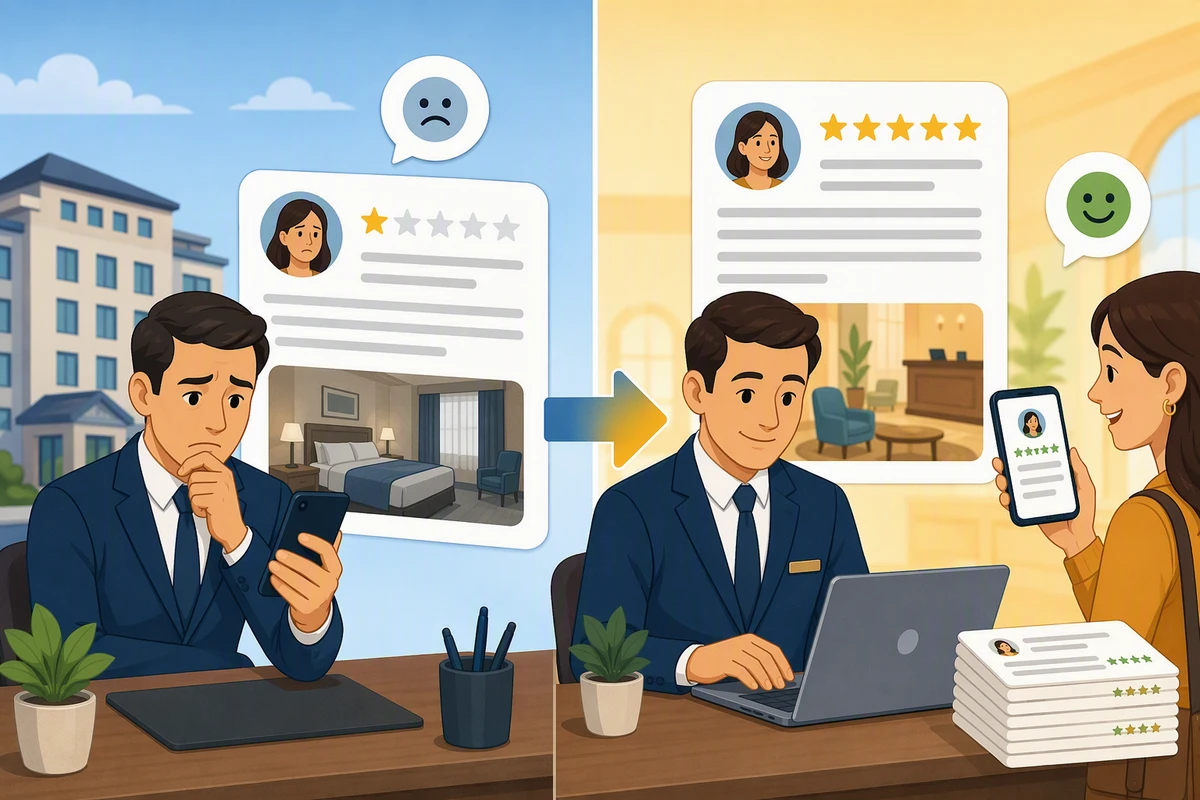
Can your business afford to miss 78% of customer feedback scattered across Google, Facebook, and niche platforms? For multi-location operations, manual review tracking drains resources while unanswered complaints erode trust. Centralising this process isn't optional—it's critical for reputation survival in 2026. The guide tackles notification fatigue and platform fragmentation head-on. If your current setup is a Google Alert, start with why Google Alerts fails for reputation management, which covers the coverage gap first.
ReviewSense automates monitoring across all your locations with real-time alerts.
Why Multi-Platform Review Monitoring Is Non-Negotiable
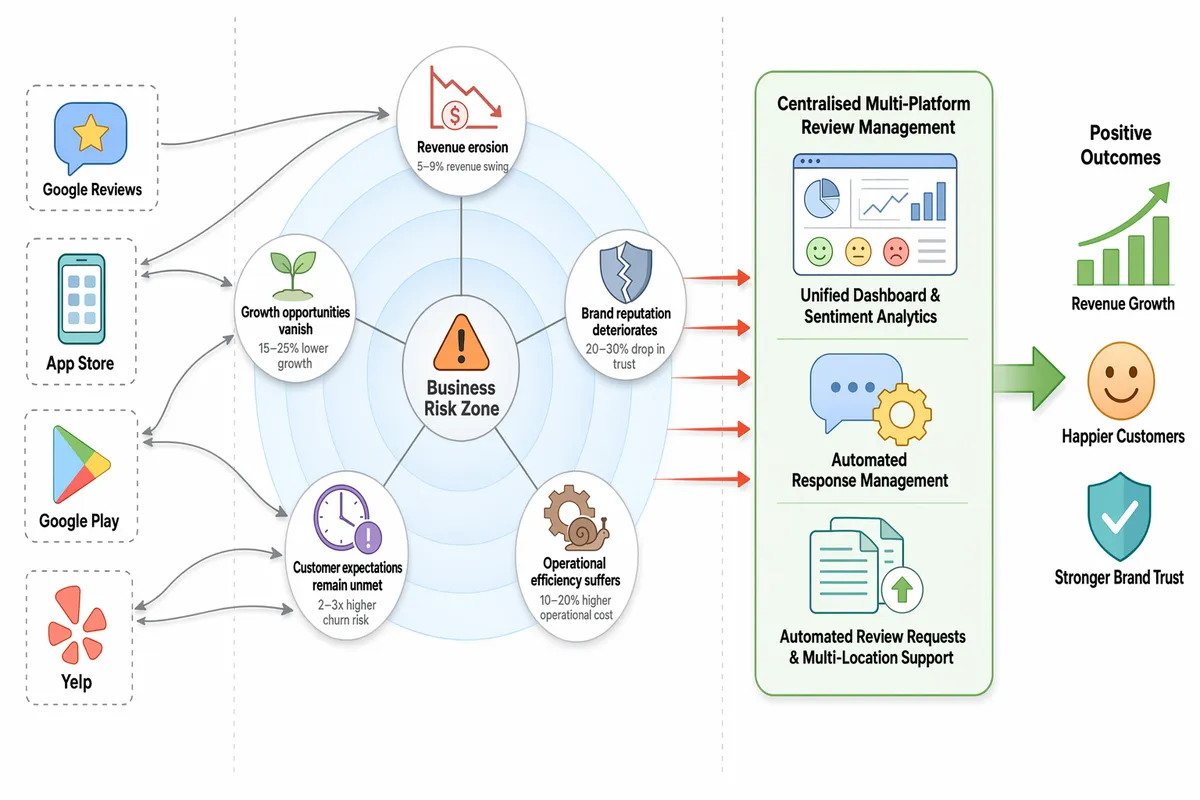
With consumers routinely checking 2-3 review platforms before purchasing decisions, fragmented monitoring creates dangerous blind spots. The commercial impact is severe and quantifiable:
| Consequence | Impact | Evidence |
|---|---|---|
| Lost Revenue | 94% avoid businesses with negative reviews | Consumer behaviour studies |
| Missed Growth | 31% higher spend from customers at 'excellent' businesses | Industry benchmarks |
| Reputation Damage | 5-9% revenue swing per star rating change | Harvard Business School |
| Customer Dissatisfaction | 89% expect responses, 81% within a week | Market research |
These risks manifest in five critical ways for businesses neglecting multi-platform monitoring:
Revenue erosion escalates when negative feedback deters potential customers. Harvard Business School data confirms each star rating change impacts revenue by 5-9%, whileQuick intervention using the negative review response generator mitigates damage.
Growth opportunities vanish when positive feedback goes unamplified. Businesses with consistently 'excellent' ratings see customers spending 31% more. Ignoring platforms like Google Play or App Store means missing these high-value endorsements.
Brand reputation deteriorates as unaddressed complaints compound across platforms. With 47% of businesses checking reviews daily, delayed responses make organisations appear indifferent. Proactive management builds authentic trust that improves perception. Once monitoring spans more than reviews, the tooling question changes shape, and our guide to brand reputation management software covers platforms that watch mentions and news sources alongside review sites.
Customer expectations remain unmet when feedback goes unanswered.Centralised Google review management ensures no genuine query slips through.
Operational efficiency suffers through manual platform-hopping. With 78% of UK businesses using review software, manual methods waste resources better spent on service improvements. This inefficiency worsens for multi-location operations where automating review requests becomes essential.
For businesses with multiple locations, fragmented monitoring is particularly unsustainable. Centralised solutions transform scattered feedback into coherent insights, whether managing high-street shops or app-based services. Explore the Apple App Store review management software guide for platform-specific strategies.
Core Challenges in Multi-Site Review Management
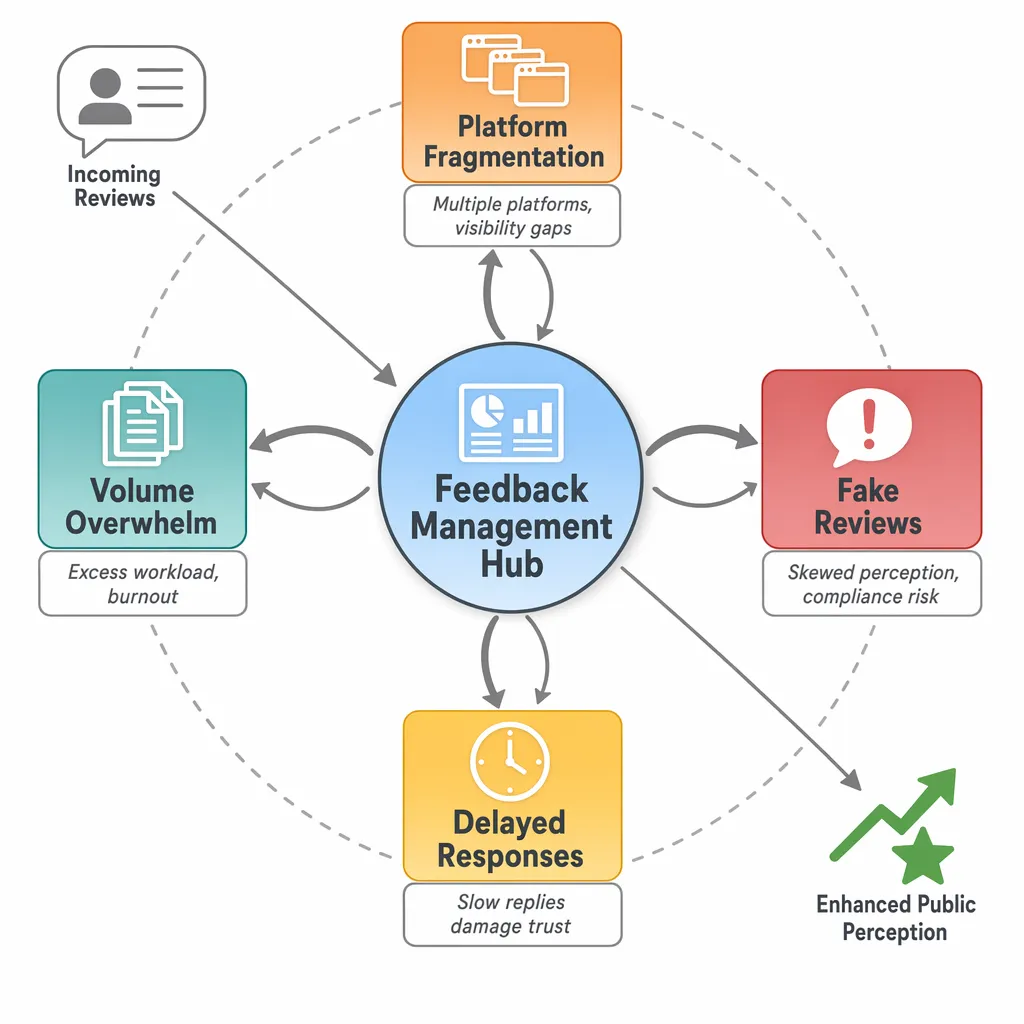
For businesses with multiple locations, fragmented review management creates operational friction that directly impacts customer perception. Manual monitoring across Google Business Profile, Facebook, Apple App Store, and Google Play becomes unsustainable at scale, leading to critical blind spots. These challenges manifest in four key areas:
| Common Pain Points | Real-World Impact |
|---|---|
| Fragmented platforms: Businesses typically monitor only 2-3 sites despite needing coverage across 4-5 key platforms | Inconsistent brand messaging, missed critical feedback, and reputation blind spots |
| Fake reviews: Prevalence of inauthentic feedback across platforms | Revenue loss from unjustified negative ratings and emerging compliance risks due to FTC crackdowns |
| Response delays: 45% of businesses take 1-2 days to respond to reviews, while 34% aim for a few hours | Escalated customer dissatisfaction and public perception of indifference |
| Volume overwhelm: High daily review volume across locations | Operational inefficiency and owner/team burnout, especially with 51% of businesses relying on owners for review management |
Platform Fragmentation Creates Visibility Gaps
Tracking feedback across Google, Facebook, and both app stores requires constant platform-hopping. This scattergun approach means urgent issues on secondary platforms like Apple App Store get missed. Multi-location operations face multiplied complexity, as each branch generates separate feedback streams. Without consolidation, you'll overlook patterns affecting specific locations.
Fake Reviews Distort Perception and Risk Compliance
Inauthentic reviews—whether malicious or well-intentioned—skew your true reputation. Negative fakes deter potential customers, while suspicious positives undermine credibility. The FTC's recent enforcement actions highlight growing regulatory scrutiny. Navigating removal requires deep platform knowledge, particularly for Google's strict policies outlined in the editing Google reviews guide.
Delayed Responses Damage Trust
When 45% of businesses take 1-2 days to reply, customers feel ignored—especially during service failures. Slow responses amplify negative experiences, turning resolvable issues into public reputation damage. For franchises, inconsistent response times between locations create jarring customer experiences that undermine brand consistency.
Volume Overwhelm Hinders Action
With owners personally handling reviews in 51% of businesses, high feedback volumes become paralyzing. Teams waste hours aggregating data instead of acting on insights. Calculating review impact manually is impractical, as covered in the star rating calculator resource. This inefficiency compounds for businesses exploring [how to automate review requests for multiple business locations] without integrated tools.
Step-by-Step Framework for Effective Review Monitoring
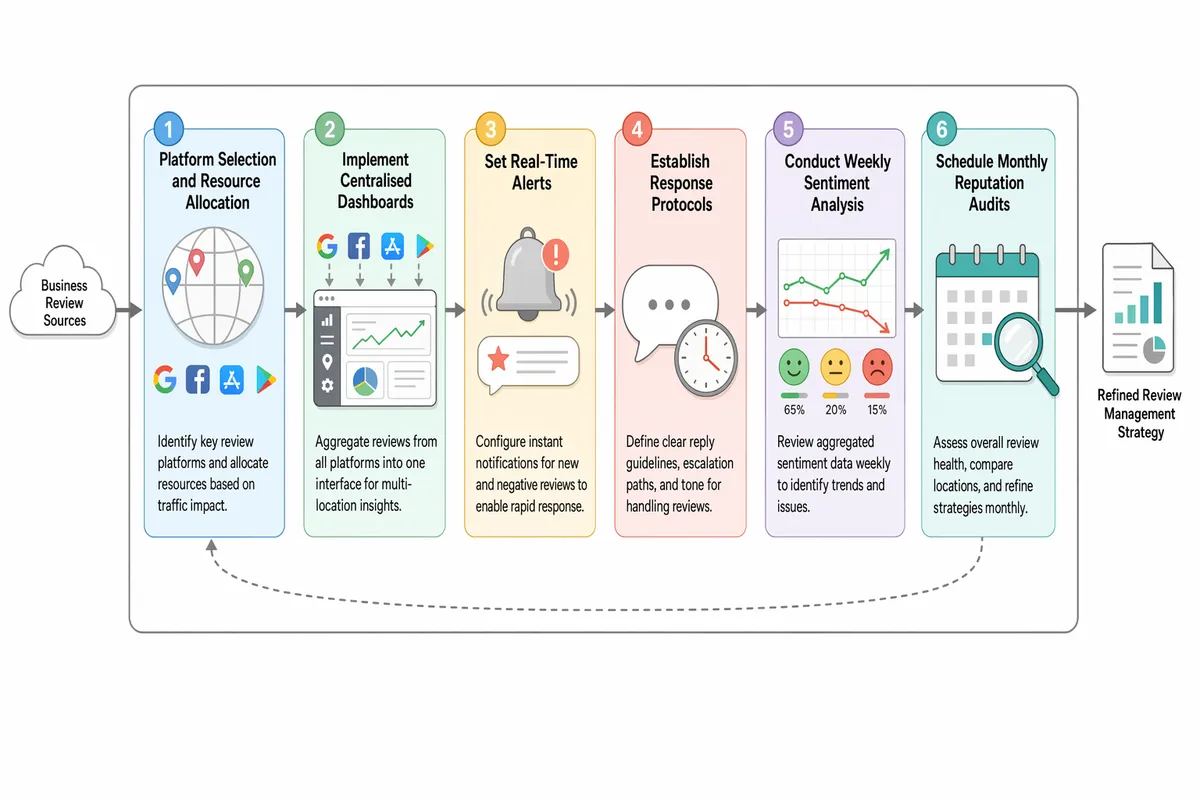
Addressing from the operational challenges outlined earlier requires a structured approach. This six-step framework provides a clear path for effective multi-platform review monitoring:
| Step | Core Action | Key Outcome |
|---|---|---|
| 1 | Platform prioritisation | Focus resources on high-impact feedback |
| 2 | Centralised dashboard implementation | Unified view across locations and platforms |
| 3 | Real-time alert configuration | Immediate notification of new reviews |
| 4 | Response protocol establishment | Consistent, timely replies |
| 5 | Weekly sentiment tracking | Early issue detection and trend spotting |
| 6 | Monthly reputation audits | Strategic improvement identification |
Step 1: Prioritise Core Platforms
Focus first on Google Business Profile, Facebook, and relevant app stores whereAllocate more resources to platforms driving your traffic. For Google-specific strategies, see the step-by-step UK business guide. App-based businesses should prioritise Apple App Store and Google Play using insights from the Google Play review management.
Step 2: Implement Centralised Dashboards
Consolidate reviews from all platforms into one interface. This eliminates platform-hopping and provides location-level insights. For multi-location operations, implement tools that support location-specific workflows to [automate review requests for multiple business locations]. Solutions like ReviewSense enable custom workflows while maintaining brand consistency across branches.
Step 3: Set Real-Time Alerts
Configure instant notifications for new reviews across all platforms. Prioritise alerts for negative feedback (1-3 stars) and platform-specific recommendations like Facebook's negative tags. Quick awareness enables faster resolution, preventing minor issues from escalating into reputation crises documented in the Google deletion analysis.
Step 4: Establish Response Protocols
Define clear guidelines for reply timing, tone, and escalation paths. Aim for under 24-hour responses since only 4% of businesses never reply. Train teams to handle sensitive feedback and identify fake reviews; a free fake review detector helps with borderline cases. For Facebook-specific approaches, consult the 2026 recommendations guide.
Step 5: Conduct Weekly Sentiment Analysis
Review aggregated sentiment data to spot emerging issues. Track complaint patterns about service, pricing, or product features. Identify positive trends to replicate success. Use free tools like the star rating calculator to quantify rating changes across locations.
Step 6: Schedule Monthly Reputation Audits
Assess overall review health by analysing response rates, sentiment trends, and platform performance. Compare location-specific data to identify underperforming branches. Document insights to refine strategies. For ongoing improvement, explore the customer review management resources.
Selecting the Right Monitoring Tools for Your Business Scale
With your monitoring framework established, choosing tools that match your operational scale becomes critical. The review environment is shifting: Google's usage dropped from 83% to 71% in 2026, while AI tools for recommendations surged from 6% to 45%. This demands solutions that consolidate fragmented feedback while using automation. Consider these core capabilities when evaluating options:
| Feature | All-in-One Platforms | Specialised Tools |
|---|---|---|
| Real-time alerts | Unified notifications | Platform-specific only |
| AI spam detection | Cross-platform analysis | Limited or manual |
| Multi-location support | Centralised management | Requires separate setups |
| Sentiment tracking | Aggregated trend reports | Isolated data |
| Brand voice alignment | Consistent application | Varies per platform |
| Approval workflows | Streamlined collaboration | Often unavailable |
For businesses with multiple outlets, all-in-one platforms eliminate the inefficiency of juggling separate systems. They provide a single dashboard showing feedback from Google, Facebook, and app stores. This consolidation is vital when you need to automate review requests for multiple business locations while maintaining oversight. Real-time alerts ensure urgent issues never slip through, addressing the 47% of teams who check reviews daily.
AI-powered spam detection automatically filters fake content across all platforms. This protects your reputation without manual verification. Sentiment analysis tracks emerging issues before they escalate, while custom brand voice settings keep responses consistent whether replying to Google reviews or App Store feedback.
Approval workflows are essential for franchises or marketing agencies managing client accounts. They enable swift collaboration while ensuring compliance. As AI response tools gain traction, platforms with integrated generation features save significant time. For deeper evaluation criteria, see the guide on review management software selection.
Ultimately, the right solution scales with your needs. Whether you're a single shop or multi-location enterprise, transparent pricing models help avoid unexpected costs. Prioritise tools that transform scattered feedback into coherent insights.
Turning Feedback Into Growth Through Strategic Response Practices
With your review monitoring infrastructure in place, transforming raw feedback into business growth requires disciplined response practices. Implement these evidence-based techniques to convert customer insights into competitive advantage:
| Practice | Core Benefit |
|---|---|
| Personalised response crafting | Builds authentic customer relationships |
| Swift negative review handling | Prevents reputation damage escalation |
| AI-human response collaboration | Maintains brand voice at scale |
| Sentiment mining | Uncovers operational improvement areas |
| Automated review solicitation | Increases feedback volume consistently |
| Response rate optimisation | Directly impacts revenue generation |
Personalisation Beats Generic Replies
Cookie-cutter responses actively damage customer relationships. Tailor each reply to the reviewer's specific comments, acknowledging their experience. This demonstrates genuine care rather than robotic compliance. Personalisation transforms transactional interactions into relationship-building moments that foster loyalty.
Rapid Response to Critical Feedback
When negative reviews appear, speed matters. Address critical feedback within 24 hours to show commitment to resolution. This prevents isolated complaints from escalating into reputation crises that deter potential customers.
AI Drafting with Human Refinement
Use tools like the AI Review Response Generator to create first drafts efficiently, but always add human judgment. Review every AI-generated response for brand alignment and emotional intelligence before sending. This balances efficiency with authentic engagement.
Mining Feedback for Operational Insights
As Bill Gates observed, "Your most unhappy customers are your greatest source of learning." Use sentiment analysis to identify recurring complaints about service gaps or product issues. These patterns reveal where to focus improvement efforts for maximum customer experience impact.
Automating Review Requests
Streamline feedback collection by automating review invitations post-purchase. For multi-location operations, centralised platforms solve how to automate review requests for multiple business locations efficiently. The Google review QR code guide shows practical implementation methods that boost response rates.
Connecting Response Rates to Revenue
Prioritise responding to all reviews, not just negatives. Businesses with high response rates benefit from increased trust - 72% of consumers trust companies with positive reviews more, and they spend 31% more with 'excellent'-rated businesses. This directly converts reputation management into revenue growth.
Establish clear crisis protocols: set real-time alerts for negative review spikes, designate response teams, and create resolution templates. Consistent, caring engagement transforms customer feedback into your most valuable growth engine.
Conclusion
Effectively monitoring reviews across Google Business Profile, Facebook, Apple App Store, and Google Play transforms fragmented feedback into strategic growth opportunities. By centralising insights, responding with personalized authenticity, and acting swiftly on critical issues, businesses protect their reputation and uncover operational improvements. The right approach combines AI efficiency for scalable response generation with human oversight to maintain brand voice, while sentiment analysis identifies trends that directly impact customer retention. ReviewSense delivers this comprehensive solution: unifying multi-platform monitoring, enabling intelligent response workflows, and surfacing actionable insights from scattered data—all within a scalable platform designed for businesses of any size. Turn your customer feedback into a proven growth engine today: Start your 7-day free trial
Related reading: a multi-platform review management strategy, multi-channel review management, and multi-property hotel review management.
Monitoring by sector? See Google review software for home-service trades, review response tools for multi-location franchises, and the review-generation tactics that move the needle for small businesses.