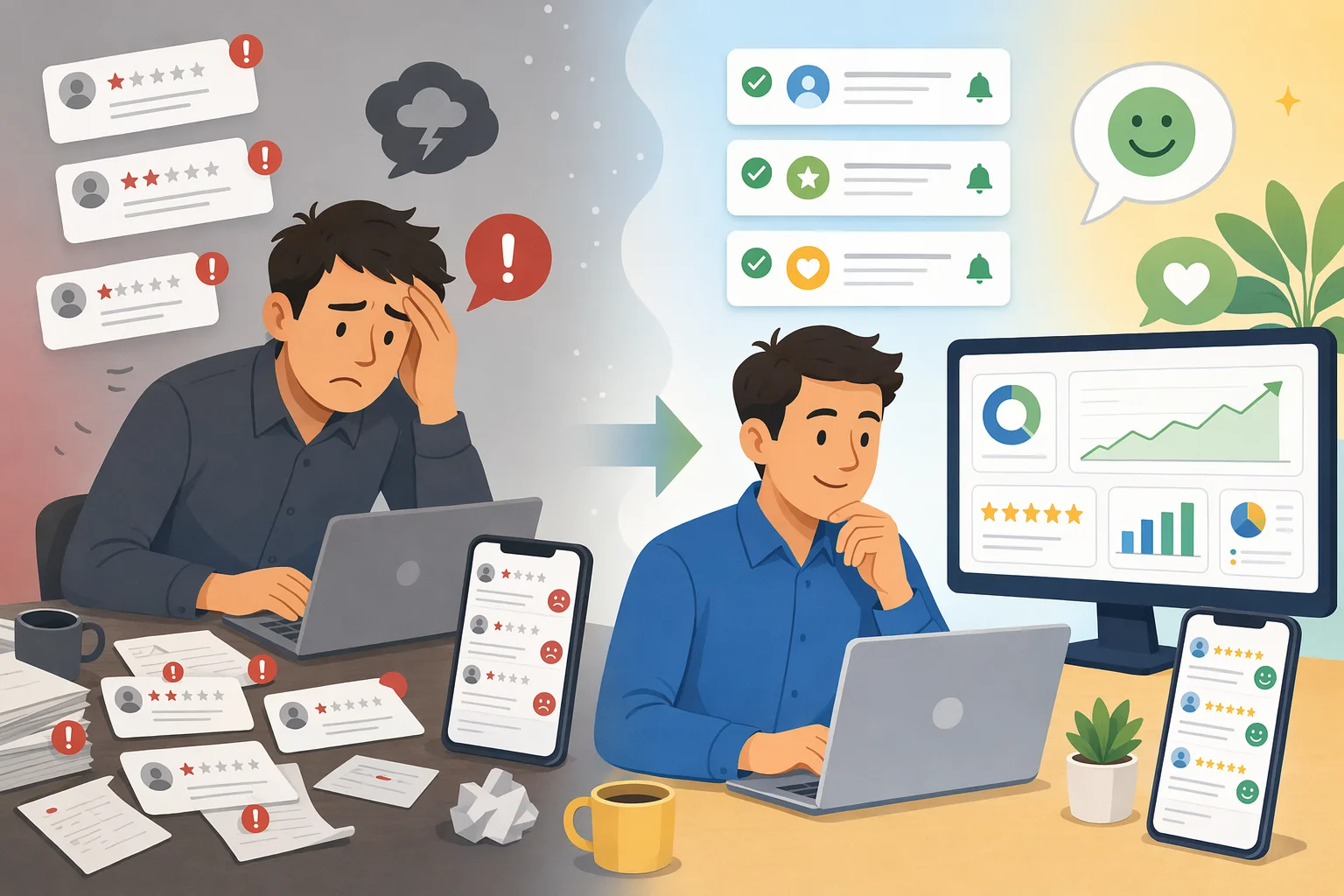
With the global reputation management market projected to hit $13.82 billion by 2034 (growing at 7.77% CAGR), the tools you choose today must deliver real ROI — not just more noise. In this guide, we cut through the hype to evaluate the best brand reputation management software for 2026, covering everything from AI-driven response generators to pricing traps you should sidestep. We’ll also show you how to integrate these tools with your existing workflows, including app store review management for mobile-first brands.
Managing this manually is hard. ReviewSense automates it.
The Reputation Management Market in 2026: Why It Demands a New Approach
This shift from manual tracking to AI-driven intelligence is now a necessity, not a luxury. The global reputation management software market was valued at approximately $7.05 billion in 2025, according to recent industry research. Estimates for its future vary, but all point to strong growth. One projection expects the market to reach $13.82 billion by 2034, growing at a CAGR of 7.77% from 2026 to 2034. Another analysis sees it rising from $7.75 billion in 2026 to $14.01 billion by 2031, at a CAGR of 12.59%.
The answer engine effect
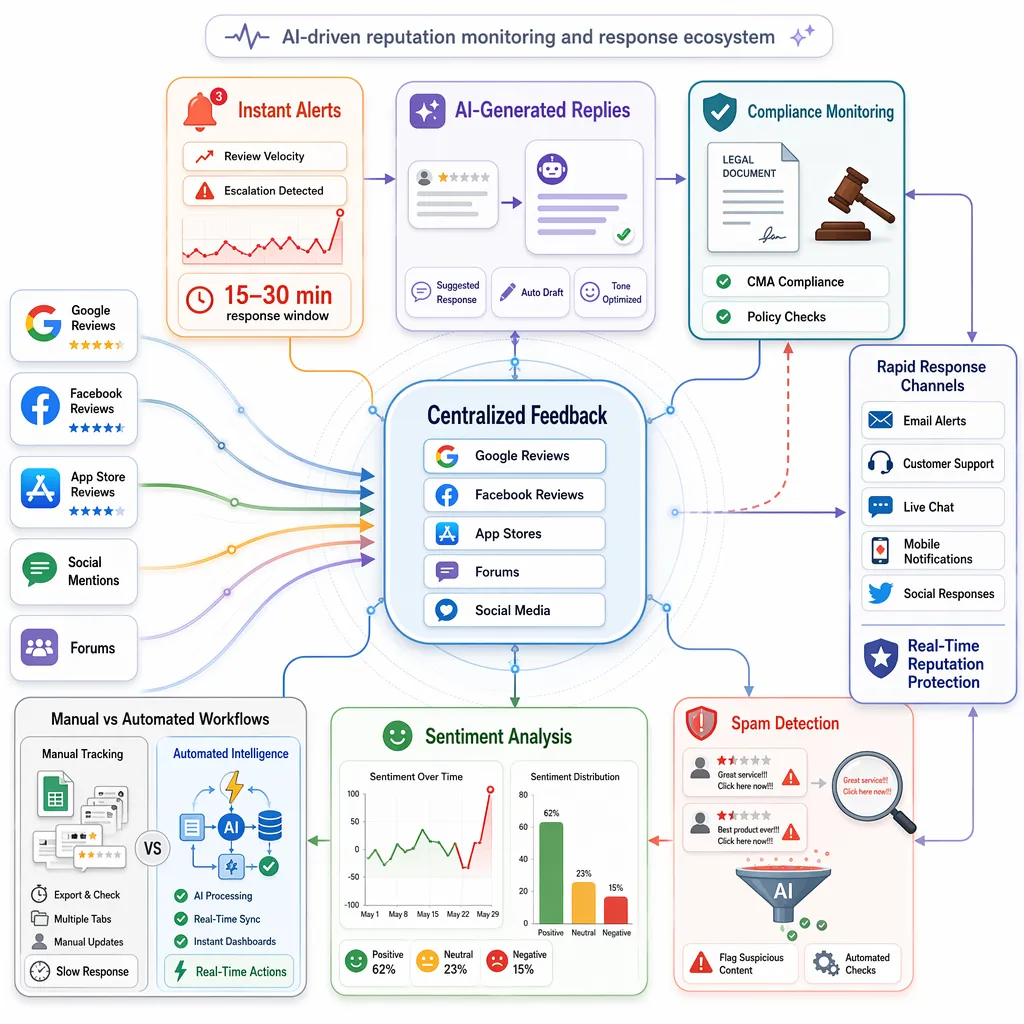
Google AI Overviews and ChatGPT now shape consumer perception before they visit a website. These tools pull from reviews, forums, and social media to generate instant summaries. A single negative review can appear in an AI-generated answer, influencing buying decisions in seconds. This compresses the crisis response window to 15–30 minutes. Brands that monitor reviews in real-time can respond before the damage spreads.
Regulatory pressure on fake reviews
The UK Competition and Markets Authority is cracking down on fake reviews. Businesses face fines for posting or hosting deceptive feedback. This makes accurate review management and spam detection critical. Manual checks no longer scale. You need automated tools to flag suspicious content and maintain compliance.
What this means for your tool choice
The best brand reputation management software 2026 must handle these pressures. It should centralise feedback from Google, Facebook, and app stores. It needs instant alerts, AI-generated replies, and sentiment analysis. Many brand reputation management tools still rely on manual workflows, and a free mention alert is the thinnest version of that: our piece on why Google Alerts fails for reputation management sets out what it does not catch. That won't cut it in 2026. This guide will help you evaluate platforms that can handle modern review challenges. We'll cover features like Facebook Review Management and AI review response generators that save time and protect your reputation.
What to Look for in a Brand Reputation Management Platform
Building on that context, you need a clear checklist when evaluating the best brand reputation management software 2026. Not every platform delivers what modern reputation management demands. Here are the six critical criteria to assess.
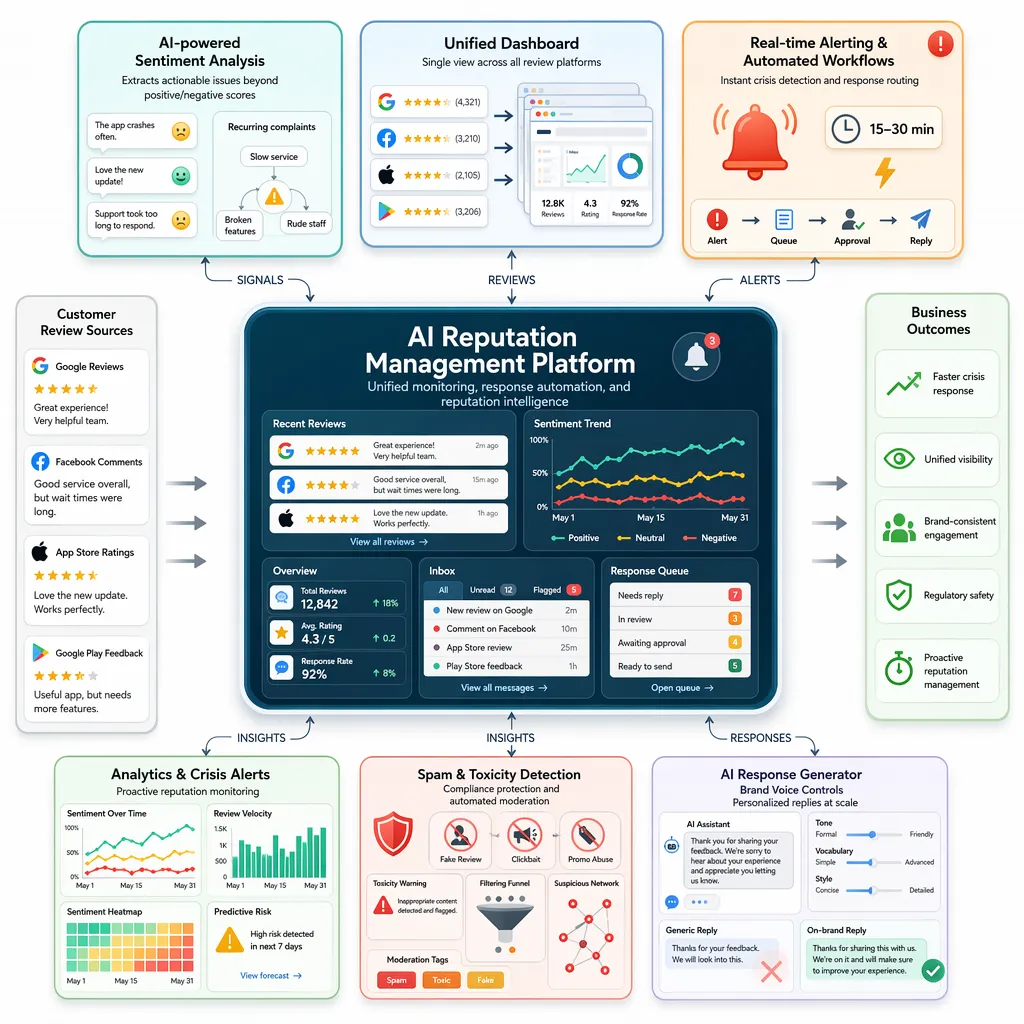
| Criterion | What It Solves |
|---|---|
| AI-powered sentiment analysis that flags actionable risk | Identifies recurring complaints, not just positive/negative scores |
| Unified dashboard for supported platforms | Centralises Google, Facebook, and app store feedback |
| Real-time alerting and automated response workflows | Meets the 15–30 minute crisis response window |
| AI response generator with custom brand voice controls | Avoids generic, robotic replies that damage trust |
| Spam and toxicity detection | Ensures compliance with UK fake review regulations |
| Analytics with review velocity, sentiment trends, and crisis alerts | Enables proactive rather than reactive reputation management |
1. Sentiment analysis that finds real problems
Basic sentiment tools tell you if a review is positive or negative. That's not enough. You need AI that extracts specific recurring complaints — slow service, broken features, rude staff. This turns feedback into a product roadmap. Without it, you're guessing what to fix.
2. A dashboard that actually unifies your platforms
Your reviews live on Google Business Profile, Facebook, Apple App Store, and Google Play. The best brand reputation management software 2026 brings them into one view. No switching tabs. No missed reviews. If a platform claims to support Trustpilot or Yelp, check your actual needs first.
3. Alerts that match the speed of AI search
Google AI Overviews and ChatGPT pull review data instantly. A negative review can appear in search results within minutes. You need real-time alerts and automated response workflows. ReviewSense offers instant notifications and queue-based approvals so you can act fast.
4. AI replies that sound like your brand
Generic AI responses hurt more than they help. Customers spot them immediately. Look for a platform with custom brand voice controls. You should train the AI on your tone, vocabulary, and style. This keeps replies personal and on-brand at scale.
5. Spam detection for regulatory safety
The UK Competition and Markets Authority fines businesses for hosting fake reviews. Manual checks don't scale. Your platform must detect spam, toxic content, and suspicious patterns automatically. This protects your compliance and your reputation.
6. Analytics that warn you before the crisis hits
Static dashboards tell you what already happened. Predictive analytics goes further, flagging rising complaint volume or sentiment shifts before they escalate. The best platforms map how a single operational issue — a supply chain delay, a pricing change — can turn into a "hyper-connected" flashpoint, giving your team time to act inside that 15–30 minute response window instead of reacting after the fact.
How Leading Platforms Address Core Pain Points Across Industries
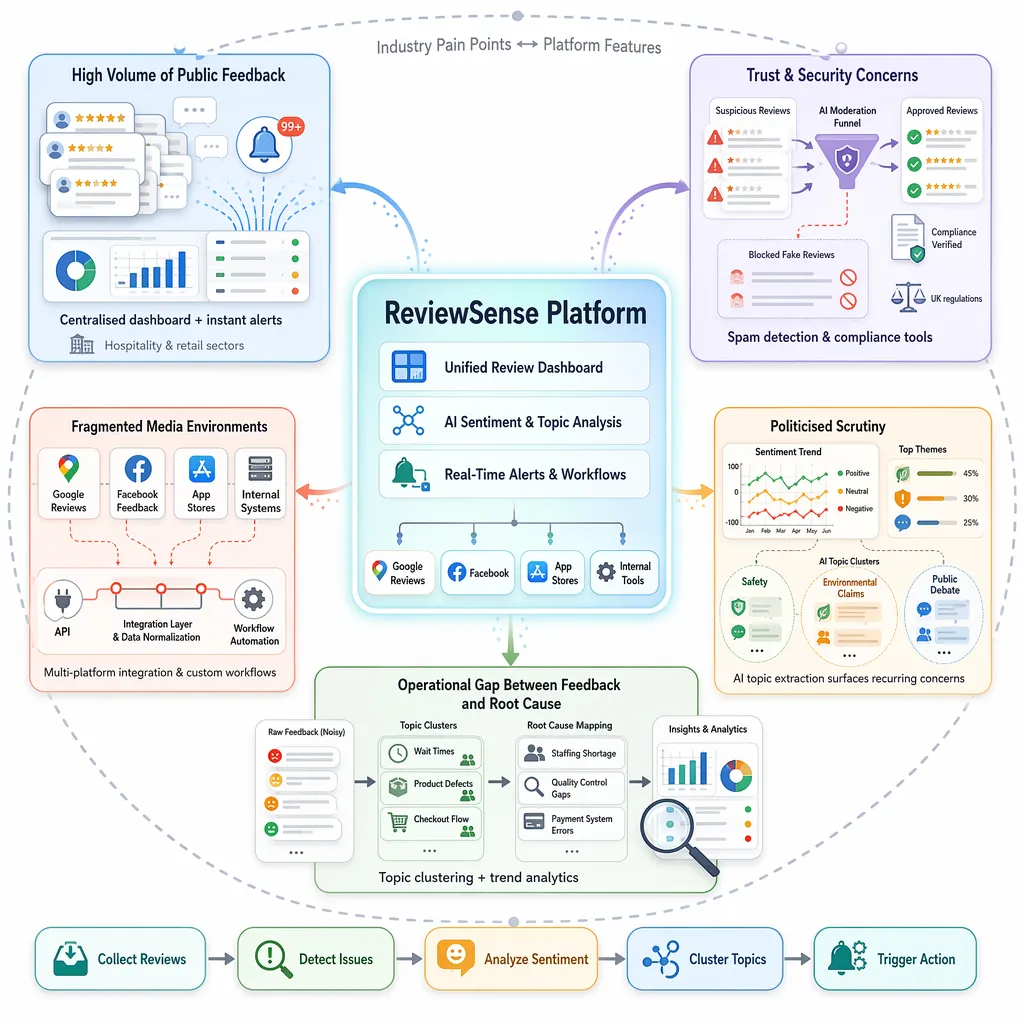
These criteria become clearer when mapped against real industry pain points. The table below shows how the best brand reputation management software 2026 addresses common challenges across sectors.
| Pain Point | What to Look For | How a Solution Like ReviewSense Addresses It |
|---|---|---|
| High volume of public feedback (hospitality, retail) | Centralised dashboard with instant alerts | ReviewSense pulls Google, Facebook, and app store reviews into one view. Real-time notifications let teams respond before a complaint escalates. |
| Trust and security concerns (finance, healthcare) | Spam detection and compliance tools | Built-in toxicity and spam filters flag fake or harmful content automatically. This helps meet UK regulations on deceptive reviews. |
| Politicised scrutiny (energy, manufacturing) | Sentiment analysis with topic extraction | AI identifies recurring themes like safety concerns or environmental claims. Teams can address root causes, not just symptoms. |
| Operational gap between feedback and root cause | Topic clustering and trend analytics | Sentiment analysis groups complaints by issue. You can spot a broken checkout flow or a faulty product line before it hits the press. |
| Fragmented media environments | Multi-platform integration and custom workflows | ReviewSense connects Google, Facebook, and app stores. Custom integrations pull data from internal tools, closing the loop between feedback and action. |
High volume of public feedback
Hospitality and retail brands face hundreds of reviews daily. Missing one can cost you a star rating. The Apple App Store review management software guide explains how centralised dashboards prevent this. ReviewSense consolidates all feedback, so nothing slips through.
Trust and security concerns
Finance and healthcare firms need airtight compliance. The UK’s Digital Markets, Competition and Consumers Act now imposes fines up to 10% of global turnover for fake reviews. ReviewSense’s spam detection flags suspicious content before it damages your reputation.
Politicised scrutiny
Energy and manufacturing companies face public debate on environmental and safety issues. AI topic extraction surfaces specific complaints. You can respond with data, not defensiveness.
Operational gap between feedback and root cause
Many brand reputation management tools show scores but not reasons. ReviewSense’s sentiment analysis groups feedback by topic. You’ll know if customers complain about wait times or product defects.
Pricing Models and Value: What You Actually Get for Your Budget
That clarity on features leads to a harder question: what should you actually pay? Pricing in this space varies wildly, and the wrong choice burns budget on features you don't need. But that only works if you know which reviews matter. Knowing that 70% of your mentions are 'neutral' is useless without topic extraction.
Quote-gated platforms like Birdeye and Podium force you into a sales funnel before you see value. Transparent pricing, like ReviewSense offers, lets you evaluate cost against actual needs. Some vendors discount annual billing significantly - BrightLocal, for example, by around 25% - which makes the decision easier.
Before committing, identify your bottleneck. Is it low response rate? Missing analytics? Spam risk? Free tools like a Google review link generator and negative response templates provide immediate value while you decide. The best brand reputation management tools solve one clear problem first, then scale.
When evaluating cost versus features, ask: does this platform unify Google, Facebook, and app store reviews? Does it offer AI response generation with brand voice controls? If not, you're paying for a dashboard that still leaves gaps. ReviewSense’s 7-day free trial removes the risk entirely.
Common Pitfalls When Choosing Reputation Software (and How to Avoid Them)
That pricing clarity matters little if you choose the wrong tool. Many businesses fall for common traps. Here are five pitfalls and how to sidestep them.
| Pitfall | The Problem | How to Avoid It |
|---|---|---|
| Confusing review management with reputation management | You only see star ratings, not brand perception drivers | Look for topic extraction and sentiment analysis that surfaces root causes |
| Over-indexing on automation that produces robotic responses | Generic replies frustrate customers and damage trust | Choose a platform with custom brand voice controls and human-in-the-loop workflows |
| Buying software 'just in case' without a clear bottleneck | You pay for features you never use | Identify your single biggest gap first — low response rate, spam risk, or missing analytics |
| Ignoring AI Overviews and Answer Engine Optimization | Your brand loses visibility in AI-generated search summaries | Prioritise tools that help you manage structured data and consistent NAP across platforms |
| Relying on sentiment analysis that doesn't flag operational failures | You see positive/negative scores but miss recurring issues like 'broken checkout' | Demand topic clustering that groups feedback by operational theme |
1. Confusing review management with reputation management
Many brand reputation management tools show scores but not context. You'll see a 4.2 average but not why. The best brand reputation management software 2026 surfaces themes — like 'slow delivery' or 'rude staff' — so you can fix root causes, not just reply to symptoms.
2. Over-indexing on automation that produces robotic responses
AI-generated replies save time, but generic ones erode trust. Customers spot templated responses immediately. ReviewSense's AI response generator lets you set a custom brand voice, so every reply sounds human.
3. Buying software 'just in case' without a clear bottleneck
Don't buy a platform because it has shiny features. Map your workflow first. If your team misses reviews on Facebook, use the Complete Guide to Facebook Review Management to understand the gap. Then pick a tool that solves that one problem.
4. Ignoring AI Overviews and Answer Engine Optimization
Google's AI Overviews now pull answers from review content. If your reviews contain inconsistent business info, you lose visibility. Tools that centralise Google, Facebook, and app store data help maintain consistency.
Conclusion
Choosing the right brand reputation management software for 2026 means looking past flashy dashboards to find a tool that solves your actual bottleneck—whether that's low response rates, missing analytics, or spam risk. Avoid platforms that lock pricing behind sales calls or automate replies that sound robotic. Instead, prioritise unified review collection across Google, Facebook, and app stores, AI with brand voice controls, and topic extraction that reveals root causes. ReviewSense delivers all this with transparent pricing and no hidden barriers. Turn scattered reviews into actionable insights that improve customer experience and drive growth. Start your 7-day free trial