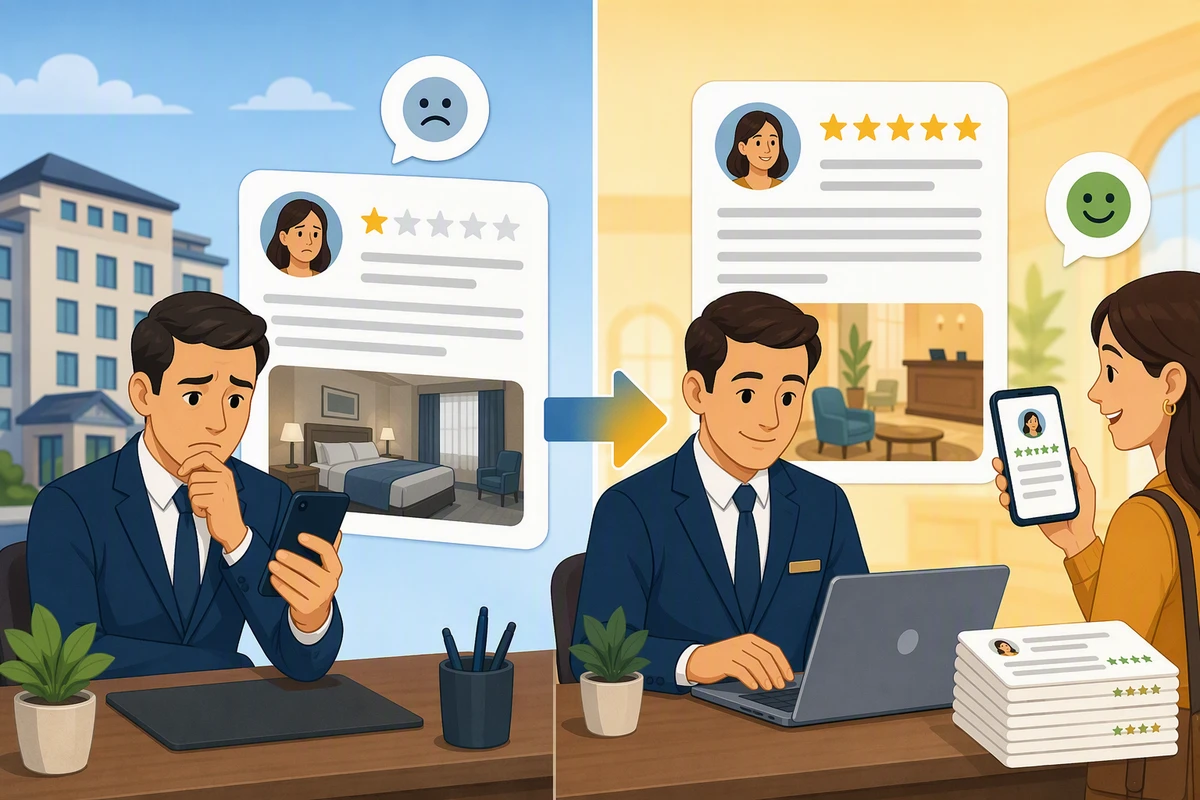
Over 70% of consumers will leave a review if a business simply asks them, yet most companies let these crucial opportunities slip away. The gap between a satisfied buyer and a published five-star rating usually comes down to friction. If your request feels like a tedious chore, they will ignore it. Learning exactly how to ask customers for reviews requires mastering timing, choosing the right channels, and deploying reliable Google review management software to minimise barriers.
Scaling this outreach manually is inefficient, but ReviewSense automates your entire customer review management workflow to capture feedback effortlessly.
The New Psychology of Asking for Reviews in 2026
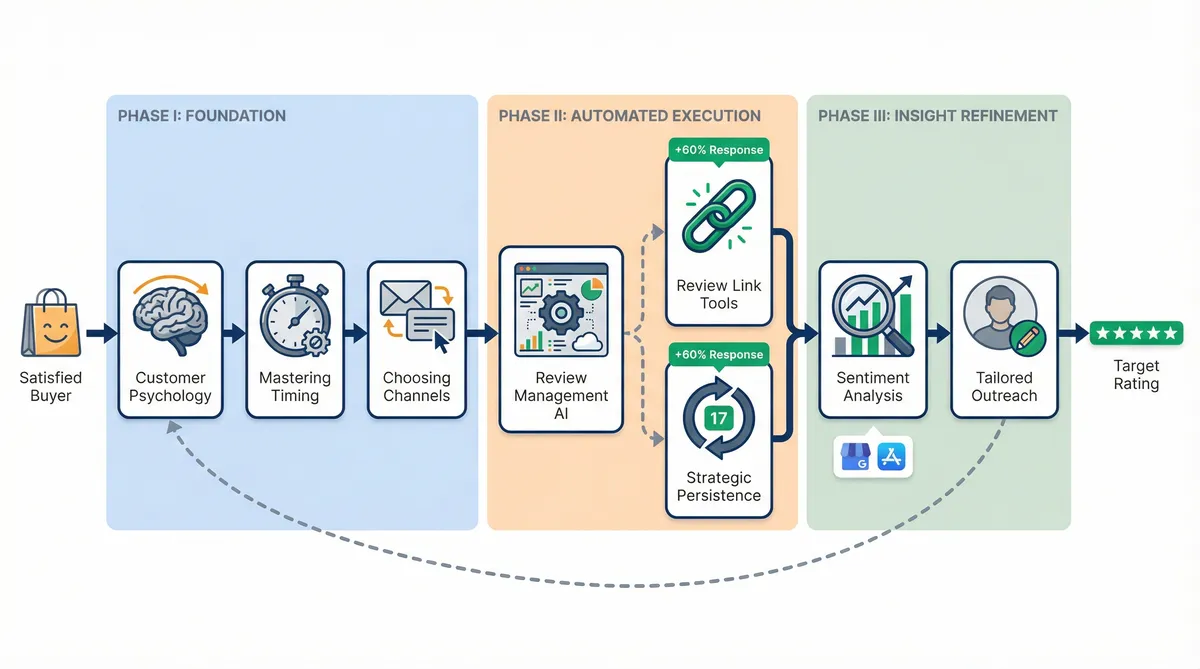
Understanding how to ask customers for reviews requires a shift in mindset. We live in the 'Nudge Economy'. It takes an average of 17 reminders to secure a review. Businesses increased their total review requests by 25% year-on-year entering 2025. While you might feel like a pest, 76% of consumers who are asked will eventually respond. Persistence pays off.
Aggressive follow-ups trigger psychological reactance. When people feel pressured, they resist. Reaching out twice a day can improve response rates by 60%, but tone matters greatly. Since 60% of all requests are sent via email, your inbox strategy must feel personal. Bombarding customers with demands creates friction.
Consumers prefer a 4.2 to 4.5 rating over a perfect score. Flawless profiles look fake. Rather than begging for top marks, follow Seth Godin’s advice and ask for 'advice' instead of 'feedback'. People love sharing their expertise. This simple phrasing builds a genuine relationship, transforming a transactional request into a collaborative conversation.
To frame this ask effectively, you need to know what matters to your audience. ReviewSense uses built-in sentiment analysis to extract key topics from Google Business Profile and Apple App Store comments. This helps teams understand recurring issues so you can tailor your outreach around specific advice.
When you stop fishing for compliments, you gather insights that drive growth. If you are Choosing the Right Customer Review Management Software for Multi-Platform Businesses, look for tools that highlight these trends. You can use a Google Review Link Generator to make the submission process easy. Allow customers to guide your business.
Optimal Timing: When to Send Your Review Requests
Once you know what advice to ask for, timing becomes your next hurdle. Customer experience expert Shep Hyken advises asking when the buyer is at their 'peak of excitement.' Strike while the positive emotion remains fresh.
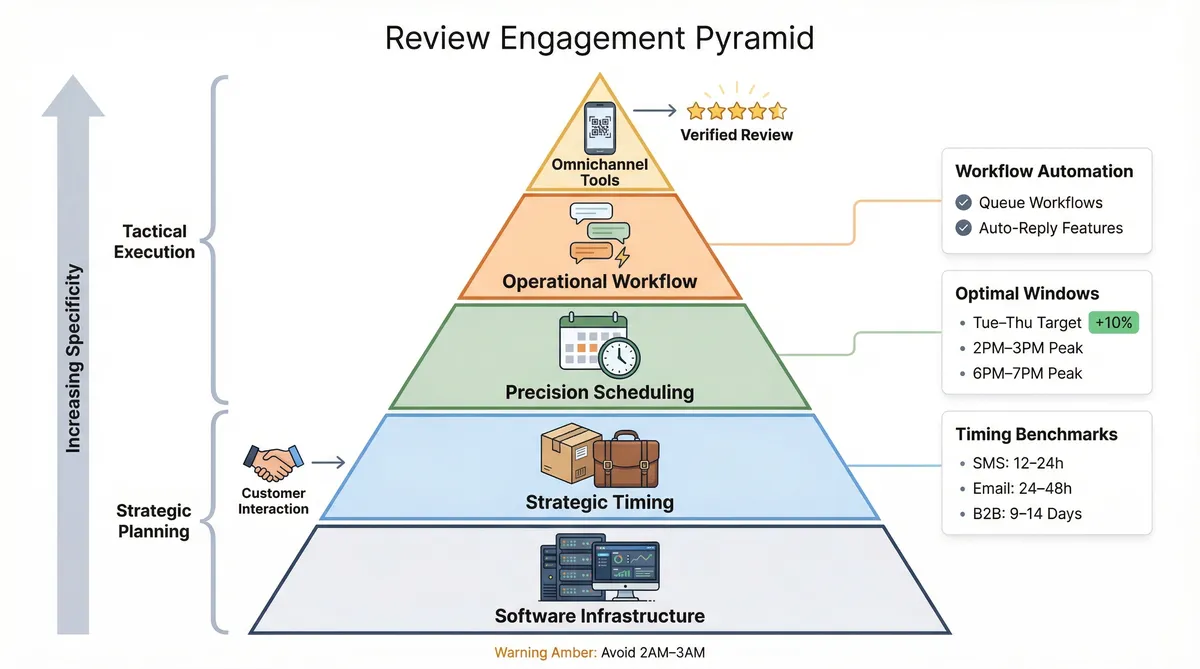
Currently, 80% of all online reviews originate from post-purchase automated emails. While SMS drives a 38% response rate compared to email’s 27%, SMS click-through rates have slipped from 8% to 6%. Consumers are growing wary of text links. That puts the burden back on the email itself, which our review generation email playbook works through subject line by subject line.
Different business models require distinct approaches. Ecommerce brands must wait until the product arrives, giving the customer time to test it: see our ecommerce review management playbook for the post-purchase send schedule that works on Trustpilot. B2B companies need a longer window, allowing clients to see measurable results before requesting an evaluation.
| Channel or Industry | Optimal Send Time |
|---|---|
| SMS | 12–24 hours post-interaction |
| 24–48 hours post-interaction | |
| Ecommerce | 1–3 days post-delivery |
| B2B | 9–14 days post-project |
Nailing how to ask customers for reviews means hitting the right day. Sending email requests in the middle of the week (Tuesday–Thursday) can increase response rates by 10%. You should target peak rating hours between 2:00–3:00 PM and 6:00–7:00 PM. Avoid the 2:00–3:00 AM dead zone entirely.
Hitting these specific windows means feedback will arrive in sudden bursts. ReviewSense helps teams manage this influx with queue workflows and auto-reply features. These tools ensure no comment goes unacknowledged during busy periods. You'll maintain a responsive brand presence.
If you need help structuring your campaigns, the FAQ covers common timing hurdles. You can also explore the Google Review QR Codes and Review Links: The Complete Setup Guide to capture in-person feedback instantly. Physical touchpoints complement your digital outreach — create a printable review request flyer to display at your counter or reception. For the digital half, our guide to using a Google review generator tool covers building the link your requests point at.
Email vs. SMS: Choosing the Right Channel for Your Brand
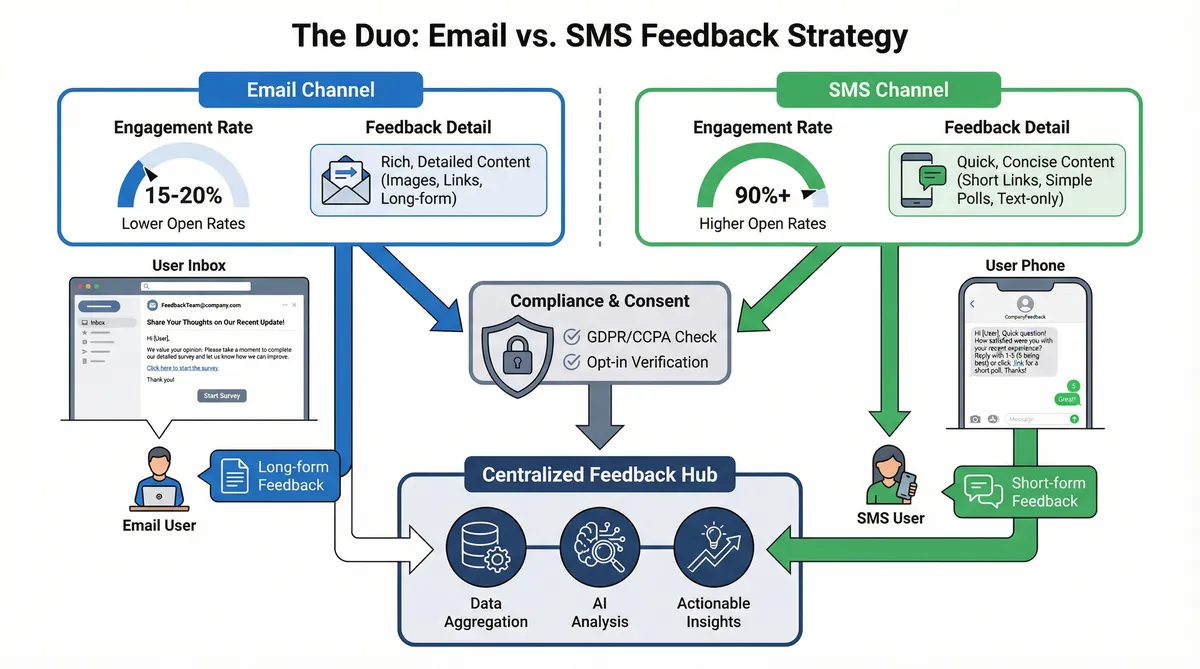
Beyond physical touchpoints, deciding how to ask customers for reviews requires choosing the correct delivery method. Email dominates request volume, but SMS often drives higher response rates despite slipping click-throughs. You must weigh channel performance against strict regulations.
Let's contrast the primary outreach methods and their 2026 compliance rules:
- Email Campaigns: Morning email requests see a 5% higher response rate than those sent in the late evening. However, major providers now enforce a 0.3% spam complaint threshold. Breaching this limit damages your domain reputation instantly.
- SMS Outreach: Text messaging demands 10DLC registration for business senders. You must also include a 'STOP' opt-out in every message. Failing to comply results in blocked campaigns and heavy fines. Use our review request SMS generator to create compliant templates.
Whatever channel you choose, you might consider rewards. In 2025, 36% of consumers were offered a discount for a review, marking a 20% decrease from the previous year. While 36% of customers admit they are more likely to leave a review if offered a reward, genuine service matters more. A massive 81% of consumers say they are most motivated to leave feedback when a business goes above and beyond.
Whether you use texts or emails, you must direct buyers to the correct platforms. ReviewSense acts as your central hub for this process. It pulls feedback from Google Business Profile, Facebook, Apple App Store, and Google Play into one dashboard. Built-in sentiment analysis extracts key topics automatically.
This centralisation stops your team from checking multiple sites every day. You can monitor sentiment trends and catch negative spikes quickly. Teams receive instant alerts for new reviews, ensuring rapid responses. If you want to improve your strategy, explore Customer Review Monitoring: Tools and Techniques for Proactive Reputation Management. You'll turn scattered comments into clear insights.
Swipeable Review Request Templates for 2026
Turning those clear insights into action requires the right messaging. When deciding how to ask customers for reviews, you need scripts that convert.
- The Personalised Power Email: Use a review request email template to build rapport. "Hi [Name], we loved helping you with [Specific Service]. Could you share your thoughts? Your feedback helps us improve." Drop a direct URL from the free Google Review QR Code Generator into this email. It removes friction instantly.
- The Compliant SMS: Texting requires strict adherence to rules. Carriers block 100% of unregistered business texts. "Hi [Name], thanks for choosing [Brand]. Share your experience here: [Link]. Reply STOP to opt out." Keep it brief.
- The 'Because' Trigger: Psychologist Robert Cialdini proved that using the word "because" increases compliance. People need a reason to act. Add a simple justification to your request. "Please leave a rating because it helps local shoppers find us." This tiny addition boosts conversion rates.
- The Anti-Incentive Script: The FTC Consumer Review Rule carries fines of up to $53,088 per violation for deceptive practices. One company faced a $12.8 million judgment for fake ratings. They had to notify all past buyers about the deception. Protect your brand by using an anti-incentive approach. "We never pay for feedback because we want 100% honesty. Please share your genuine experience." This contrarian script removes transactional pressure. It builds immediate trust.
You'll streamline this entire process using ReviewSense. The platform centralises feedback from Google Business Profile, Facebook, Apple App Store, and Google Play. You can generate on-brand replies quickly. If you want to master this workflow, read the guide on Customer Review Management: Building Trust and Improving Ratings.
The Legal and Ethical Pitfalls to Avoid
While mastering these communication workflows builds trust, you must navigate strict compliance laws carefully.
The December 2025 FTC Consumer Review Rule punishes deceptive tactics. Businesses face a $53,088 penalty per violation for posting insider ratings or hiding financial incentives. You can't afford to cut corners when learning how to ask customers for reviews.
History shows what happens when brands bribe buyers. Cure Encapsulations faced a massive FTC fine for paying third-party sites to maintain high ratings. Amazon banned major electronics brands Aukey and Mpow for offering gift cards in exchange for five-star feedback. These catastrophic penalties destroyed their primary sales channels.
The platforms themselves are tightening restrictions. The February 2026 Google Business Profile update introduced a strict crackdown on review gating. You can't filter negative feedback while only publishing positive comments. If you worry about losing ratings, read Why Google Is Deleting Your Reviews in 2026 (And How to Protect Them).
You don't need illegal incentives to generate positive sentiment. Trustpilot data shows that 71% of people will leave a review for a business if they are simply asked. Exceptional service drives organic feedback. Focus on delivering great experiences instead of risky manipulation tactics.
ReviewSense acts as a vital safeguard for your brand integrity. The platform features built-in spam detection that flags illegitimate comments automatically. This helps you maintain authentic profiles across Google Business Profile, Facebook, Apple App Store, and Google Play. You can manage genuine feedback without resorting to dangerous gating strategies.
If you spot toxic content, you must handle it correctly. The guide on Editing Google Reviews: Policies, Options, and Effective Strategies for UK Businesses explains the proper removal process. ReviewSense keeps your reputation clean and compliant.
Conclusion
Asking customers for reviews doesn't have to be complicated, but it does require a strategic and legally compliant approach. By timing your requests perfectly, utilizing proven templates, and strictly avoiding illegal incentives or review gating, you build authentic trust with your audience.
However, managing a growing volume of feedback across Google Business Profile, Facebook, the Apple App Store, and Google Play can quickly overwhelm your team. ReviewSense solves this by centralizing your reputation management into a single dashboard. With automated spam detection and an AI response generator, your team can easily maintain compliance while focusing on genuine interactions.
Transform scattered reviews into actionable insights that improve customer experience and drive growth—Start your 7-day free trial.