
Are you risking a massive FTC fine just to boost your local search rankings? Many businesses blindly deploy automation tools, completely ignoring the strict compliance rules governing online reputation. While the right google review management software drives measurable revenue through AI-powered operations, the wrong strategy traps you in a cycle of deleted reviews and penalised profiles. It is time to separate genuine ROI from dangerous manipulation.
Balancing aggressive growth with strict compliance is tough, but ReviewSense automates your reputation strategy safely and effectively.
Before committing your budget to a new platform, you must understand why Google is deleting your reviews in 2026 (and how to protect them) so you can build a resilient, long-term acquisition engine. On the commercial side, our guide to comparing review management pricing and features covers the hidden fees and volume caps that decide whether the ROI you model is the ROI you get.
The ROI of Google Review Management Software in 2026
Understanding these operational limits shows why manual tracking fails. The global online reputation management market reflects this shift. Valued at $6.88 billion in 2025, the market is projected to reach $7.75 billion by 2026. Businesses are abandoning scattered spreadsheets. They treat google review management software as an operational necessity instead of a basic marketing task.
Google remains the primary gateway for local discovery. It hosts 57–58% of all online reviews. Most consumers check these profiles before visiting a physical location. Shoppers hesitate to buy if a rating drops below four stars. A negative comment can push potential buyers to competitors. Managing this feedback impacts your bottom line.
The financial return on this software is clear. Improving your overall rating yields a large revenue boost. Reviews drive a major portion of local search ranking. Higher visibility brings more foot traffic and digital conversions. Organisations using centralised platforms see a distinct revenue advantage over those relying on manual tracking.
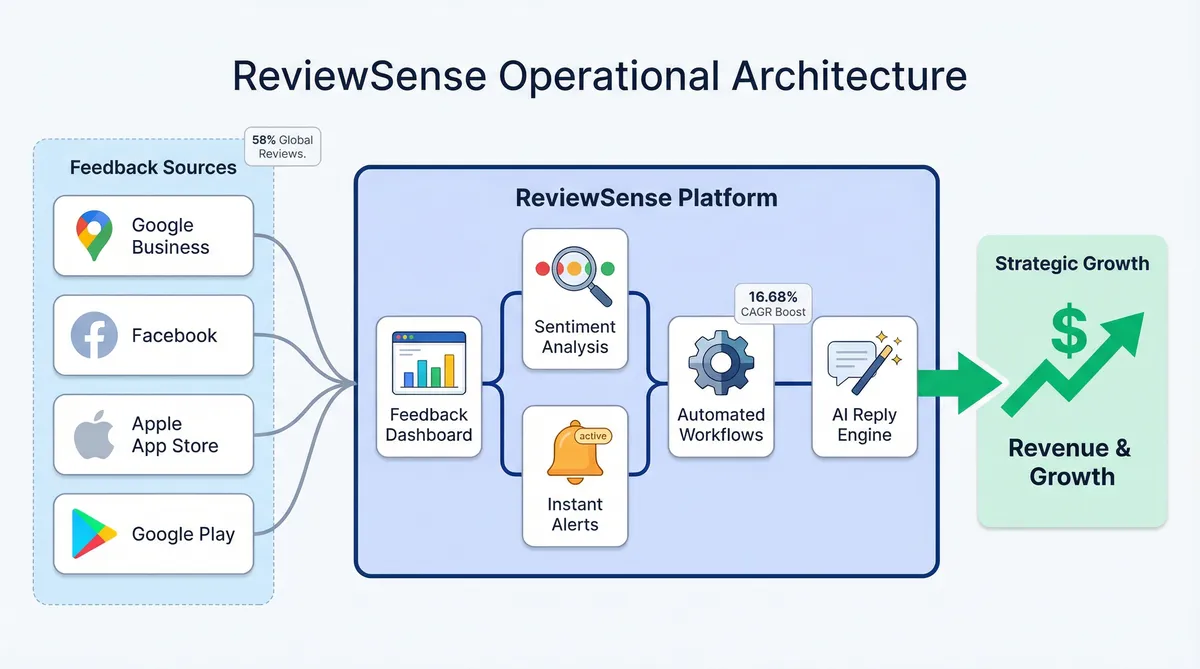
Small and medium-sized enterprise adoption of these tools is growing at a 16.68% CAGR, as platforms become affordable and AI-driven. ReviewSense centralises feedback from Google Business Profile, Facebook, Apple App Store, and Google Play into a single dashboard. You'll get instant alerts for new comments. Teams can generate on-brand replies in seconds. This prevents minor complaints from escalating into costly crises.
Evaluating review management software requires looking at long-term value. Automated workflows save hours of administrative work each week. Built-in sentiment analysis flags recurring issues early. You transform scattered feedback into actionable insights. This proactive approach protects your brand and drives sustainable growth.
Core Capabilities: How AI is Transforming Reputation Operations
To achieve that sustainable growth, teams need smarter tools. Currently, 34% of businesses now use AI tools to draft or generate review responses. This shift turns overwhelming feedback volumes into manageable tasks.
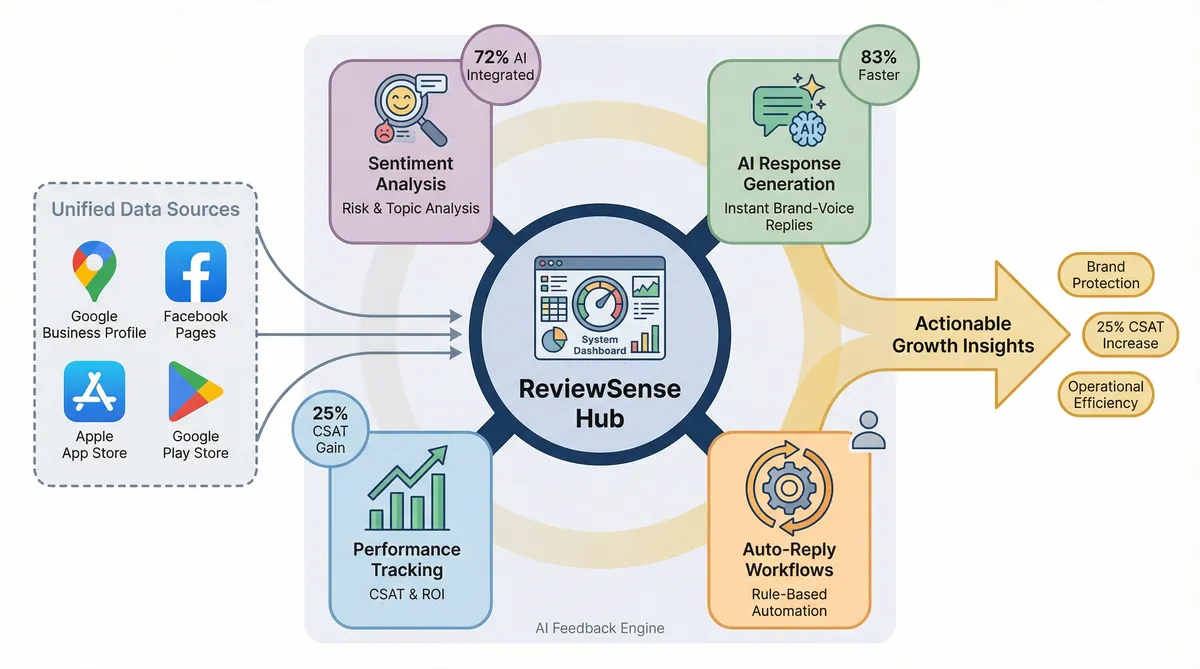
ReviewSense handles this operational challenge. It centralises data from Google Business Profile, Facebook, Apple App Store, and Google Play. You can manage all interactions from a single dashboard. The core capabilities of google review management software focus on speed and deep insight:
- AI response Generation: Automated systems process customer feedback 83% faster than manual methods. Using AI review response generators helps teams reply instantly. You maintain a brand voice without the manual typing.
- Auto-Reply Workflows: Set specific rules to handle common queries automatically. This keeps your daily queue clear. Your staff can focus on complex issues instead of repetitive tasks.
- Sentiment Analysis: Today, 72% of organizations have integrated generative AI into their reputation management workflows to analyze sentiment and identify recurring issues. The system extracts key topics and flags toxic content early.
- Performance Tracking: Businesses using AI-powered review analysis report an average 25% increase in customer satisfaction scores. Tracking these metrics proves the value of your software investment.
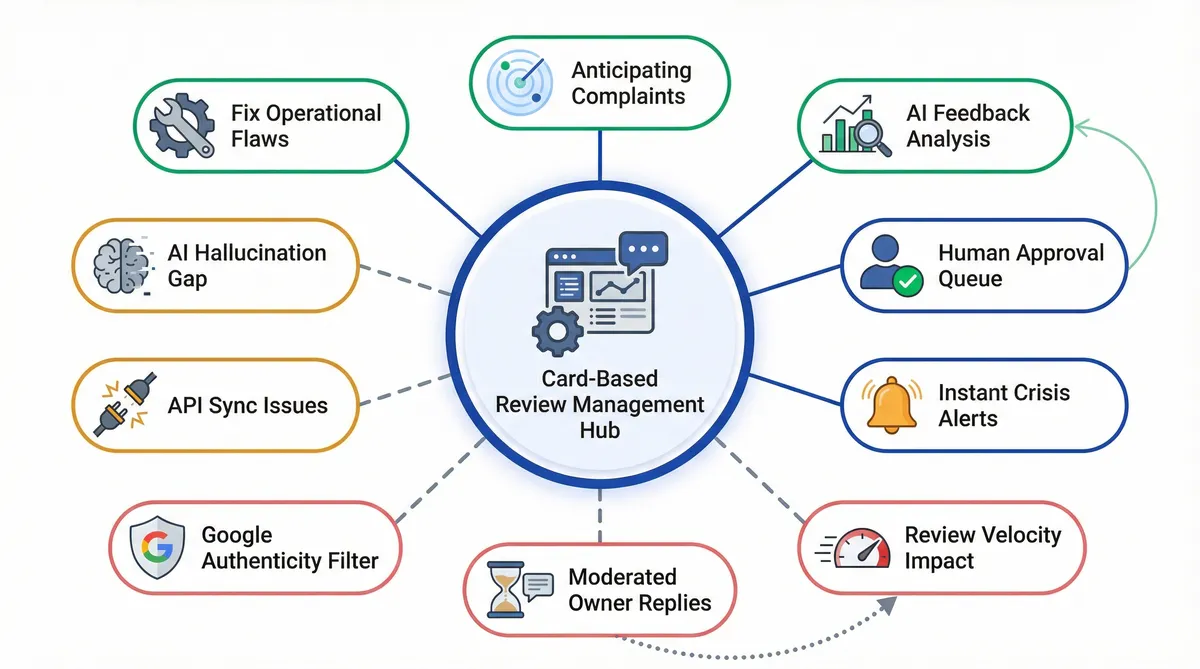
These features eliminate the guesswork from customer service. You stop reacting to complaints and start anticipating them. AI tools highlight what your buyers want. You don't need to wait for a crisis. This lets you fix operational flaws before they affect future sales. Proper customer review management builds lasting trust. It turns raw data into a clear roadmap for better service.
Current Limitations and Industry Shifts Affecting Review Platforms
While AI provides a clear roadmap, the rules governing that data are changing. Google is tightening its control over local feedback. The upcoming February 2026 'Authenticity Crackdown' will aggressively filter suspicious content. You must understand why Google is deleting your reviews in 2026 (And How to Protect Them) to protect your profile. Soon, the December 2025 shift to Moderated Owner Responses will introduce new hurdles. This update can delay public replies for up to 30 days.
These delays create a serious problem for local businesses. Currently, 73% of consumers only trust reviews written within the last 30 days. Review velocity is critical for maintaining trust. If your replies sit in moderation, buyers won't see your side of the story. Remember, 97% of potential customers read a business's response to reviews. A delayed reply can cost you sales.
Beyond platform updates, modern software faces technical hurdles. API discrepancies between Google Play and Apple App Store often cause syncing delays. Then there is the 'AI Hallucination Gap'. Current generative models have a hallucination rate between 3% and 18%. Relying on pure automation is risky. An AI might invent a refund policy or promise an unavailable service to a frustrated buyer.
This is why human oversight remains vital. ReviewSense solves this through 'Human-in-the-Loop' approval queues. Your team reviews AI-drafted responses before they go live. If a sudden wave of negative feedback hits, crisis alerts notify you instantly. This ensures your google review management software protects your brand rather than creating new liabilities. Proper customer review management requires both speed and safety.
The Cost of Manipulation: Ethical Engagement vs. FTC Fines
Balancing speed and safety also means staying on the right side of the law. Many brands try to cheat the system by hiding negative feedback. This tactic, known as review gating, is illegal. The US Federal Trade Commission (FTC) recently banned these deceptive practices. Fines now reach $51,744 per violation.
Products with at least five reviews see 270% higher conversion rates than those with none. You must earn this visibility honestly. A one-star increase on a Google Business Profile yields a revenue boost of 5% to 9%. Faking your way to the top carries severe financial risks.
ReviewSense encourages transparent engagement. You can use a Google review link generator to ask every buyer for honest feedback. Ethical google review management software helps you address criticism directly. You shouldn't suppress bad ratings. After all, 53% of reviewers expect a reply to negative feedback within seven days.
| Approach | Real-World Outcome | Financial Impact |
|---|---|---|
| Failure Story: Fashion Nova | Suppressed poor ratings using illegal software. | Fined $4.2 million by the FTC. |
| Success Story: CLF Services | Used automated requests for all clients. | Achieved a 45% conversion increase and $30,000 in revenue. |
| Success Story: The Coffee Corner | Engaged ethically with all feedback. | Saw a 40% review volume increase and 25% more foot traffic. |
Organisations using centralised management platforms see a 29% revenue advantage over those using manual tracking methods. This advantage relies on honest practices. Choosing the best review management software 2026 means prioritising compliance. You build genuine brand trust when you address customer complaints openly.
Strategic Implementation: Avoiding the Review Velocity Trap
Building genuine trust requires more than following the rules. You need a contrarian approach to software implementation. Many companies fail because they rush the process.
Manage Review Velocity. Most businesses blast their entire email list asking for feedback. This aggressive tactic triggers platform spam filters. A sudden spike in ratings causes a shadow-ban. You must use a slow drip campaign. Steady feedback looks natural to search algorithms. Learning how to get more 5-star Google reviews protects your account.
Embrace the 4.2-4.5 Star Paradox. A flawless 5.0 rating looks fake to modern buyers. Consumers seek out negative feedback to verify authenticity. When you use a negative review response generator, you show real accountability. A human voice handling a complaint builds more credibility than pure automation.
Prioritise Recency. Stale feedback kills local conversions. Buyers ignore praise from three years ago. You must refresh your profile with new ratings. Reviews account for 17% of the local pack ranking algorithm. This makes them the second most important factor for appearing in Google's Map Pack.
Utilise Review Schema Markup. Don't leave your hard-earned reputation sitting on third-party sites. Pull this valuable data onto your own domain. This strategy builds a strong SEO content moat. Use a Google review widget or review badge to display these ratings on your service pages.
Getting started without risk doesn't require a massive budget. ReviewSense offers a 7-day free trial with transparent pricing. You can test the platform. ReviewSense provides free tools like a Google review link generator and a star rating calculator. These utilities deliver immediate value while protecting your local search presence.
Conclusion
Effective Google review management software must balance automation with ethical engagement. Suppressing negative feedback risks severe FTC fines, while transparently addressing complaints builds genuine consumer trust. Maximizing your ROI requires managing review velocity to avoid platform shadow-bans, embracing the authenticity of a 4.2-4.5 star rating, and prioritizing recent feedback to boost local search visibility.
ReviewSense helps you navigate these complexities safely. By centralizing feedback from your Google Business Profile, Facebook, Apple App Store, and Google Play into a single dashboard, you ensure compliance while never missing an opportunity to engage. Built-in analytics track review velocity naturally, and crisis alerts help you address negative spikes before they escalate.
Stop letting valuable customer sentiment slip through the cracks and turn scattered reviews into actionable insights that improve customer experience when you Start your 7-day free trial.