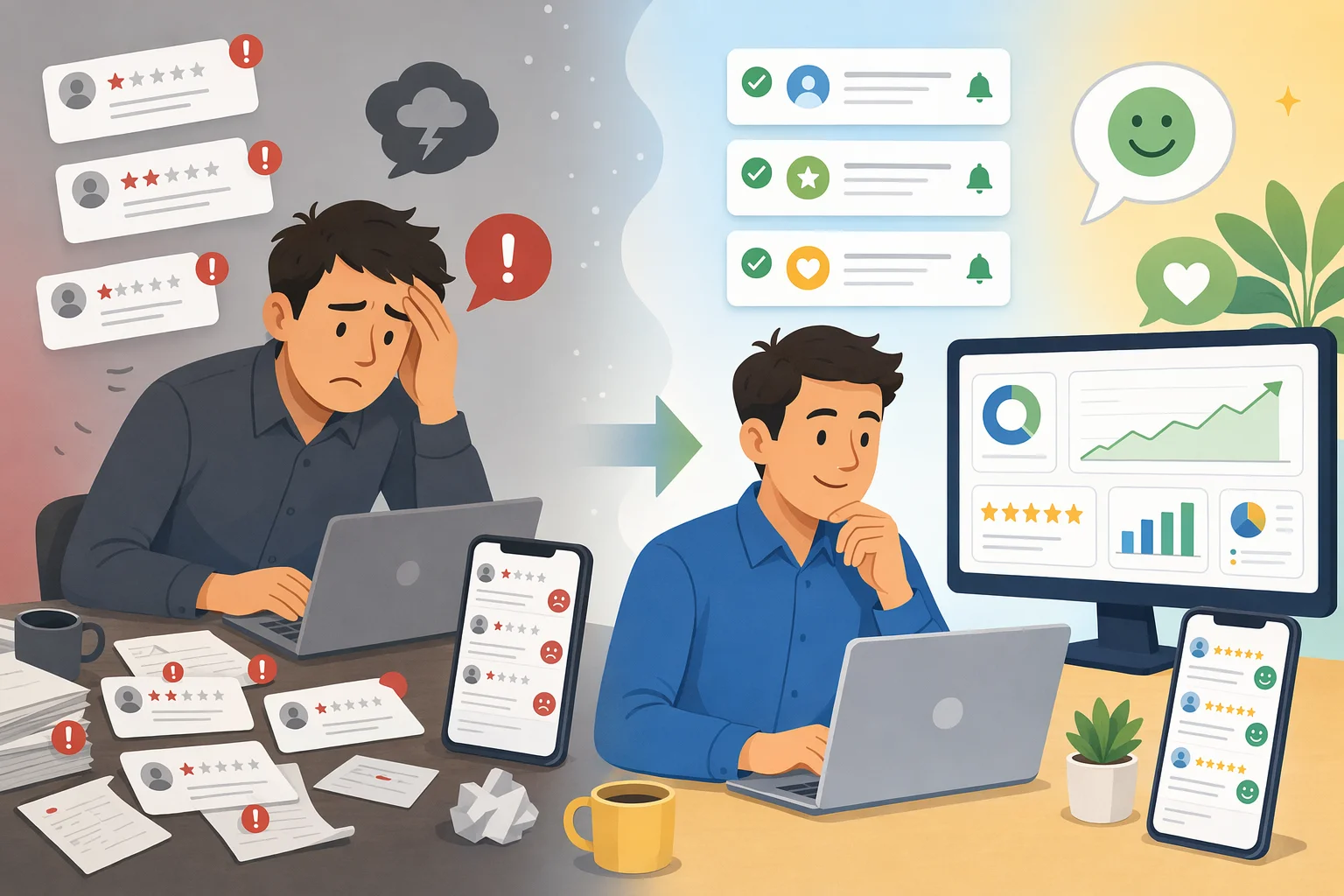
Juggling feedback across Google, Facebook, and mobile app stores quickly becomes a logistical nightmare. When you're running a multi-platform business, missing a critical user complaint isn't just an oversight—it directly impacts your bottom line. You need a system that brings everything into one centralised dashboard. Finding the right customer review management software is the key to turning scattered feedback into a structured growth engine.
Managing these channels manually drains your team's resources. ReviewSense automates the heavy lifting so you can focus on strategy. For a comprehensive comparison, see our best review management software for 2026 guide. Whether you are evaluating review management software for app stores—like dedicated tools for Apple App Store review management—or seeking to deploy automated review replies across all your channels, selecting the right platform is vital for your brand's reputation.
The Challenge of Managing Reviews Across Multiple Platforms
As operations expand, tracking customer feedback becomes a logistical headache. A UK survey found that 72% of consumers expect fast responses to their online reviews. Those comments rarely sit in one convenient location. They scatter across local search on Google Business Profile, social media via Facebook, and mobile platforms. Monitoring these separate channels drains valuable time.
Missed feedback carries a heavy cost. When negative comments linger on a Facebook page, public trust drops. Unanswered complaints lead to customer churn. Shoppers read these unresolved issues and take their money elsewhere. It's a harsh reality that a damaged reputation impacts your bottom line before you realise a problem exists.
The core issue is context switching. Teams waste hours logging into different portals to check for updates. Finding a specific complaint on Google Play requires a different workflow than checking a Facebook page. This constant jumping between tabs creates blind spots. Genuine feedback falls through the cracks while staff struggle with messy spreadsheets.
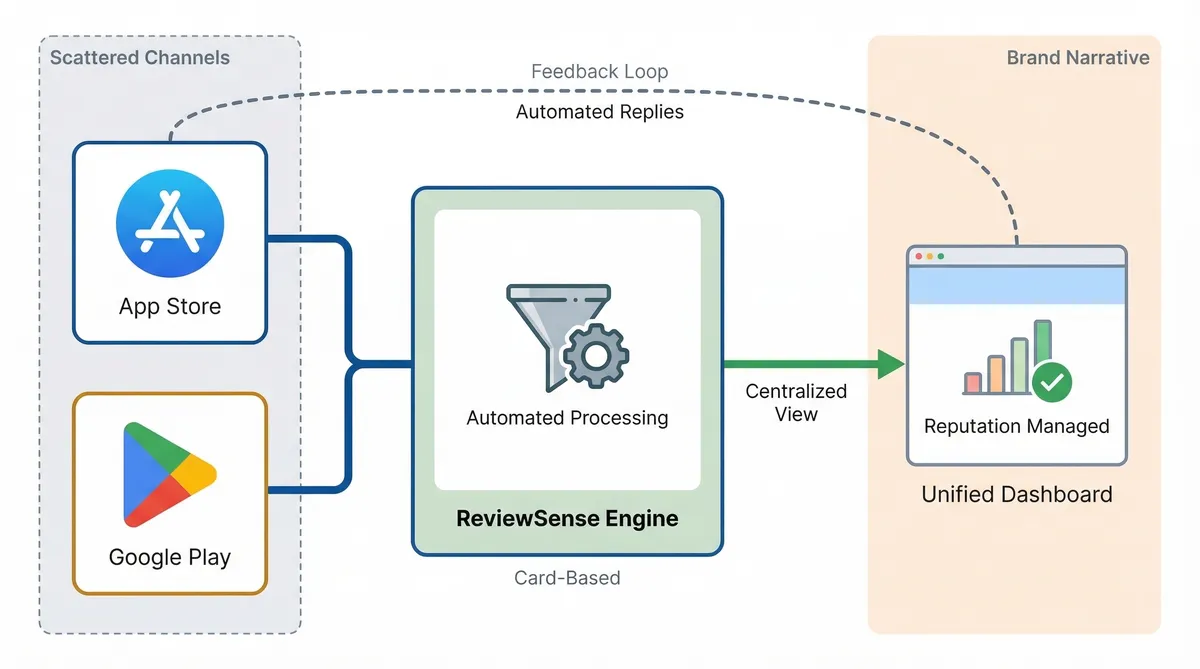
To regain control, businesses need to centralise their approach. Implementing customer review management software eliminates this administrative burden. An AI review response generator further accelerates your workflow by drafting replies in seconds. Teams managing mobile apps should also explore how to manage App Store reviews at scale, while DTC and online retail brands lean on dedicated ecommerce review management workflows. A unified dashboard brings every comment into a single view. This feature proves vital for mobile developers. Using review management software for the Apple App Store ensures you catch every rating alongside your Google Play feedback.
A central system prevents context switching entirely. You won't need to hunt for mentions across scattered platforms. Your team can focus on resolving issues and improving the customer experience. A unified inbox guarantees that no customer is left unheard. You'll regain control of your brand narrative without relying on stressful workflows.
Essential Features to Look For in Customer Review Management Software
Abandoning scattered workflows requires the right technology. A recent UK report reveals 68% of managers struggle to track feedback across multiple channels. Evaluating customer review management software highlights specific features that save time. UK businesses must prioritise platforms offering genuine relief.
Here are the core capabilities every multi-platform business needs:
Centralised Dashboards: Your team needs a single workspace. The ideal system aggregates feedback from Google Business Profile, Facebook, Apple App Store, and Google Play. ReviewSense brings these exact channels into one clear view. This proves essential when using review management software for the Apple App Store alongside local platforms. Staff stop wasting time hunting for scattered comments.
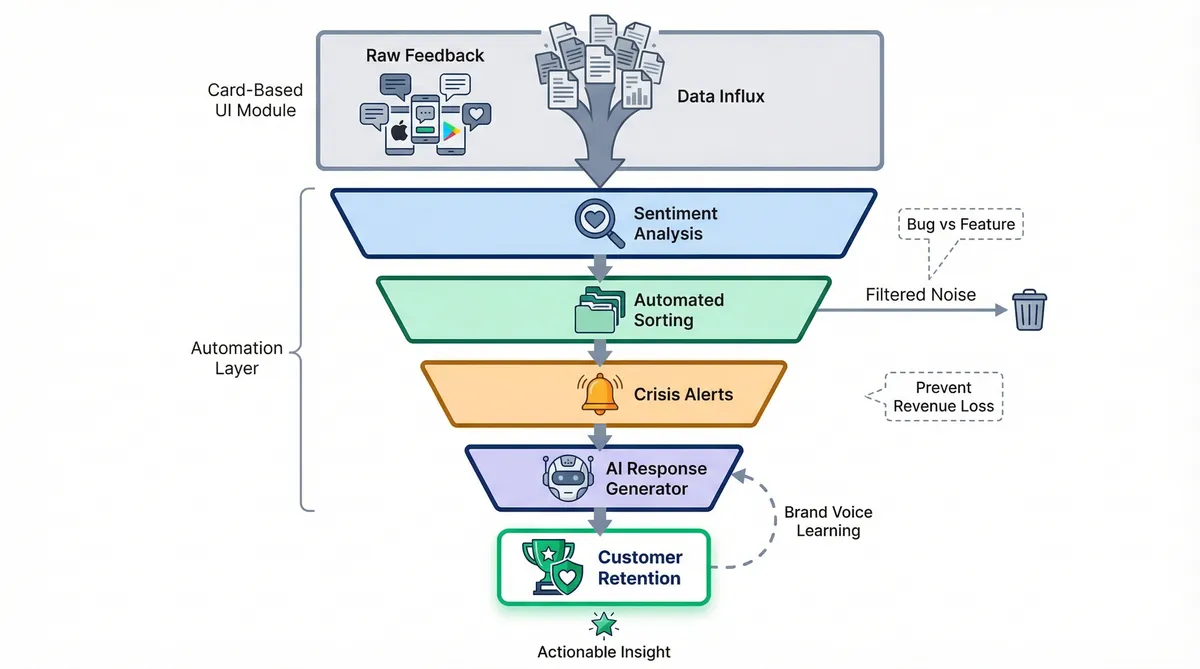
Instant Alerts and Crisis Management: Online reputations break fast. A sudden spike in negative comments requires an immediate response. Look for systems providing crisis alerts. ReviewSense monitors review velocity and notifies your team about negative trends. You'll catch unhappy customers. Teams intervene before a minor complaint escalates into a public disaster.
AI-Powered Response Generation: Staring at a blank screen wastes valuable hours. Modern platforms use artificial intelligence to generate personalised replies. ReviewSense matches your custom voice effortlessly. It features auto-reply workflows and approval queues. This streamlines your daily tasks. It ensures consistent communication across all your locations without sacrificing quality.
Sentiment Analysis: Manual reading becomes impossible for scaling businesses. Built-in analysis extracts key topics. It flags recurring issues and detects toxic spam. ReviewSense automatically filters out this digital noise. Your staff can focus on genuine feedback. You'll uncover actionable insights that improve customer retention and drive steady growth.
Evaluating Platform Integrations: Local SEO vs. App Stores
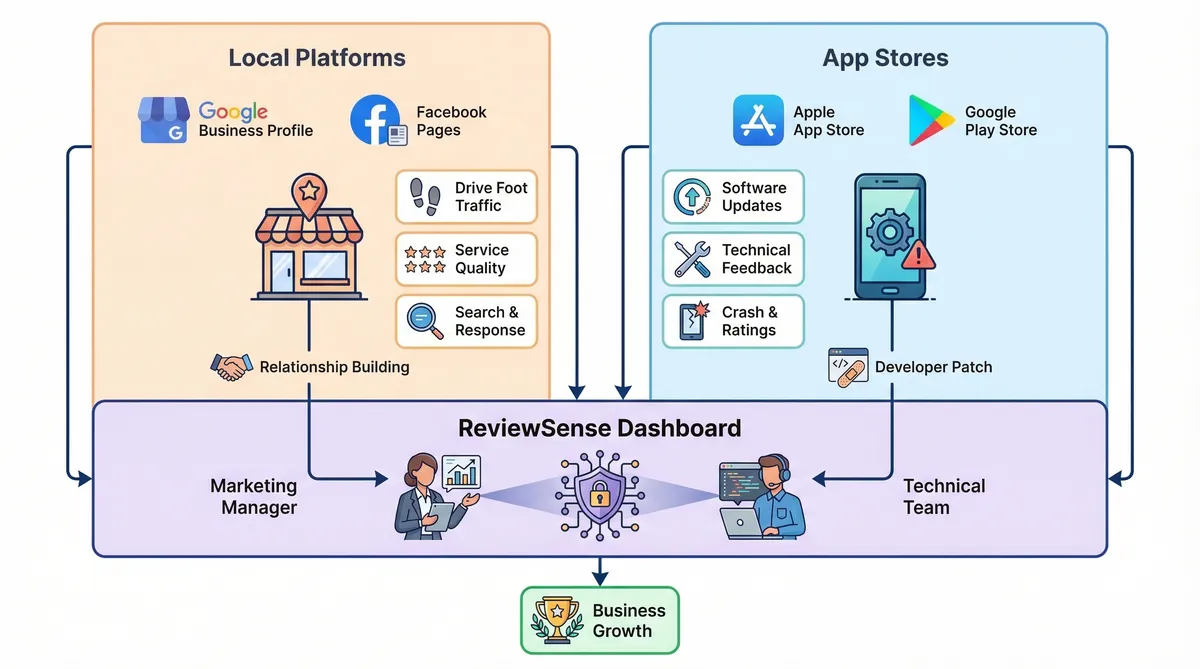
Building on those actionable insights requires understanding where your feedback originates. A local retail chain uses data in distinct ways compared to a digital product team. For physical venues, platforms like Google Business Profile and Facebook drive vital foot traffic. Conversely, mobile developers rely on review management software for app stores to guide technical updates.
Comparing these separate ecosystems highlights why a unified approach matters. Recent UK market data shows 76% of consumers check local search before visiting physical locations. App users behave in unique ways. They expect rapid bug fixes and feature rollouts based on their comments.
| Feature Focus | Local Platforms (Google, Facebook) | App Stores (Apple, Google Play) |
|---|---|---|
| Primary Goal | Driving foot traffic and local visibility. | Guiding product updates and bug fixes. |
| User Intent | Evaluating customer service and product quality. | Reporting technical issues or requesting features. |
| Key Metrics | Star ratings, response times, search ranking. | Version-specific feedback, app crash reports. |
| Action Required | Service recovery and relationship building. | Developer intervention and software patching. |
Software teams face unique challenges in the mobile space. When a bug crashes an application, frustrated users flood the store with negative ratings. Developers need specific insights from this feedback to patch software issues. Meanwhile, a local shop manager focuses on resolving service complaints to protect their neighbourhood reputation. Both scenarios demand urgent attention but require different workflows.
Bridging this divide is essential for multi-platform brands. Comprehensive customer review management software must handle both physical venues and digital products. Using a fragmented system creates blind spots. ReviewSense connects these distinct worlds without complex setups. It fully supports Google Business Profile, Facebook, the Apple App Store, and Google Play.
You don't need separate tools for local marketing and digital app development. Your marketing managers and technical teams can finally collaborate in one shared dashboard. This unified perspective ensures every single piece of feedback drives meaningful business growth.
4 Steps to Implementing a Unified Review Strategy
Transitioning to a shared dashboard requires a clear rollout plan. A structured approach ensures your team adopts the new system without disrupting daily operations. Following a proven framework eliminates confusion. Here is how to build an effective strategy.
Audit your existing profiles. Before centralising your feedback, map out every active channel. Identify your Google Business Profile locations and Facebook pages. Software developers must verify their digital listings. Using review management software for the Apple App Store requires a complete inventory. This prevents forgotten accounts from causing reputation damage. You cannot manage what you do not track.
Select scalable technology. Your platform must grow alongside your business. Choosing the right customer review management software is critical for long-term success. It needs to support everything from a single local shop to a multi-location enterprise. Ensure it handles local platforms and digital endpoints. ReviewSense connects these channels. You won't face frustrating limitations as your brand expands.
Establish response workflows. Don't let incoming comments overwhelm your staff. Set up clear rules for handling different types of feedback. Use AI auto-replies to acknowledge simple queries. You can route complex complaints to human agents. ReviewSense streamlines this process with custom approval queues. This hybrid approach maintains your brand voice while saving time. Your team handles crises while automation manages routine work.
Leverage analytics for growth. Gathering feedback is the first phase. You must extract clear value from the data. Track review velocity to spot unusual spikes in activity. Monitor sentiment trends to understand customer feelings about recent updates. This data highlights where your operations need improvement. Crisis alerts notify you of negative patterns. Teams can fix underlying issues before they impact revenue.
How AI and Automation Transform Feedback into Actionable Insights
You can't fix those issues before they damage revenue without processing feedback faster than manual teams can manage. Modern customer review management software uses artificial intelligence to handle this heavy workload. Staff no longer need to read every single comment. Instead, automation sorts incoming data instantly. This shift transforms messy data into clear directives.
Built-in sentiment analysis serves as a frontline defence. The technology reads reviews across all connected platforms to extract key topics. It flags recurring issues like a slow checkout process or a faulty product update. The system detects toxic content and automated spam. Filtering out this noise ensures you're seeing genuine feedback.
Recent UK consumer studies show that quick resolutions build lasting loyalty. When brands address complaints, shoppers are more likely to return. Intelligent software makes this rapid turnaround possible. It highlights negative spikes through automated crisis alerts. Managers can act before a minor hiccup becomes a public disaster.
It's vital for mobile developers to use automated sorting. Sifting through thousands of user comments takes hours. Using dedicated review management software for Apple App Store listings changes this dynamic. The AI categorises technical bug reports apart from new feature requests. iOS developers get instant clarity on what needs patching to improve app stability.
Identifying problems represents just one step. Teams must reply to buyers promptly. ReviewSense features an AI response generator that creates personalised replies in seconds. It learns your custom brand voice so every interaction sounds authentic. Managers can set up queue workflows to streamline approvals across different departments.
Automating these routine tasks frees up valuable staff time. Your team won't worry about drafting the perfect reply. They'll focus on genuine feedback that directly impacts customer retention. Transforming scattered opinions into actionable insights improves the overall customer experience. It helps multi-platform businesses drive sustained growth without expanding headcount.
Making Your Final Decision: A Software Evaluation Checklist
Achieving this growth without adding headcount requires selecting the perfect tool. Evaluating different platforms can feel overwhelming when every vendor promises instant results. You'll need a clear framework to cut through the noise. Use this evaluation checklist to find the right customer review management software for your specific business.
- Transparent pricing: Avoid hidden fees or complex contracts. Look for clear tiers that align directly with your operational budget. Our guide to comparing review management pricing and features lists the questions that force a quote-gated vendor to show its per-location and overage charges.
- Trial periods: Never commit blindly to a new system. Look for platforms offering a risk-free trial. ReviewSense provides a 7-day free trial so you can evaluate its features yourself.
- Mobile ecosystem support: App developers face technical challenges. Ensure your chosen platform functions as robust review management software for app stores. It's vital it supports both Google Play and the Apple App Store.
- Agency capabilities: Managing multiple clients requires specialised tools. Prioritise custom integrations and white-label reporting. This lets UK agencies present professional analytics under their own brand.
- Free resources: Good vendors provide immediate value before you pay. Check if they offer helpful tools like a Google review link generator. Access to negative review response templates also helps train new staff.
The primary goal remains simple. You'll want to transform scattered reviews into actionable growth. The best system will consolidate your distinct feedback channels into one secure dashboard. It must connect your local footprint with your digital products.
Take your time when evaluating these tools. Test a platform's capabilities before signing a long-term contract. A short trial run will quickly reveal if the software fits your daily workflow. You'll see how it handles your actual customer data first.