In 2024, Trustpilot removed 4.5 million fake reviews — and 90% were caught automatically. That’s a lot of fraud, but it’s only the tip of the iceberg. Review fraud isn’t just about inflated ratings; it siphons an estimated $300 billion annually from consumers across key sectors. Understanding how this fraud works, what it really costs, and how platforms are fighting back is essential for any business that relies on its online reputation.
Managing this manually is hard. ReviewSense automates it.
The Anatomy of Review Fraud: More Than Just Fake Five-Star Reviews
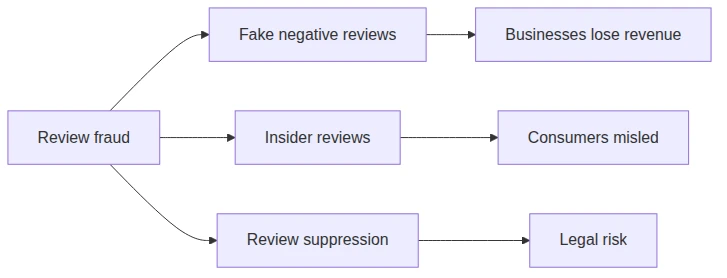
Most people picture a fake five-star review when they hear the term review fraud. That picture is dangerously incomplete. Fraudsters have built a far more sophisticated playbook, and it costs businesses real money.
| Type of Review Fraud | How It Works | Who It Hurts |
|---|---|---|
| Fake negative reviews | Competitors or disgruntled ex-employees post one-star attacks to tank a rival's rating. | The targeted business loses customers and revenue. |
| Undisclosed insider reviews | Owners, staff, or friends leave glowing reviews without disclosing their connection. | Consumers are misled; trust erodes across the platform. |
| Review suppression | Staff route unhappy customers to private surveys instead of public review pages. | The public rating becomes artificially inflated. |
| Selective solicitation | Businesses ask only happy customers to leave a review. | The average star rating no longer reflects real experience. |
| Incentivised reviews with strings | A free product is offered in exchange for a positive review, not an honest one. | Genuine feedback is buried under bought praise. |
Google removed 13 million fake or fraudulent business profiles during 2025 alone, according to Google's transparency report. That number reveals the sheer scale of the problem. Fake review fraud isn't a fringe issue — it's a systemic one.
The FTC's 2024 rule now bans buying or selling both positive and negative reviews. It also prohibits misrepresenting that displayed reviews represent all submitted feedback. That means review suppression and selective solicitation are now legally risky, not just ethically dubious.
Consumers are fed up. They expect platforms to act. They expect businesses to be honest.
Review fraud detection tools are becoming essential for any brand that values its reputation. Without them, a single coordinated attack can undo years of trust-building. The cost of ignoring this problem? Lost customers, damaged credibility, and potential regulatory fines.
The Real Cost: From Consumer Harm to Regulatory Penalties
The damage from fake review fraud cuts two ways. UCLA researchers found that fake reviews directly deceive consumers and, more insidiously, erode trust in the entire ratings system. That second harm is the harder one to fix.
The Consumer Harm
| Harm Type | How It Manifests | Scale of Impact |
|---|---|---|
| Direct deception | Consumers buy poor products or services based on inflated ratings | 93% of consumers believe someone must detect fake reviews |
| Systemic erosion | Trust in all online ratings declines, hurting honest businesses | Roughly one in four consumers expect government action |
| Financial loss | Wasted spending on substandard goods and services | $152 billion in global spending influenced by fake reviews |
A Which? experiment demonstrated the power of this deception. When researchers added fake five-star reviews to low-rated products, the proportion of consumers selecting those 'Don't Buy' items more than doubled. People trusted the fabricated ratings over their own caution.
The Transparency Company estimates the annual consumer harm at $300 billion across home services, legal, and medical categories alone. That's real money lost to fake review fraud.
The Regulatory Cost
The FTC's Consumer Reviews and Testimonials Rule carries a maximum civil penalty of $53,088 per violation. In December 2025, the FTC sent warning letters to businesses violating this rule. The message was clear: the regulator is watching.
A May 2026 lawsuit from the FTC and DOJ against Premium Home Service shows the stakes. The company allegedly created over 15,000 fake Google Business Profiles. That many violations at the maximum penalty rate would total hundreds of millions of dollars.
Businesses need strong review fraud detection tools to avoid becoming the next target. The cost of ignoring this problem isn't just lost trust — it's a direct financial liability.
For a deeper look at how to manage this risk, read the guide on centralised review dashboards. You can also explore the best AI-powered reputation management software for 2026 to see how technology helps.

How Platforms Are Fighting Back: Detection, Enforcement, and New Rules
Those enforcement numbers from Google and the FTC signal a clear shift. Platforms are no longer relying on simple text filters. They're building sophisticated detection systems that analyse behaviour, not just words.
| Platform | 2025 Enforcement Action | Detection Method |
|---|---|---|
| 292 million reviews blocked/removed, 13 million fake profiles removed, 782,000 accounts restricted | Behavioural analysis of review timing and profile edits | |
| Trustpilot | 7.8 million fake reviews detected (90% automated) | Network-based detection with a dedicated Chief Trust Officer |
| Amazon | 275 million suspected fake reviews blocked in 2024 | Reviewer-product cluster analysis and shared infrastructure checks |
Behavioural Detection Replaces Text Filters
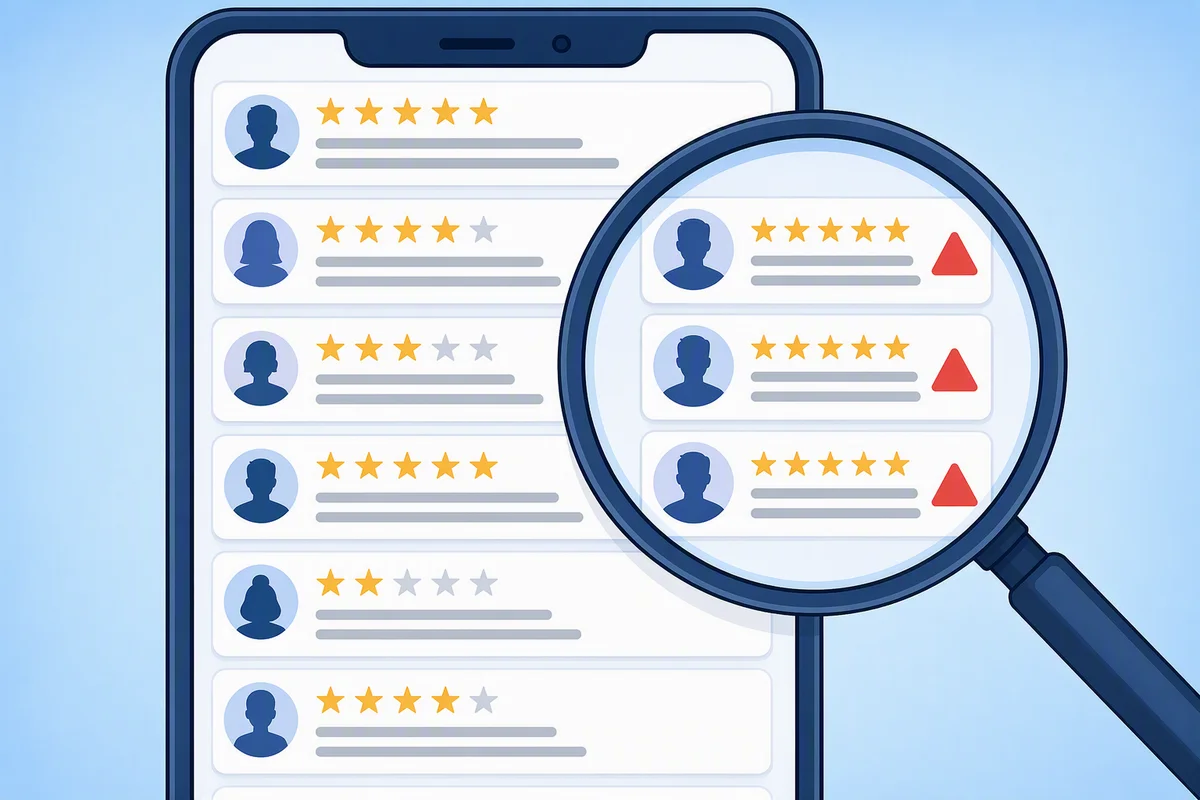
Old systems scanned for suspicious phrases like "great product." Fraudsters learned to avoid those. Modern review fraud detection looks at patterns instead. Google's 2026 Maps update targets coordinated spikes in abusive reviews and suspicious profile edits. The system flags a cluster of five-star reviews posted from the same IP range within minutes. That's a signal, not a coincidence.
Trustpilot's updated enforcement framework now prohibits review gating and selective solicitation. Their 2025 trust report shows 90% of fake reviews are caught by automated systems before anyone reads them. Amazon blocks 275 million suspected fake reviews annually by analysing reviewer-product clusters and shared infrastructure, as detailed in their latest actions against fake review brokers.
The Limits of Detection
No system catches everything. Cambridge University Press research warns about concept drift — fraudsters adapt faster than detection models update. A tactic that works today may fail tomorrow. That's why platforms invest in dedicated trust teams. Trustpilot appointed a Chief Trust Officer in 2025 to oversee enforcement.
Fake review fraud remains a cat-and-mouse game. The platforms are getting better, but businesses still need their own defences. For practical guidance on managing your reputation, read the guide on asking customers for reviews the right way. You can also compare top AI review management tools to see how technology helps you stay ahead.

Industries Most at Risk: Where Fraud Thrives and Why
Platforms are building better defences, but fraudsters follow the money. Some industries attract far more fake review fraud than others. The pattern is clear: where a single star rating can make or break a sale, manipulation thrives.
Industries Most at Risk
| Industry | Common Fraud Patterns | Why It's Vulnerable |
|---|---|---|
| Online retail & marketplaces | Purchased reviews, brushing schemes | Quality is invisible until purchase; conversion depends on ratings |
| Hotels, lodging & tourism | Competitor sabotage, review hijacking | Booking decisions rely almost entirely on star scores |
| Local services & home improvement | Fake profiles, purchased five-star reviews | High competition in small geographic areas |
| Professional services (law, accounting, real estate) | Selective solicitation, gating | Trust must be established before any transaction |
| Health, wellness & telehealth | Bought reviews, fake patient testimonials | Consumers seek reassurance for high-stakes decisions |
| Apps & digital services | Coordinated rating campaigns, astroturfing | App store rankings directly drive downloads |
Online Retail and Marketplaces
UK government research estimates 11-15% of product reviews are fake. Brushing schemes — where sellers ship empty boxes to generate verified purchases — are a known tactic. Amazon blocked 275 million suspected fake reviews in 2024 alone.
Hotels, Lodging, and Tourism
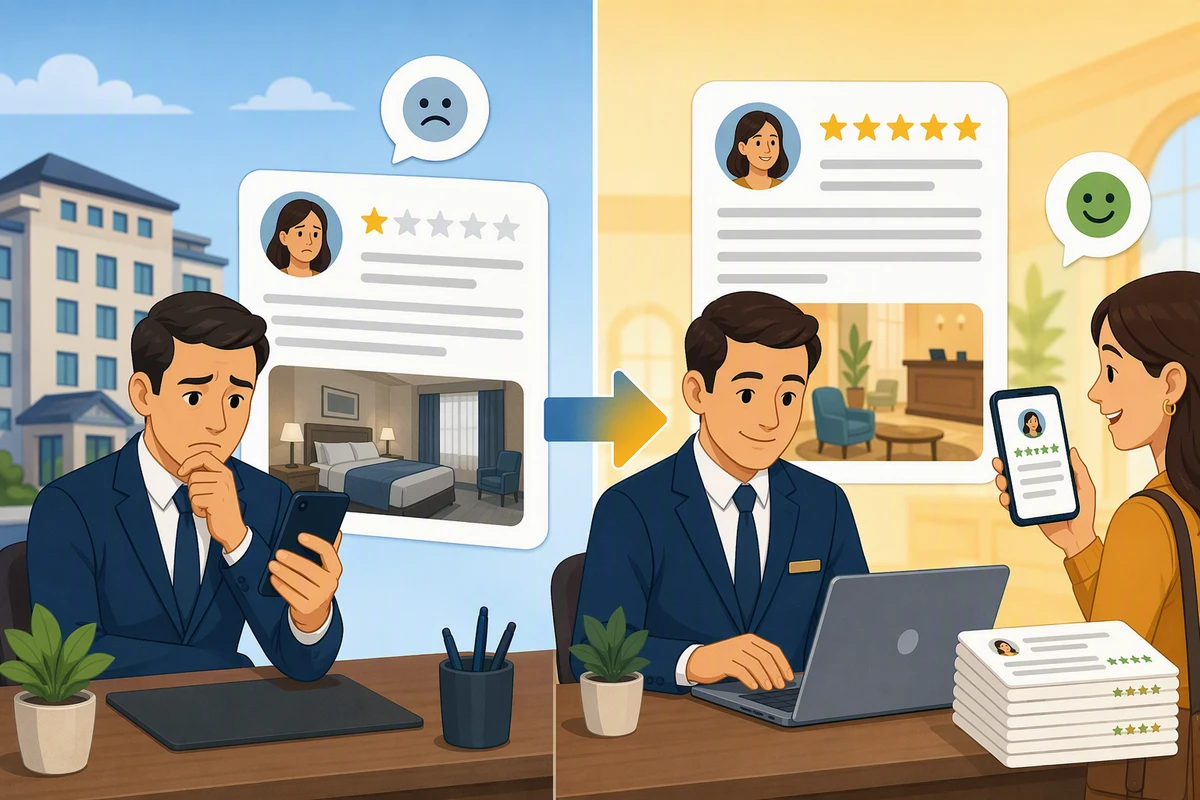
Academic research shows hospitality is especially vulnerable. A single point on a hotel's rating can shift revenue by 5-9%. Competitors post fake negative reviews to lower rivals' scores. Fake positive reviews inflate listings that don't deserve them.
Local Services and Home Improvement
The FTC's Premium Home Service case exposed over 15,000 fake Google Business Profiles. Local competition is concentrated. A few fake reviews can push a business to the top of search results. Consumers often hire based on ratings alone.
Professional and Advice-Based Services
Real estate agents, lawyers, and accountants sell trust before any measurable outcome. A client can't verify legal expertise before paying a retainer. Fake reviews fill that information gap with deception. For real estate professionals, managing reputation across platforms is critical — see the real estate review management guide.
Health, Wellness, and Telehealth
The FTC has pursued enforcement actions against telehealth companies using fake patient testimonials. Consumers making health decisions are especially vulnerable. A fake five-star review can steer someone toward an ineffective treatment.
What Businesses Can Do to Protect Their Reputation
Platforms fight a constant battle, but they cannot solve review fraud alone. Businesses need proactive defences. The most dangerous review may be a genuine five-star review that is unrepresentative—not a fabricated one. A single outlier can distort your average and mislead customers. That's where your own monitoring becomes essential.
Centralise Your Review Monitoring
Fraudsters target multiple platforms. You need a single dashboard to spot patterns. ReviewSense centralises feedback from Google Business Profile, Facebook, Apple App Store, and Google Play. This lets you compare review velocity across channels. A sudden spike on one platform while others stay flat? That's a red flag.
Catch Attacks Early with Instant Alerts
Coordinated fake review fraud often happens in waves. You cannot refresh every profile manually. ReviewSense sends instant alerts for new reviews. This lets you catch a suspicious cluster within minutes, not days. Early detection limits reputational damage.
Respond Fast with AI Assistance
Engagement signals authenticity. A business that ignores reviews looks vulnerable. ReviewSense's AI response generator helps you craft on-brand replies in seconds. This demonstrates active management, which platforms reward in local search rankings. It also reassures real customers that you care.
Analyse Sentiment and Flag Issues
Built-in sentiment analysis extracts key topics from every review. It flags recurring issues and detects spam or toxic content. This helps your team focus on genuine feedback that impacts retention. You stop wasting time on fabricated noise.
Act During Crisis with Alerts
Negative spikes demand immediate action. ReviewSense sends crisis alerts when sentiment drops sharply. This lets you investigate and respond before a fraud attack escalates. Speed matters when fake reviews flood your profile.
Start with Free Tools
You can begin protecting your reputation today. Use the Google Review Generator Tool to collect more authentic feedback. Access negative review response templates for consistent replies. Try the 5-Star Review Response Generator for quick wins.
Detection is an arms race. ReviewSense helps you stay ahead with transparent pricing and a 7-day free trial. Evaluate it now and take control of your reputation.
Conclusion
Review fraud costs businesses real revenue and erodes consumer trust. No platform eliminates it entirely. Your best defence is vigilance: centralised monitoring, instant alerts, and fast, authentic responses. ReviewSense turns scattered feedback into a single, actionable dashboard. It catches suspicious spikes, flags toxic content, and helps you respond with your brand voice in seconds. Don't leave your reputation to chance. Start your 7-day free trial and turn scattered reviews into actionable insights.