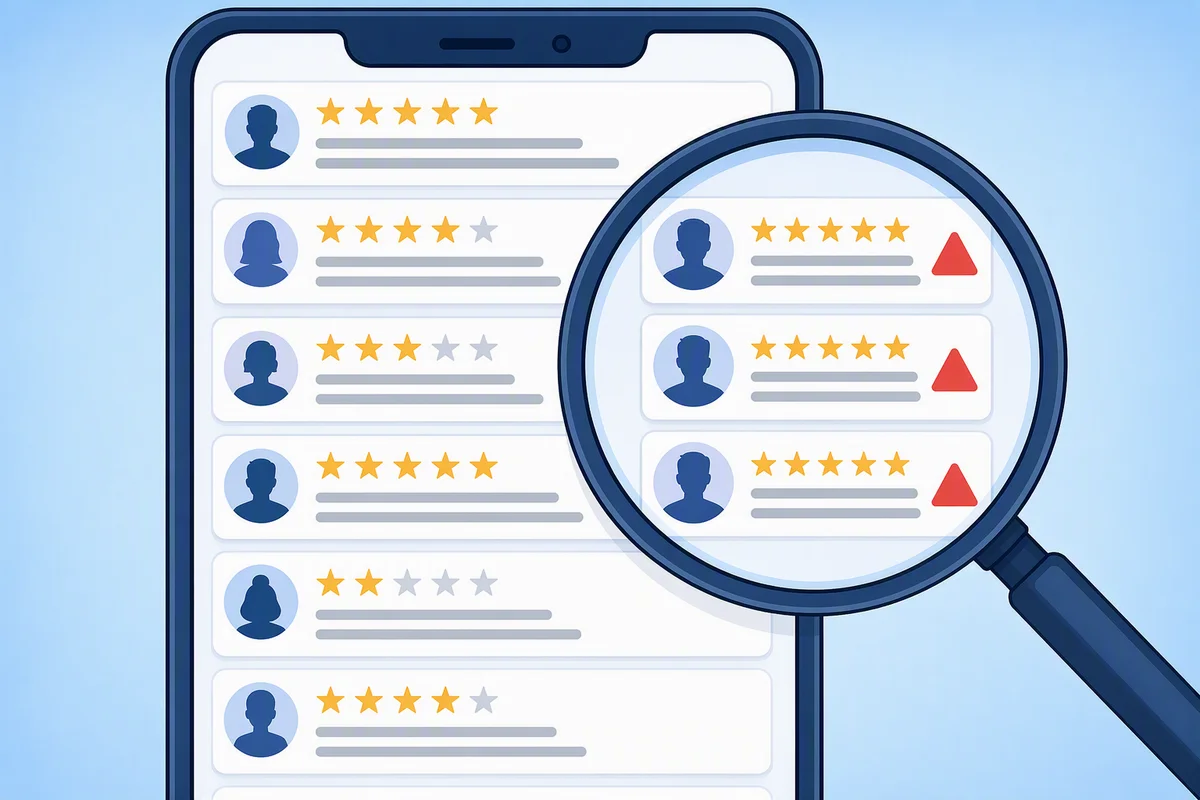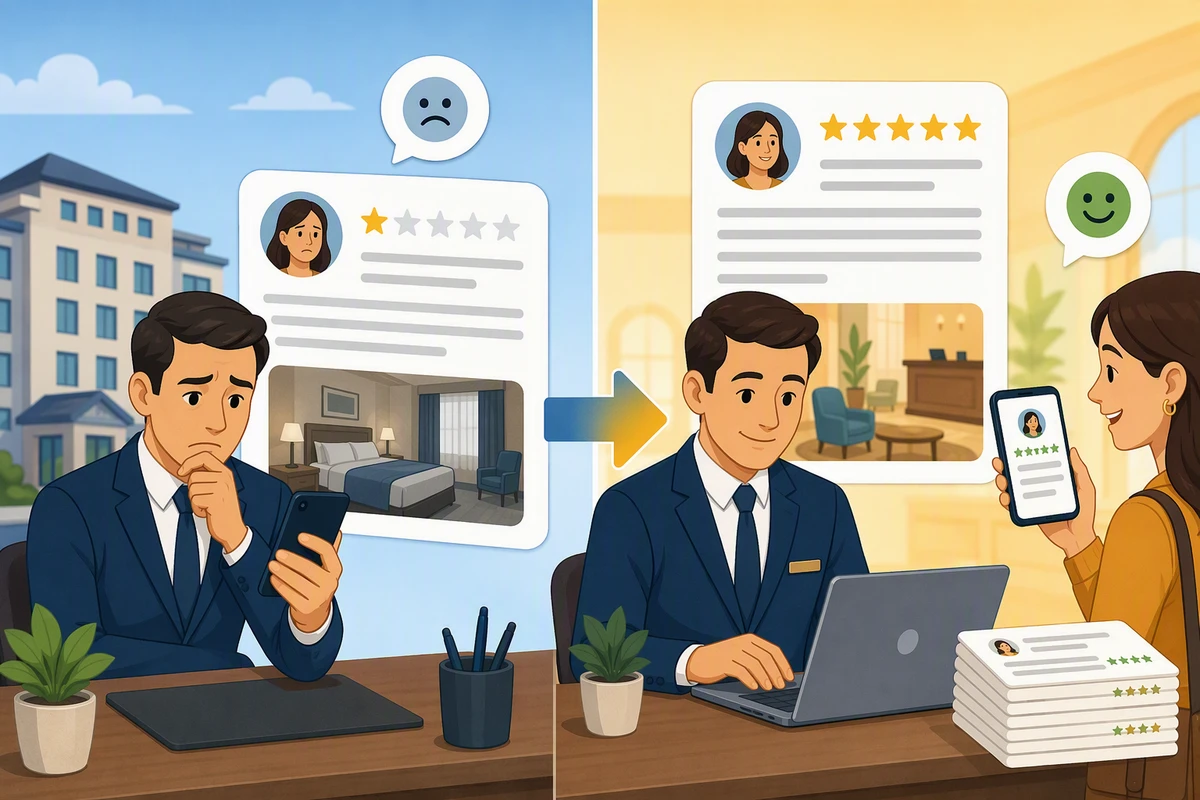
Google reported that it blocked or removed more than 292 million policy-violating reviews in 2025, alongside over 1 billion legitimate ones. But does Google remove fake reviews effectively enough to protect your business? The short answer: it catches coordinated campaigns and behavioural red flags well, but sophisticated fakes still slip through. Here’s what the detection system actually sees—and what it misses.
Managing this manually is hard. ReviewSense automates review monitoring and response, so you stay compliant without the headache.
We’ve linked these insights to the Customer Review Monitoring: Tools for Reputation Management guide, and you can also explore how to Get More 5-Star Google Reviews (Without Asking Awkwardly) or check Does Replying to Reviews Help SEO? 2026 Data Revealed. For a deeper dive, see the [Customer Review Management: Building Trust and Improving Ratings](/blog/customer-review-management-trust) article and the Ecommerce Review Management page.
How Google’s Fake Review Detection Actually Works—and Its Limits
So, can Google detect fake reviews? Yes, but the answer comes with important caveats. Google’s system is not a truth-verification tool. It’s a trust-and-abuse filter focused on behavioural patterns, not content accuracy.
The detection process works across four layers. Here’s how they break down:
| Detection Layer | What It Analyses | Example Trigger |
|---|---|---|
| Account-level behaviour | Connections to suspicious accounts, long-term history | A new account that only reviews competitors |
| Reviewing patterns | Sudden spikes, duplicated activity | 50 five-star reviews posted in one hour |
| Place-level anomalies | Unusual rating shifts for a single location | A 4.8-star café drops to 2.1 stars overnight |
| Human review | Complex, borderline cases | A review with subtle fake claims but normal patterns |
Google’s enforcement numbers show the scale. From 2024 to 2025, it increased by approximately 22%, from more than 240 million to 292 million reviews blocked or removed. Separately, 15.4% of all reviews contributed were classified as fake or misleading, with 782,000 accounts restricted. Google does not disclose precision or recall rates, so we don’t know how many fakes slip through.
In April 2026, Google announced pre-publication fraud prevention and Gemini-powered detection. This means some reviews never go live. The system catches coordinated networks well. It struggles with isolated, well-written fakes that look organic.
Does Google remove fake reviews? Yes, but only those that trigger its behavioural filters. A single fake review from a clean account with normal typing patterns can survive. That’s the limit. Google’s strength is volume detection, not truth verification. For businesses, this means monitoring your Google Business Profile remains essential. You cannot rely on Google alone to catch everything.

What Google Catches Best: Coordinated Campaigns and Behavioural Red Flags
That behavioural focus explains why Google excels at catching coordinated attacks. Its systems flag patterns that look unnatural, not individual lies. Here is what Google detects best and why.
| What Google Catches | How It Detects It | Why It Works |
|---|---|---|
| Coordinated review campaigns | Sudden rating spikes from linked accounts | Volume creates a clear signal |
| Review-extortion schemes | Repeated demands for payment in exchange for edits | Text patterns + account history |
| Fake business listings | Address, phone, and category mismatches | 13 million removed in 2025 alone |
| Accounts with repeated violations | Cross-location abuse history | Behavioural scoring over time |
Coordinated campaigns are Google's strength. A business that posts 50 five-star reviews in one hour triggers an obvious anomaly. Google's system flags the spike and removes the batch. The FTC's 2024 final rule banning fake reviews gave regulators more power. In May 2026, the FTC charged Premium Home Service with orchestrating a multi-signal scheme involving fake accounts and paid reviews. Google's detection caught the behavioural clues before the FTC acted.
Review-extortion schemes also leave traces. A reviewer who demands a refund or gift card in exchange for deleting a negative review creates a text pattern. Google's filters spot the language. The account gets restricted.
Fake listings are a separate problem. Google removed 13 million fake business profiles in 2025. It cross-checks addresses, phone numbers, and categories against official records. A listing that claims to be a plumber but uses a residential address gets flagged.
What Google misses matters more. Single fake reviews from clean accounts often survive. AI-generated text without behavioural clues slips through. The Yelp 2026 Trust & Safety Report found 500,000 AI-generated reviews on its platform. Brushing scams—where sellers ship empty packages to generate verified purchases—use real identities. The FTC warned about this in August 2026.
Detection is probabilistic, not absolute. Google does not catch every fake. It only needs to make manipulation unreliable as a business strategy. When the cost of getting caught exceeds the benefit, most bad actors stop. That is the real goal: deterrence, not perfection.

Why Most Articles Get Google’s Fake Review Detection Wrong
That probabilistic reality explains why most articles on the topic get the details wrong. Here are eight myths versus what Google’s system actually does.
| Myth | Reality |
|---|---|
| 1. Detection is text analysis | It’s behavioural. Patterns matter more than words. |
| 2. Speculative signals are confirmed rules | Google confirms very few signals. Most are SEO folklore. |
| 3. Positive reviews can’t be fake | Paid or coordinated positive reviews violate policy. |
| 4. Detection is immediate and final | Reviews can be revisited months later. |
| 5. False positives don’t happen | Legitimate campaigns can look suspicious. |
| 6. Removal is the only consequence | Profile restrictions and account bans also occur. |
| 7. Google removal equals legal safety | The FTC Consumer Reviews Rule applies regardless. |
| 8. AI-written reviews are the main threat | Purchased reviews and coordinated accounts are more detectable. |
Myth 1: Detection is text analysis
Most coverage claims Google scans review content for lies. It doesn’t. The system analyses account history, posting speed, and device fingerprints. A glowing review from a new account that only reviews competitors gets flagged. The same text from a ten-year account with normal patterns survives.
Myth 2: Speculative signals are confirmed rules
Blogs often list “confirmed” signals like IP matching or browser fingerprinting. Google rarely confirms specifics. Most claims are SEO folklore. The FTC’s 2024 final rule banning fake reviews doesn’t dictate Google’s signals either.
Myth 3: Positive reviews can’t be fake
Businesses sometimes pay for five-star ratings. That violates Google’s policy. A coordinated spike of positive reviews from new accounts triggers removal. The system treats fake praise the same as fake criticism.
Myth 4: Detection is immediate and final
Google can revisit reviews months after publication. A review that passes initial checks may get removed later when linked accounts show abuse. There’s no statute of limitations.
Myth 5: False positives don’t happen
Legitimate campaigns—like a launch event where customers post reviews—can look like coordinated attacks. Google’s system may remove them. The burden falls on the business to appeal.
Myth 6: Removal is the only consequence
Google restricts accounts and bans profiles. In 2025, it restricted 782,000 accounts. A single violation can cost a business its entire listing history.

Industries Most Vulnerable to Fake Reviews—and What Google Misses
That probabilistic reality hits some industries harder than others. Sectors with high review volume and local competition face the biggest gaps in Google's detection. Here is how the vulnerability breaks down.
| Sector | Why fakes are common | Google's detection gap | Economic stakes |
|---|---|---|---|
| Restaurants | High volume + short customer relationships | Single fake reviews from clean accounts survive | A single star drop can meaningfully dent annual revenue |
| Hotels | Booking sites cross-post reviews | Google misses cross-platform manipulation | Reputation directly drives booking conversion |
| Home services | One-time purchases with no repeat customers | Brushing scams using real addresses slip through | FTC fined Premium Home Service for fake scheme |
| Healthcare | Patients fear retaliation for negative reviews | Google cannot verify treatment outcomes | Licensing boards monitor online reputation |
| Legal | Competitors post fake negative reviews | Text analysis misses sophisticated AI content | Client trust hinges on star ratings |
| Real estate | Agents buy reviews to win listings | Google misses coordinated campaigns across markets | Commission income tied to online presence |
| Automotive | Dealerships face review extortion | Extortion text patterns evolve faster than filters | FTC rule applies to dealer review practices |
| Beauty | High competition for local search | Google misses fake accounts with normal behaviour | Appointment bookings depend on ratings |
| E-commerce | Sellers ship empty packages for verified reviews | Real identities used in brushing scams | UK government found 15% of reviews were fake |
| Education | Students post fake reviews for rival institutions | Google cannot verify academic claims | Enrolment decisions influenced by reviews |
| Travel | Seasonal businesses need quick reputation boosts | Google misses AI-generated content at scale | 500k AI reviews found on Yelp in 2026 |
Seven common traits make these sectors vulnerable
Every sector above shares a pattern. High review dependence means one bad review hurts. Local-search competition creates incentive to cheat. One-time purchases mean no repeat customers to balance the score. Low switching costs let customers walk. Thin margins make a single fake review costly. Emotional purchase decisions amplify reputation risk. And regulatory gaps mean Google is often the only gatekeeper.
How to Protect Your Business From Fake Reviews—Without Crossing the Line
That probabilistic reality means your business can’t rely on Google alone. The system catches patterns, not every fake. You need a strategy that protects your reputation without violating platform rules.
Here is a practical framework for ethical defence.
| Step | Action | Why it works |
|---|---|---|
| 1 | Monitor all supported platforms from one place | Spotters spot coordinated attacks across channels |
| 2 | Use sentiment analysis to flag spam patterns | Catches fake text that Google’s behavioural model misses |
| 3 | Respond to every review promptly | Shows engagement and deters extortionists |
| 4 | Never incentivise or gate feedback | Keeps you compliant with Google’s policy on prohibited practices |
| 5 | Preserve transaction records | Provides evidence to contest fake reviews |
| 6 | Track review velocity with crisis alerts | Detects negative spikes before they damage your rating |
Step 1: Centralise your oversight. Fake reviews often hit multiple platforms at once. A coordinated attack on your Google Business Profile may also target your Facebook page. You need a single dashboard to spot the pattern. Tools like ReviewSense centralise feedback from Google, Facebook, and app stores into one view, with instant alerts when new reviews appear.
Step 2: Analyse sentiment for recurring issues. Sentiment analysis flags toxic content and recurring complaint themes. It helps you distinguish genuine customer frustration from coordinated spam. The Google support page on prohibited content confirms that fake reviews violate policy, but detection is imperfect. Your own analysis fills the gap.
Step 3: Respond to all reviews promptly. A fast, on-brand reply shows you care about feedback. It also signals to potential extortionists that you monitor your profile actively. Most attackers move on when they see engagement.
Step 4: Never incentivise or gate feedback. Google’s policy bans offering discounts or gifts in exchange for reviews. It also prohibits review gating—selectively asking only happy customers to leave feedback. Both practices violate the rules and can trigger account restrictions.
Step 5: Keep transaction records. When a fake review appears, you need evidence to contest it. Save receipts, appointment confirmations, and communication logs. Google’s appeals process works best with concrete proof.
Conclusion
Google catches patterns, not every fake. Your business needs its own defence. Centralised monitoring spots coordinated attacks across platforms. Sentiment analysis catches what behavioural models miss. Prompt responses deter extortionists. Transaction records provide evidence for appeals. These steps protect your reputation without violating platform rules. ReviewSense turns scattered reviews into actionable insights that improve customer experience and drive growth. Start your 7-day free trial.