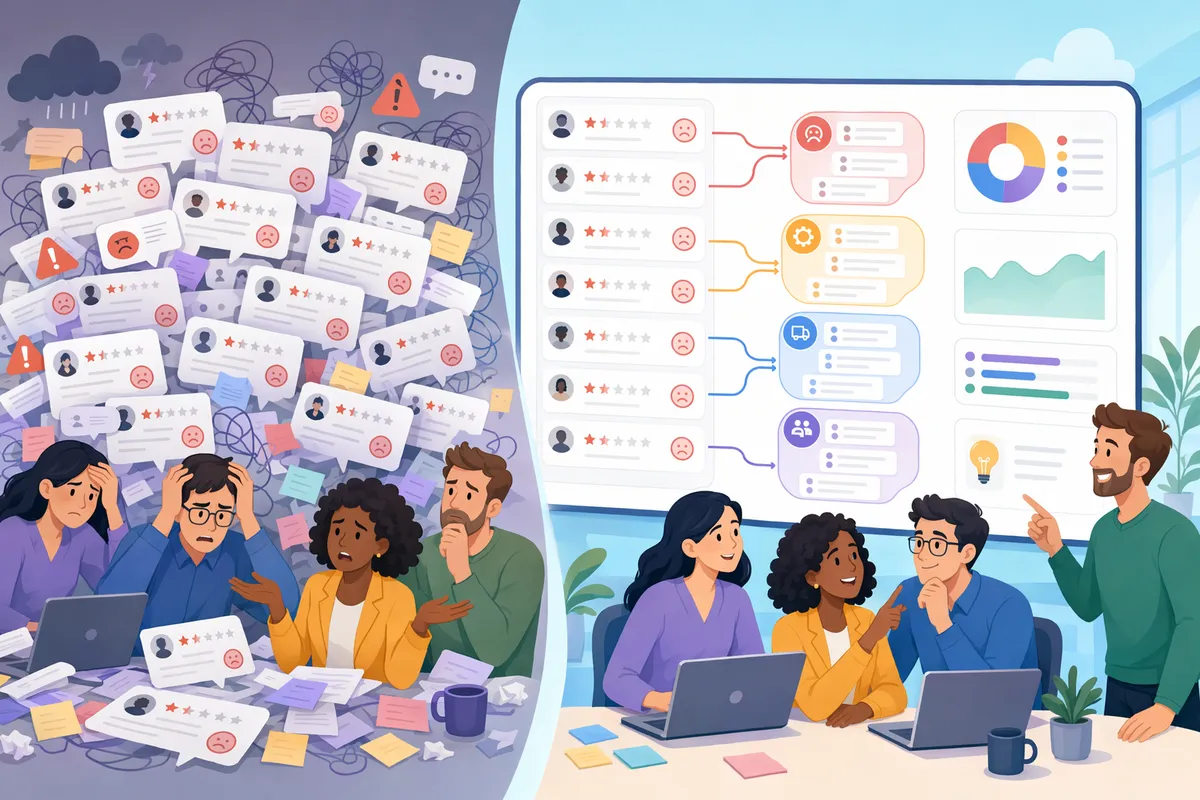
Are you losing thousands of daily downloads to unmanaged negative feedback?
Most developers treat app ratings as an afterthought, but your reputation directly dictates your visibility and conversion rates. Tracking feedback across multiple platforms manually is an impossible task. If you aren't actively monitoring and responding to user comments, you're handing competitors a massive advantage.
Managing this manually drains resources, but dedicated App Store Review Management software like ReviewSense automates your entire feedback loop. Teams running both iOS and Android usually want our cross-store mobile app review management workflow rather than two separate tools.
The Evolution and Impact of App Store Review Management Software
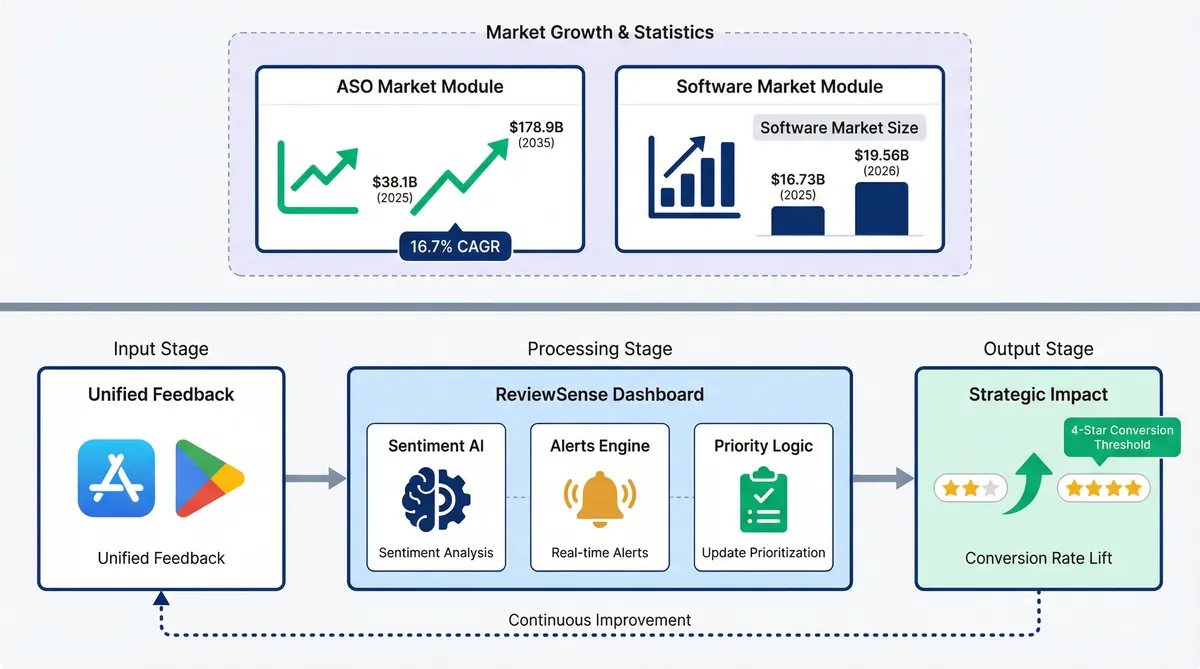
The mobile application market has grown into a highly competitive space. Developers face intense pressure to stand out among millions of alternatives on the Apple App Store and Google Play. This fierce competition drives massive investment in optimisation. The global market for App Store Optimisation tools is estimated at $38.1 billion in 2025. Projections show this reaching $178.9 billion by 2035 at a 16.7% CAGR.
User feedback dictates app success. Nearly all consumers read comments before committing to a download. The difference between a three-star and four-star average rating creates a massive shift in conversion rates. Each additional star generates a noticeable revenue lift. Falling below this four-star threshold often means losing potential users to direct competitors.
Manual tracking isn't viable for development teams. The broader feedback and reviews management software market reflects this shift. It is valued at $16.73 billion in 2025 and projected to hit $19.56 billion in 2026. Teams need efficient ways to handle high volumes of user input. Dedicated appstore review management software replaces messy spreadsheets with streamlined workflows.
Centralised dashboards protect your conversion rates. ReviewSense pulls feedback directly from both major app stores into one unified workspace. You receive instant alerts for new ratings. This allows your team to address bugs fast and maintain a positive brand image. If you need help comparing options, the guide on Google Play Store Review Management Software: Comparing Features and Platforms offers detailed insights.
Automated sentiment analysis highlights recurring issues. This helps developers prioritise essential updates. You can try these features by visiting the Sign Up page for a free trial. Managing your digital reputation becomes a predictable process.
Essential Features of Modern App Store Review Management Software
Moving beyond basic sentiment tracking requires tools built for modern development cycles. As of early 2026, there are approximately 1.81 million apps on the Apple App Store and 1.66 million on Google Play. Standing out among these options means maintaining high ratings.
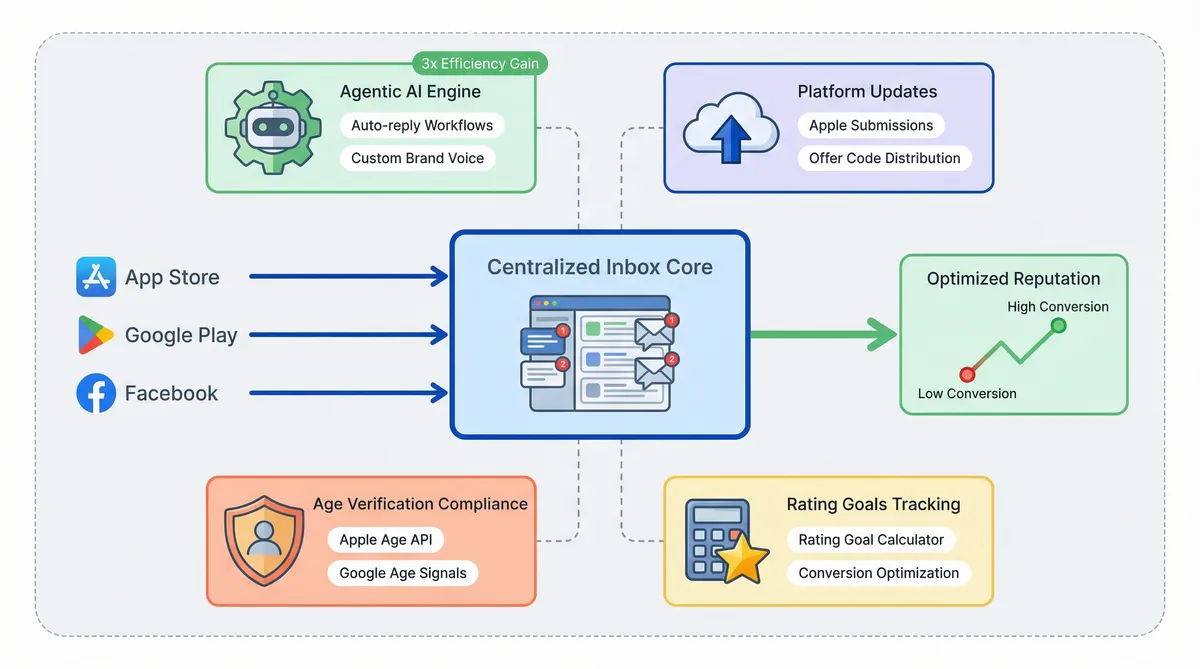
Conversion for 3-star apps plummets to 0.57, representing a 43% loss in potential users. To prevent this drop, developers need appstore review management software that handles complex workflows. ReviewSense provides a centralised inbox exclusively for the Apple App Store, Google Play, Google Business Profile, and Facebook. This unified approach saves valuable time.
- Agentic AI vs. Generative AI: Modern systems do more than draft text. Agentic AI takes autonomous actions based on your rules. It handles 3x more reviews than manual drafting. ReviewSense uses an AI response generator to maintain your custom brand voice while executing auto-reply workflows. If you need help crafting manual replies, try the Negative Review Response Generator.
- Platform-Specific Updates: App stores update their promotional tools. You'll need software that tracks Apple's Independent Submissions. It should distribute new Offer Codes through review replies. This direct approach helps win back unhappy users.
- Age Verification Compliance: Handling minor accounts is now mandatory. Top platforms integrate Apple's Declared Age Range API and Google's Play Age Signals API. This ensures your team interacts with young users within legal boundaries. Protecting user privacy builds long-term trust.
You can track your rating goals using the How Many 5-Star Reviews Calculator. This keeps your team focused on growth. Managing feedback requires the right technical foundation.
The Hidden Benefits (and Contrarian Traps) of Managing Reviews
Building on that technical foundation means navigating unexpected pitfalls. Conventional wisdom fails when applied to modern app stores. What worked yesterday might harm your ratings today. Let's examine the hidden traps of managing user feedback.
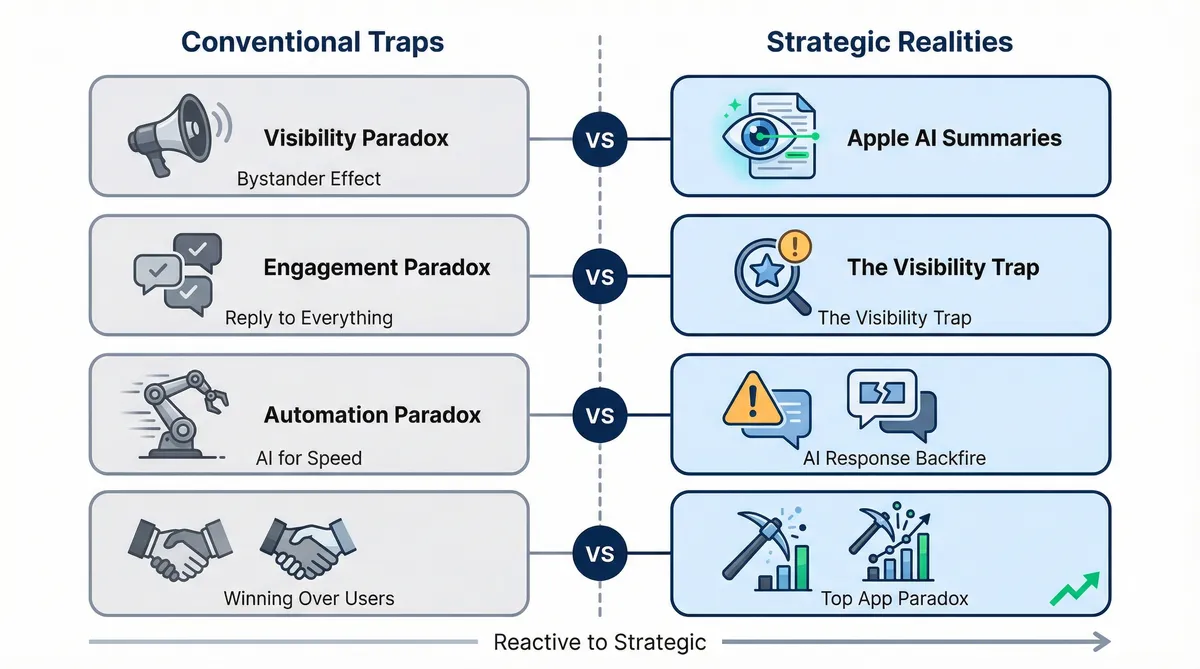
| Standard Advice | Contrarian Reality |
|---|---|
| The Bystander Effect: Public replies show future users you care. | Apple iOS 18.4 AI Summaries: Individual replies get buried under AI-generated overviews. |
| Reply to Everything: Acknowledge every piece of feedback. | The Visibility Trap: Replying to a 1-star review can boost its algorithmic ranking. |
| Using AI for Speed: Automate everything to save time. | AI response Backfire: Robotic replies frustrate users, causing them to lower ratings. |
| Winning Over Users: Focus on changing individual minds. | Top App Paradox: Top developers prioritise review mining for product insights over individual replies. |
These traps highlight why blind automation is dangerous. The stakes are high. Moving an app from 3 to 4 stars in 2025 results in an average 89% increase in conversion rates. A one-star rating boost is correlated with a 5% to 9% increase in total revenue. You cannot afford unforced errors.
Effective App Store Review Management requires precision. ReviewSense helps you avoid the visibility trap. Built-in sentiment analysis extracts key topics while ignoring toxic content. You can focus on genuine feedback instead of engaging with trolls. This keeps harmful comments buried.
Generic automation causes the AI response backfire. Users spot canned text instantly. ReviewSense solves this with a personalised AI response generator. It crafts on-brand replies that feel human. If you are Using AI review Response Generators to Improve Online Reputation, customisation is vital.
Top developers understand the top app paradox. They use appstore review management software to mine data. ReviewSense flags recurring issues automatically. Your team can fix bugs rather than arguing with users. This strategic approach drives real growth.
4 Steps to Selecting the Right App Store Review Software
Transitioning from data mining to actual procurement requires a clear strategy. Selecting the right appstore review management software demands careful evaluation of security, features, and pricing models. You must align your technical requirements with your long-term business goals.
Prioritise Platform Alignment and Security: Your chosen platform must protect customer data at all times. The regulatory failure of App Annie serves as a stark warning about poor data practices. Ensure your software complies with strict privacy standards while directly integrating with Google Play and the Apple App Store.
Demand Sentiment-to-Revenue Mapping and Multilingual Support: Global non-game app revenue is growing at record pace. You need tools that translate feedback across borders. Connecting user sentiment to revenue metrics helps justify development costs. This ensures your team builds features that paying users want, rather than chasing empty vanity metrics.
Look for a Voice of Customer Focus: Transforming feedback into a product roadmap is vital for retention. 95% of users read reviews before downloading, and 56% specifically prefer apps where developers respond. Teams using AI-powered tools like AppFollow or Appbot report handling 3x more reviews without increasing headcount. This efficiency turns raw comments into actionable insights.
Test Before Committing: Don't sign a long contract without testing the workflow first. Look for transparent pricing and accessible trials. ReviewSense offers a 7-day free trial so you can evaluate its impact without high-pressure sales tactics. You can explore free utilities like the Star Rating Calculator to see immediate value. For a broader perspective, read the guide on Review Management Software: Key Features, Use Cases, and Selection Tips.
Expert Strategies for Maximizing Your App's Reputation
Once you secure the right tools, execution separates top apps from forgotten ones. AppTweak's 2025 ASO Benchmark reveals a harsh reality for struggling developers. Apps sitting below 3.5 stars rank for three times fewer keywords, meaning your organic visibility drops instantly. You need proactive tactics to maintain momentum and drive downloads.
Timing your prompts changes everything. Growth expert Steve P. Young suggests triggering review requests directly after paywalls because paying users show high investment. Consultant Thomas Petit adds another layer to this strategy. He views appstore review management software as a defensive shield that protects your brand from rival apps.
Product manager Yaroslav Rudnitskiy advises turning noisy feedback into your next sprint's roadmap. Speed matters when addressing these user concerns. 85% of teams using AI automation see a significant reduction in response times within the first week. You can use a 5-Star Review Response Generator to handle common queries, which frees developers to fix core issues.
ReviewSense serves as an execution engine for these strategies. The platform tracks review velocity across all major platforms. Crisis alerts notify teams about negative spikes so they can take swift action before ratings plummet.
Mastering Google Play Review Management requires constant vigilance. You must monitor sentiment trends daily to stay ahead of the competition. Transforming scattered comments into actionable data drives sustainable product growth. Your app's survival depends on turning criticism into a competitive advantage.
Conclusion
Managing your app's reputation requires more than just reading feedback; it demands a proactive strategy. As we've explored, mapping sentiment to development goals and responding swiftly are non-negotiable for maintaining high rankings. Apps that fall below a 3.5-star rating suffer severe visibility drops, making a reliable review management system essential for survival. By using AI automation and strategic review prompts, your team can resolve issues faster and focus on building features your users actually want.
ReviewSense equips you with the tools to centralize feedback from the Apple App Store and Google Play, track sentiment trends, and generate personalized, on-brand replies in seconds. Stop letting valuable feedback slip through the cracks. Turn scattered reviews into actionable insights that improve customer experience and drive growth when you Start your 7-day free trial.