
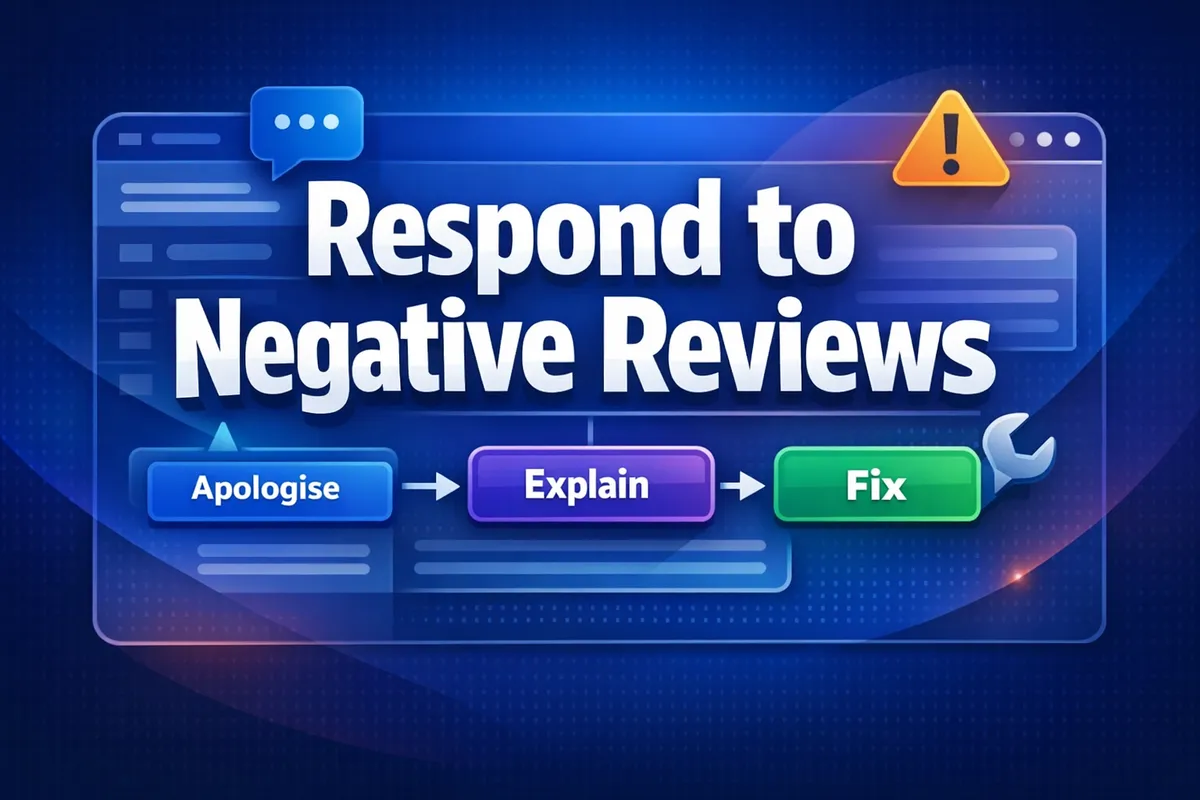
Negative reviews feel personal, but your response isn't really for the reviewer—it's for everyone who reads it afterwards. Research shows that how you respond to criticism significantly impacts whether future customers choose your business. The question isn't whether to respond, but how: should you apologise, explain, or focus on the fix?
For businesses managing high volumes of negative reviews, ReviewSense offers AI-powered response suggestions that strike the right balance between empathy and action.
What Research Says About Apologies and Trust
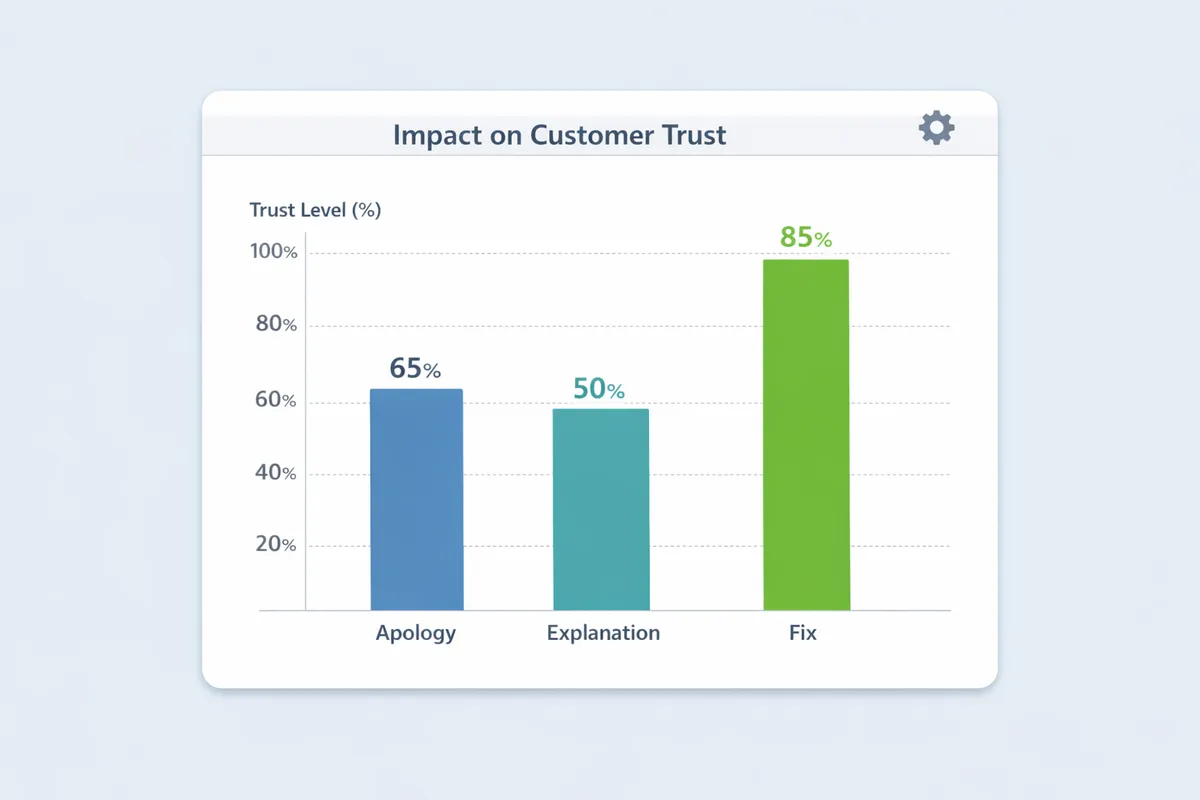
Studies on service recovery have consistently found that apologies play a crucial role in rebuilding customer trust. When businesses acknowledge mistakes sincerely, customers are more likely to give them a second chance—and third-party observers (potential customers reading the review) form positive impressions of the business.
Key findings from consumer behaviour research:
- Apologies increase purchase intention – Customers who see businesses apologise for failures are significantly more likely to consider purchasing
- Explanations help when legitimate – Providing context (not excuses) helps customers understand extenuating circumstances
- Action statements build confidence – Describing what you'll do differently signals commitment to improvement
- Defensive responses backfire – Arguing with reviewers damages perception among third-party readers
The most effective response combines all three elements: acknowledge the problem, provide appropriate context, and describe the action you're taking.
The 3-Part Response Framework
Based on research and practical experience, the most effective negative review responses follow this structure:
Part 1: Acknowledge and Apologise
Start by validating the customer's experience. Even if you disagree with their assessment, their feelings are real.
Good acknowledgment:
"I'm sorry your experience didn't meet your expectations. That's not the standard we aim for."
Poor acknowledgment:
"We're sorry you feel that way."
The difference? The first takes ownership. The second implies the problem is the customer's perception, not your performance.
Part 2: Explain (When Appropriate)
Context can help readers understand unusual circumstances—but only when it's genuinely relevant and doesn't sound like an excuse.
Appropriate explanation:
"We were unexpectedly short-staffed due to a family emergency that day, which contributed to the longer wait times."
Inappropriate explanation:
"We've been very busy lately, so some delays are to be expected."
When to explain:
- Unusual circumstances affected the experience
- External factors beyond your control were involved
- Clarifying a misunderstanding (carefully, without being defensive)
When NOT to explain:
- The problem was clearly your fault
- The explanation sounds like an excuse
- You're tempted to blame the customer
Part 3: State the Action
Tell the reader what you're doing about the problem. This transforms your response from damage control into trust-building.
Strong action statements:
"I've already spoken with our team about this and implemented additional quality checks." "We've adjusted our staffing schedule to prevent this from happening during peak hours." "I'd like to personally make this right—please contact me at [email]."
Weak action statements:
"We'll try to do better." "We'll look into this." "We'll take your feedback on board."
Specificity matters. Vague promises sound like PR. Concrete actions demonstrate genuine commitment.
Response Templates by Situation
Here are proven templates for common negative review scenarios:
Service Failure (Your Fault)
Hi [Name],

I sincerely apologise for your experience. You're right—[specific issue they
mentioned] fell well below our standards, and I understand your frustration.

I've personally reviewed what happened and have [specific action taken] to
ensure this doesn't happen again. We take every piece of feedback seriously
because customers like you help us improve.

I'd welcome the chance to make this right. Please reach out to me directly
at [email/phone], and I'll personally ensure your next visit reflects the
experience we're known for.

[Your name]
[Title]
External Factor (Not Your Fault, But Affected Experience)
Hi [Name],

Thank you for sharing your feedback. I'm sorry that [external factor] impacted
your experience with us.

While [brief, non-defensive explanation of circumstance], that doesn't change
the fact that your visit wasn't what you hoped for. We should have [what you
could have done differently].

We'd genuinely appreciate another chance to show you the experience we
normally deliver. Please contact us at [email] if you'd be willing to
give us that opportunity.

[Your name]
Misunderstanding (Customer Expected Something Different)
Hi [Name],

Thank you for taking the time to share your thoughts. I'm sorry there was
confusion about [issue].

To clarify, [factual explanation without being condescending]. I can see how
this might not have been clear, and we're [action to improve communication].

I'd be happy to discuss this further or find a way to make it right for you.
Please reach out at [email]—I'm here to help.

[Your name]
Legitimate Complaint About Recurring Issue
Hi [Name],

I appreciate you bringing this to our attention, and I apologise for
[specific issue]. You're not the first to mention this, and that tells me
we need to do better.

Here's what we're doing about it: [specific actions being taken]. We expect
to see improvement by [timeframe if appropriate].

Your feedback genuinely helps us improve. If you're willing to give us
another try after we've made these changes, I'd be grateful—and I'd love
to hear if you notice the difference.

[Your name]
Decision Tree: Choosing Your Response Type
Use this framework to decide how to balance apology, explanation, and action:
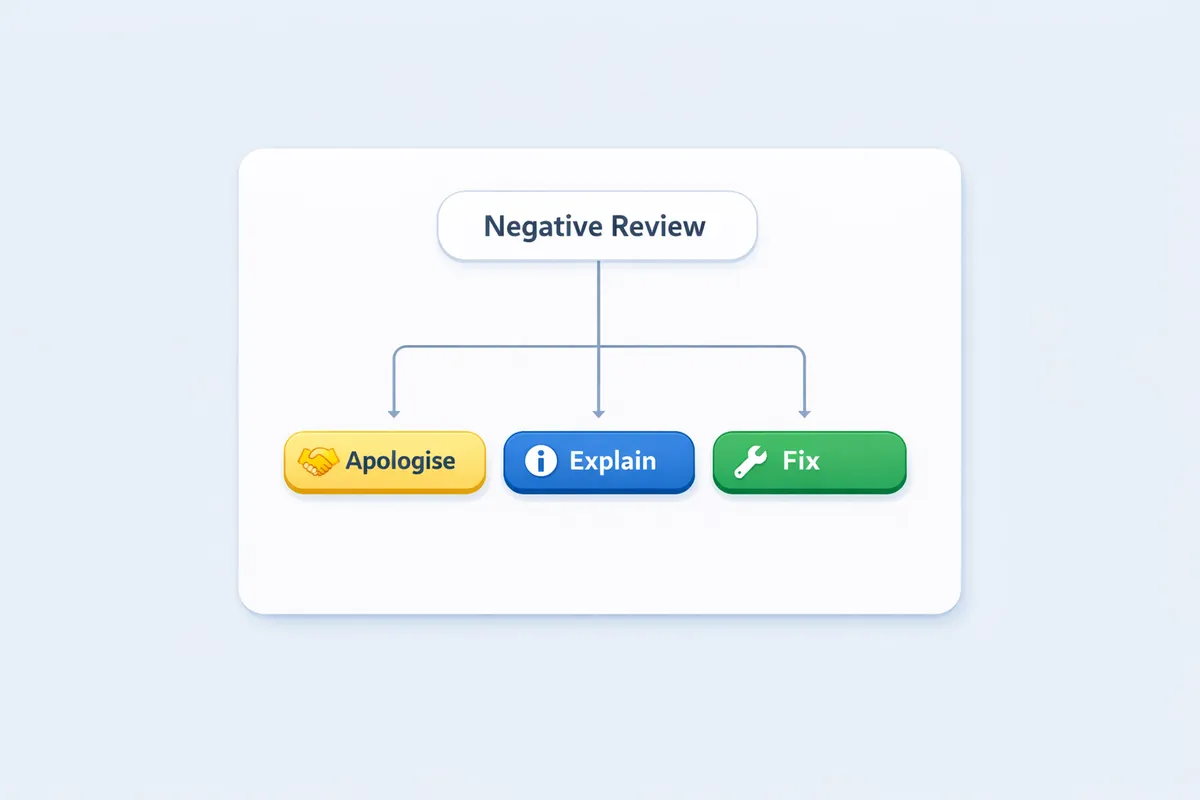
Question 1: Was it your fault?
Yes → Lead with a strong apology. No explanations that sound like excuses.
No → You can include context, but still acknowledge the customer's disappointment.
Question 2: Is it a safety or legal issue?
Yes → Keep the response brief. Acknowledge concern, invite offline discussion, don't admit liability. Consult legal counsel if needed.
No → Proceed with standard response framework.
Question 3: Is this a recurring pattern?
Yes → Acknowledge the pattern. Describe systemic changes you're making, not just individual fixes.
No → Focus on resolving this specific incident.
Question 4: Can you actually fix it?
Yes → Offer a specific remedy (refund, redo, discount on next visit).
No → Focus on preventing recurrence and invite them back to see the improvement.
Before and After: Rewriting Poor Responses
Example 1: Defensive Response
Before (Poor):
"We're sorry you feel this way, but we were extremely busy that night and did our best. Perhaps your expectations were unrealistic for a Friday evening."
After (Improved):
"I'm sorry your experience on Friday didn't meet our standards. You're right that the wait was too long—being busy isn't an excuse for poor service. I've reviewed our Friday staffing and made adjustments to prevent this in future. I'd genuinely appreciate the chance to show you a better experience. Please email me at [address] for a complimentary appetizer on your next visit."
Example 2: Generic Response
Before (Poor):
"Thank you for your feedback. We apologize for any inconvenience. We will try to do better."
After (Improved):
"Thank you for sharing this, [Name]. I apologise that our team's communication fell short during your appointment. Clear explanations are fundamental to what we do, and I've already discussed this with the staff member involved. I'd welcome the opportunity to personally oversee your next visit—please contact me directly at [email]."
Example 3: Argumentative Response
Before (Poor):
"Actually, our records show that your order was delivered on time. Perhaps you should check your delivery instructions."
After (Improved):
"I'm sorry the delivery didn't arrive as expected, [Name]. I've looked into this and can see [what happened]. While our systems showed [facts], I understand that doesn't change your experience of waiting. Let me make this right—please reach out at [email] and I'll ensure your next order is prioritised, along with [compensation]."
What Never to Do in a Negative Review Response
Avoid these response mistakes that damage your reputation:
- Never argue publicly – Even if you're right, you look petty
- Never question the customer's honesty – Implies they're lying
- Never mention competitors – Draws unwanted comparisons
- Never use copy-paste responses – Readers notice and it feels dismissive
- Never respond in anger – Write a draft, wait an hour, then revise
- Never ignore the review – Silence implies you don't care
How ReviewSense Helps With Negative Review Responses
Crafting the perfect response to every negative review is time-consuming, especially when emotions are involved. ReviewSense helps you respond effectively:
- AI Response Suggestions – Generate contextually appropriate responses that balance empathy with professionalism
- Tone Analysis – Ensure your responses don't come across as defensive or dismissive
- Template Library – Access proven response frameworks for common scenarios
- Response Tracking – Monitor which response approaches lead to review updates or customer returns
- Real-Time Alerts – Get notified immediately when negative reviews appear so you can respond quickly
With ReviewSense, you spend less time crafting individual responses and more time on the operational improvements that prevent negative reviews in the first place.
Turn Criticism Into Trust
A negative review handled well can actually strengthen your reputation. When potential customers see you respond with genuine empathy, concrete action, and professional grace, they're more likely to trust you—even more than if the negative review didn't exist.
The formula is simple: Acknowledge + (Explain when appropriate) + Act = Trust
Start applying this framework today. Your next negative review isn't just a problem to manage—it's an opportunity to demonstrate what kind of business you really are.
Wondering whether you should respond to every review, or just the negative ones? Our guide on review response policy helps you build a sustainable approach that protects your reputation without burning out your team.
![10 Best Review Management Software for 2026 [Expert Comparison]](/_next/image?url=%2Fimages%2Fposts%2Fbest-review-management-software-2026-featured.webp&w=3840&q=75 "10 Best Review Management Software for 2026 [Expert Comparison]")