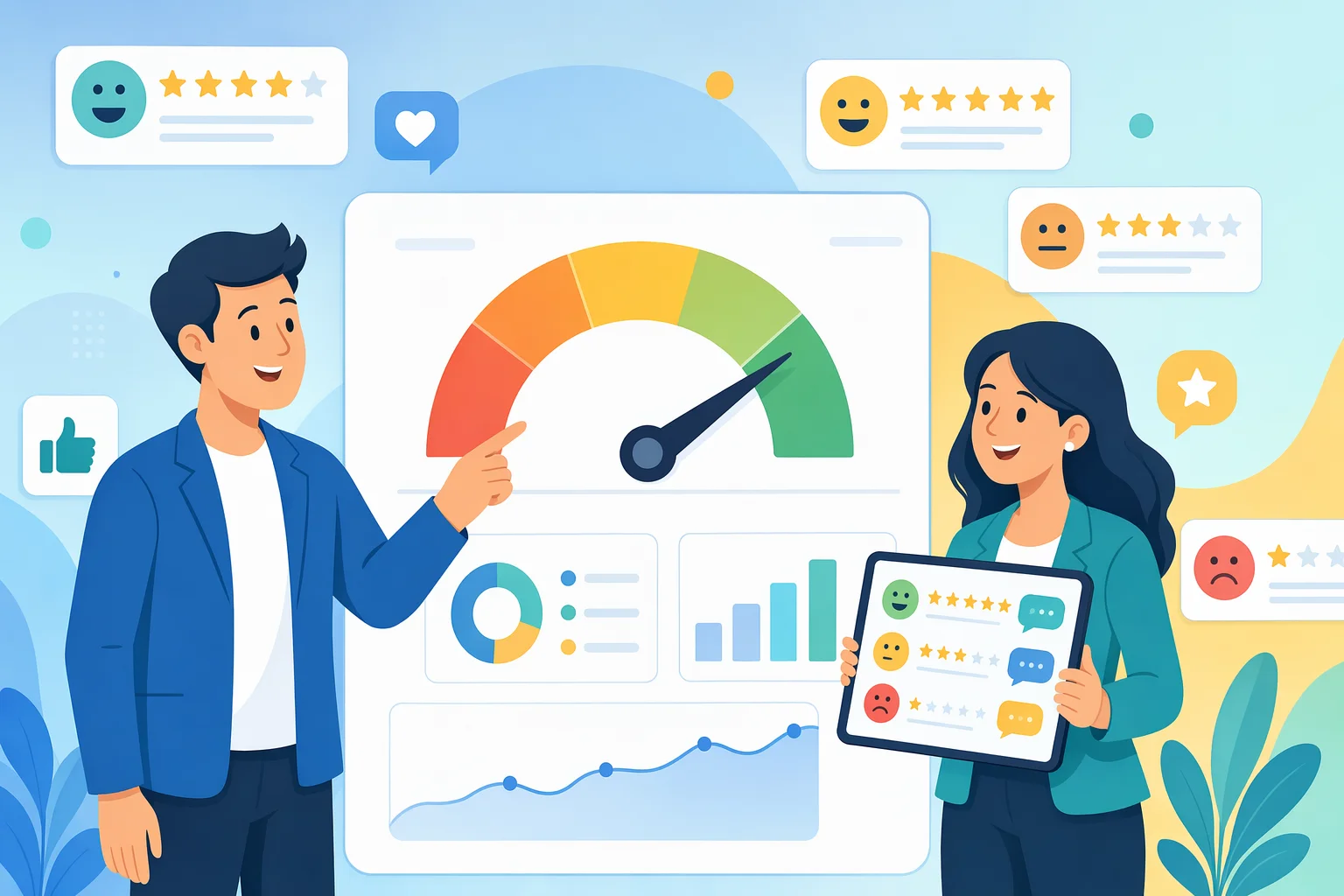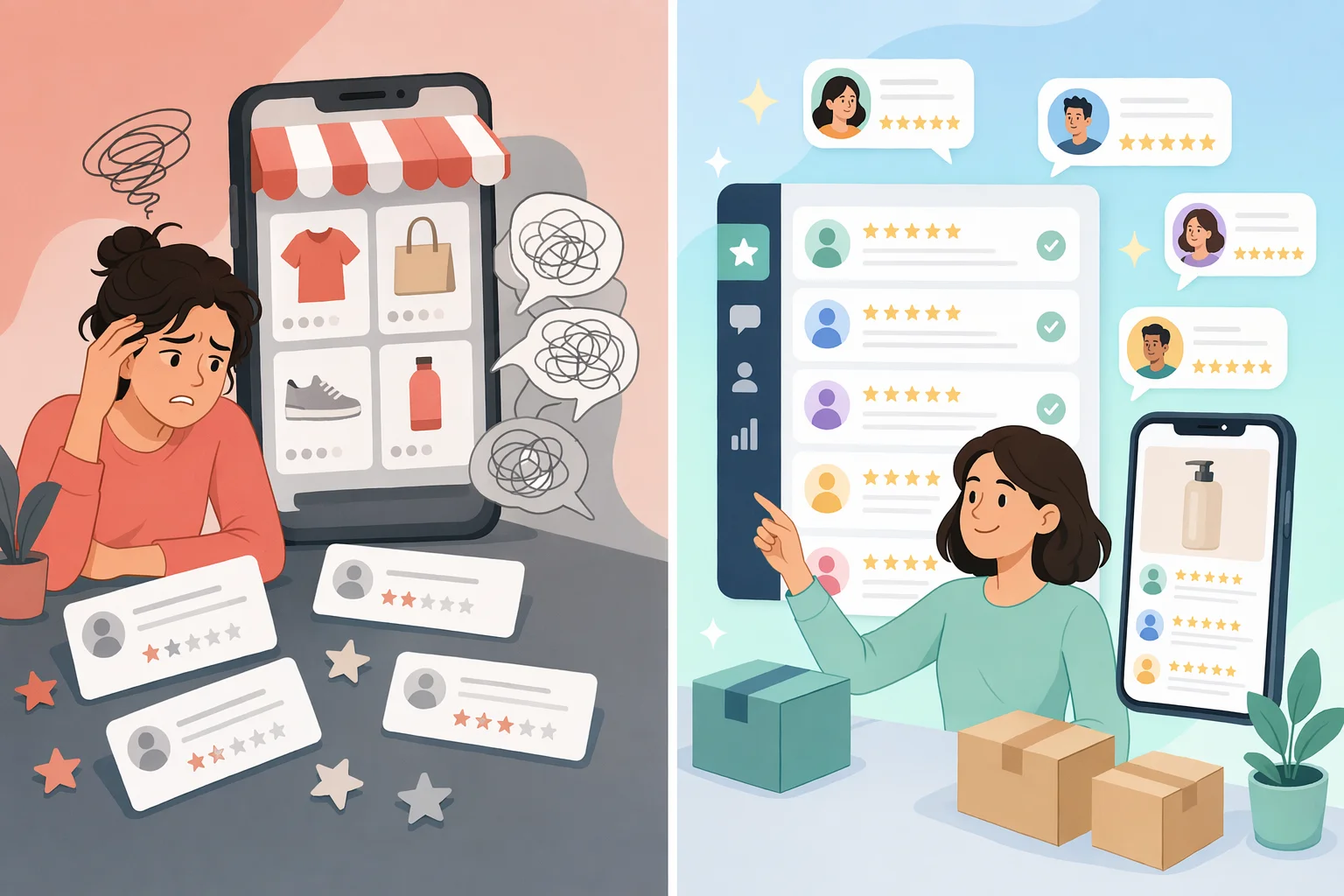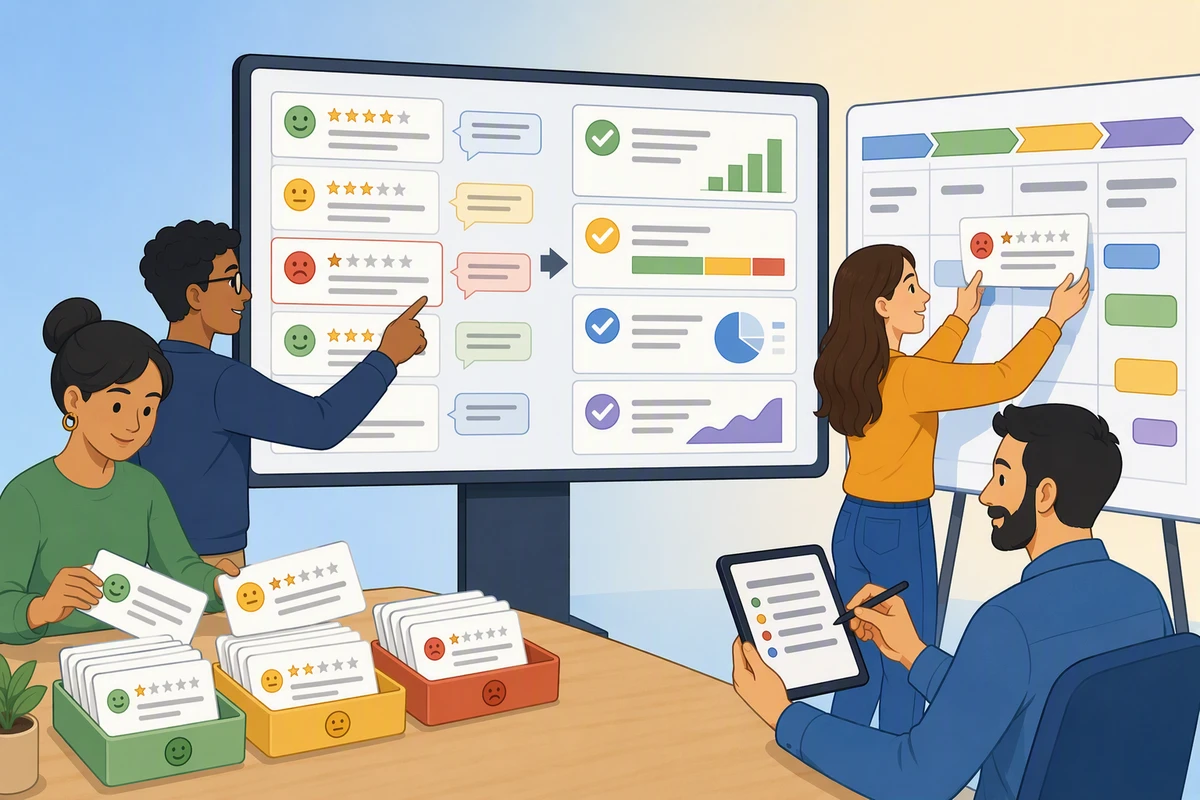
Only about 30% of customers give direct feedback, leaving the vast majority of their experience hidden in support transcripts, reviews, and behavioural data. That’s why relying solely on surveys is a losing strategy. Customer feedback analysis tools centralise these scattered signals and turn them into decisions your teams can actually act on — without drowning in spreadsheets or guessing which complaints matter most.
Managing this manually is hard. ReviewSense automates it.
Why Customer Feedback Analysis Tools Are No Longer Optional in 2026
The customer feedback software market now sits at roughly $5 billion globally in 2026, with a projected 16.5% annual growth rate through 2031, according to recent industry research. That growth reflects a fundamental shift: feedback analysis software is no longer a nice-to-have. It's becoming a competitive necessity.
| Problem | What Happens Without a Tool | What a Tool Does |
|---|---|---|
| Only 30% of customers give direct feedback (Qualtrics) | You miss 70% of customer sentiment | Captures indirect signals from reviews |
| 30-40% of departments take no action after receiving feedback (Medallia) | Insights sit in spreadsheets, unused | Routes feedback into workflows automatically |
| Manual review triage takes hours per week | Teams ignore negative spikes until it's too late | Sends instant alerts for critical changes |
Why volume alone isn't the problem. Most businesses already collect reviews across Google Business Profile, Facebook, and app stores. The real challenge is turning that noise into decisions. Basic sentiment scoring — positive, negative, neutral — tells you almost nothing about why a customer is unhappy. You need topic detection that surfaces root causes: "late delivery" versus "rude staff" versus "broken product."
The gap between data and action is widening. A Medallia survey found that 78% of CX practitioners plan to adopt new metrics in 2026. They're not looking for more dashboards. They want tools that analyse customer feedback and then trigger responses — auto-reply workflows, escalation alerts, or queue assignments for specific teams.
Consequence: teams that rely on manual review management will fall behind. A single negative review left unanswered for 48 hours can damage local search rankings. A pattern of complaints about a specific product feature, left unaddressed, erodes retention.
What to look for in 2026. The best customer feedback analysis tools combine three layers: detection (what was said), diagnosis (why it matters), and deployment (who needs to act). Without workflow integration, even the best sentiment model is just a report that nobody reads. This guide will help you evaluate tools based on decision quality — not feature counts. For a deeper look at how AI is reshaping this space, see the AI Review Management in 2026 guide.

What the Best Feedback Analysis Software Actually Does With Text
That widening gap between data and action demands a closer look at how tools actually process text. The best feedback analysis software operates in five distinct layers. Here's what each one does.
| Layer | Core Function | What It Solves |
|---|---|---|
| 1. Multichannel ingestion | Pulls text from surveys, reviews, tickets, calls, and social posts | Fragmented data across silos |
| 2. AI classification & theme detection | Identifies topics and patterns continuously | Manual tagging that misses emerging issues |
| 3. Contextual sentiment analysis | Measures tone with nuance, not just polarity | Generic positive/negative labels that mislead |
| 4. Action orchestration | Drafts replies, creates tickets, routes alerts | Insights that sit in dashboards, unused |
| 5. Governance & explainability | Flags confidence levels and requires human validation | Blind trust in black-box AI models |
1. Multichannel ingestion
A single feedback channel gives you a partial view. Forrester's research shows the market converging around surveys, reviews, support tickets, call transcripts, and social data. Without ingestion from all five sources, you're analysing a fraction of the story.
2. AI-powered classification and theme detection
Static category lists miss new complaints. Modern tools use continuous topic detection — similar to the approach behind Enterpret's Agent OS launch in June 2026. They surface themes like "billing error" or "shipping delay" as they emerge, without manual setup.
3. Sentiment with context
Generic positive/negative/neutral scoring is insufficient. A review that says "the product finally arrived" could be relief or frustration. MIT Sloan research found that fewer, more targeted metrics deliver better insight than broad polarity scores. Context matters more than volume.
4. Action orchestration
Detection without action is noise. Tools like AskNicely's AI agents (June 2026) and Sprinklr's Customer Feedback Copilot (April 2026) now draft responses, create support tickets, and route alerts to specific teams. The output is a workflow, not a report.
5. Governance and explainability
Forrester's environment report cautions that text-analysis accuracy requires human validation. The best tools flag low-confidence classifications and let teams override them. You need to know why the AI tagged something as negative.

How to Analyse Customer Feedback Without Falling for Common Pitfalls
Those five layers sound straightforward, but execution trips up most teams. The real challenge isn't collecting feedback — it's analysing it without falling for common pitfalls that distort decisions.
| Pitfall | What It Looks Like | How to Avoid It |
|---|---|---|
| Equating sentiment with insight | A sarcastic "great service" scores as positive | Use models trained on context and tone |
| Ignoring sampling bias | Only angry customers leave reviews | Combine feedback with behavioural data |
| Confusing correlation with causation | Slow performance correlates with churn, but onboarding is the real cause | Validate with controlled experiments |
| Treating feature requests as demand | Five users ask for a dark mode; 95% don't care | Prioritise by impact, not volume |
| Assuming real-time is always better | Instant alerts cause overreaction to one-off complaints | Use delayed aggregation for strategic decisions |
Equating sentiment with insight. A customer writes "love waiting 45 minutes for cold food." Basic sentiment tools score it positive. Research from an arXiv paper on LLM sentiment errors shows that models miss sarcasm and context regularly. Mitigate this by using feedback analysis software that detects tone, not just polarity. Train it on your industry's language.
Ignoring sampling bias. The loudest voices are rarely the most representative. A PMC study on nonresponse bias found that survey respondents often hold extreme views. Quiet customers with moderate experiences stay silent. Combine review data with usage metrics to see the full picture.
Confusing correlation with causation. Your tool shows "slow checkout" correlates with churn. You optimise checkout speed. Churn stays flat. The real cause was a confusing onboarding flow. Always validate patterns with A/B tests before acting.
Treating feature request volume as demand. Five users request a chatbot. That's not a market signal. Requests are proposed solutions, not validated problems. Dig into the underlying need before building.
Assuming real-time is always better. Instant alerts for every negative review create noise. Teams overreact to outliers. For strategic decisions, aggregate data over weeks. Save real-time alerts for crisis thresholds only.
For a practical example of how to apply these principles in a specific industry, see the guide on Restaurant Review Management.

Comparing Feedback Analysis Platforms: Criteria That Actually Matter
Those five layers provide a solid foundation, but choosing the right platform still trips up most teams. The market is crowded with tools that claim to analyse customer feedback. Most fail where it counts. Below is a framework built on seven criteria that separate useful feedback analysis software from expensive dashboards.
| Criterion | Why It Matters | Red Flag to Watch For |
|---|---|---|
| Decision fit | The tool improves a specific recurring decision, like routing support tickets or updating a product roadmap. | The vendor pitches “insights” without naming a single decision it changes. |
| Coverage | It pulls data from Google Business Profile, Facebook, Apple App Store, and Google Play — not just one source. | The tool only ingests surveys or a single review site. |
| Representativeness | You can see which customer segments are silent. | The dashboard shows only the loudest voices with no demographic filter. |
| Explainability | Users can click from a detected theme back to the original review text. | The AI outputs a sentiment score with no way to inspect the evidence. |
| Taxonomy control | Your team can define and evolve categories like “billing error” or “shipping delay.” | Categories are locked by the vendor and updated quarterly. |
| Workflow integration | An insight creates an owned action — a ticket, an alert, or a drafted reply. | The tool exports a PDF report that lands in someone’s inbox. |
| Outcome measurement | You can tell if acting on feedback actually moved satisfaction or retention. | The platform shows review volume but no link to business outcomes. |
Decision fit separates tools from toys
A platform that surfaces “sentiment trends” but never asks what you’ll do next is a toy. McKinsey research found that organisations using integrated data see 10–20% improvements in customer satisfaction. That gain only happens when the tool ties directly to a recurring decision, like which store needs coaching on service.
Coverage reveals blind spots
Many tools claim omnichannel support but only connect to surveys. You need coverage across Google, Facebook, Apple, and Google Play. A single missing channel hides a chunk of your reputation. Forrester’s analysis confirms that surveys and dashboards are now commoditised. Real differentiation comes from breadth of sources.
Turning Insights Into Outcomes: the Organisational Challenge
That framework helps you pick the right tool. Yet even the best feedback analysis software fails if no one acts on what it finds. A Medallia study revealed that 30–40% of departments take zero action after receiving customer feedback. That gap turns insight into waste.
Closing the loop requires five organisational steps. Each one turns raw data into real outcomes.
1. Assign ownership
Every recurring theme needs a team accountable for acting on it. “Billing confusion” belongs to finance. “Slow checkout” belongs to product. Without clear ownership, issues bounce between departments until they die.
2. Connect feedback to operational data
Feedback alone is a symptom. You need to link it to metrics like churn rate, support tickets, or repeat purchase data. McKinsey research shows analytics only works when data foundations are fixed. For B2B firms with small, concentrated customer bases, every voice carries more weight.
3. Build a stable taxonomy
Categories drift without governance. One month “shipping delay” means late delivery. Next month it includes damaged boxes. Lock your taxonomy and review it quarterly. This prevents the noise that buries real signals.
4. Measure outcomes
Satisfied customers are 4.1 times more likely to recommend and 2.3 times more likely to purchase more. Verify that acting on feedback actually moved those metrics. If response rates improved but retention stayed flat, you fixed the wrong problem.
5. Create a cadence
Weekly reviews catch operational issues like a broken checkout flow. Monthly reviews shape product strategy. Quarterly reviews set strategic direction. Each cadence needs a different audience and format.
A model that correctly classifies 90% of comments may still miss the small number of privacy, billing, safety, or enterprise-blocking issues that matter most. That’s why governance matters more than accuracy.
Evaluate your customer feedback analysis tools on whether they support these steps — not just on flashy dashboards. For a practical example, see the 2026 Google Business Profile Audit Checklist. Or compare costs with the Review Platform Pricing Comparison 2026.
Conclusion
Customer feedback analysis tools only deliver value when they connect insight to action. Coverage across Google, Facebook, Apple, and Google Play eliminates blind spots. Stable taxonomy prevents signal loss. Ownership and cadence turn findings into outcomes. Without those steps, even high-accuracy models waste your time. ReviewSense centralises every review, flags recurring issues, and ties directly to workflows like auto-reply and crisis alerts. Start your 7-day free trial and turn scattered reviews into actionable insights that drive retention.