
Responding to reviews is almost always the right choice—but how you respond matters enormously. Done poorly, review responses can actually damage your reputation more than the original negative review. Understanding when and why responses backfire helps you avoid common traps that turn well-intentioned engagement into PR disasters.
For businesses looking to craft effective responses, ReviewSense offers AI-powered suggestions that help you strike the right tone every time.
The Nuance: Responses Aren't Magic
Research consistently shows that businesses benefit from responding to reviews. But the benefits come from thoughtful, appropriate responses—not from responding itself. A defensive, argumentative, or dismissive response can be worse than no response at all.
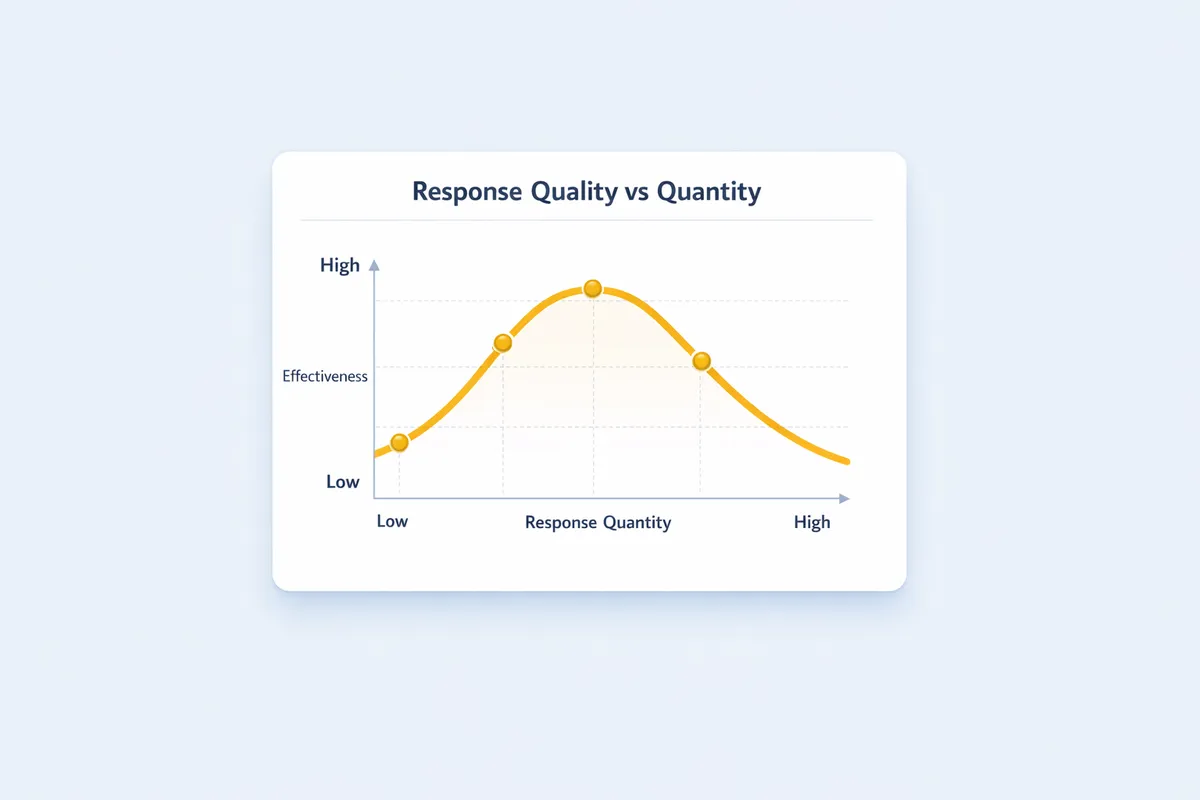
Recent academic research has explored how different response patterns affect outcomes:
- Short-run vs long-run effects – Responding to negatives can have different impacts depending on timing and consistency
- Response ratios matter – How you balance responses to negative vs positive reviews signals something to readers
- Context shapes perception – The same response can seem caring or defensive depending on the original complaint
The key insight: responses influence future reviewers and potential customers by signalling what kind of business you are. Get that signal wrong, and you undermine the very purpose of responding.
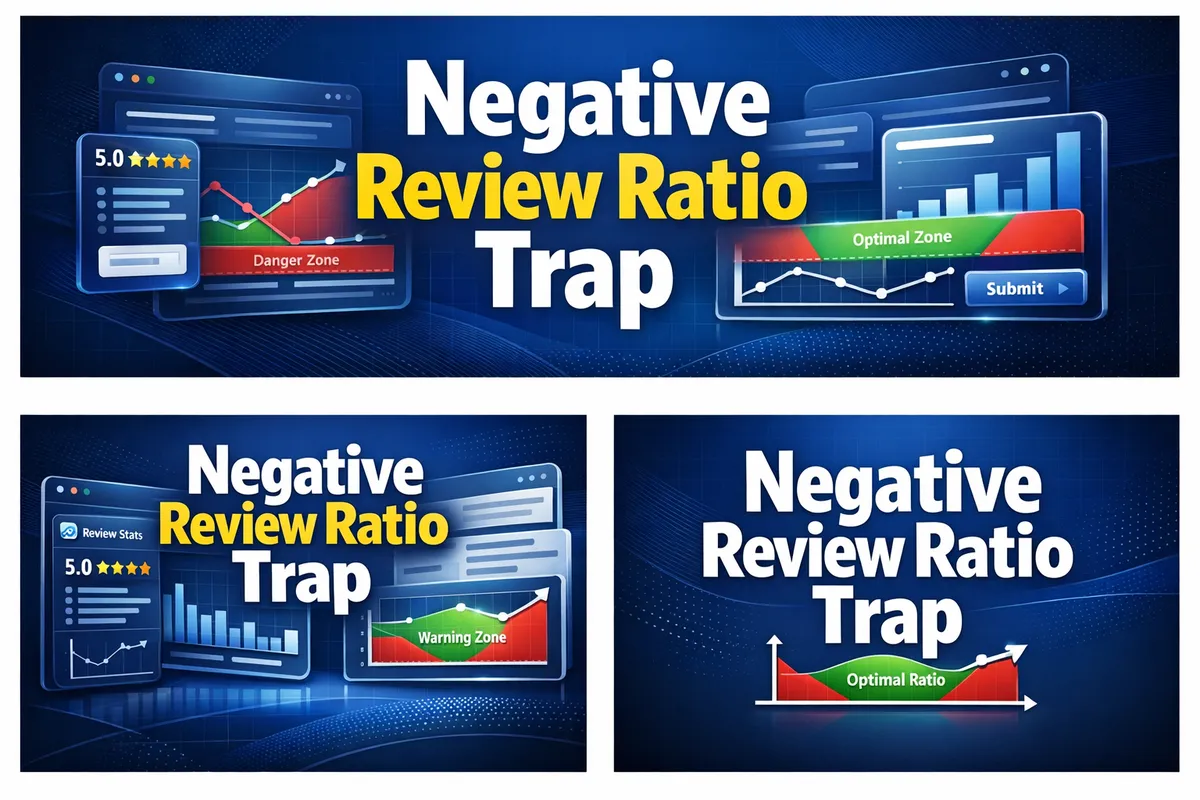
The "Negative Review Ratio" Trap
One subtle trap involves the ratio of responses to negative vs positive reviews. If you respond to every 1-star review but ignore all 5-star reviews, the visual pattern sends an unintended message.
What Over-Responding to Negatives Looks Like
Scroll through your reviews and count responses:
Review 1: ★★★★★ "Great experience!" (No response)
Review 2: ★☆☆☆☆ "Terrible service!" → Owner response
Review 3: ★★★★★ "Love this place!" (No response)
Review 4: ★★☆☆☆ "Disappointed" → Owner response
Review 5: ★★★★★ "Amazing!" (No response)
Review 6: ★☆☆☆☆ "Won't return" → Owner response
A potential customer scanning this page sees responses only under complaints. The subliminal message: "This business has issues it's constantly apologising for."
The Better Balance
Review 1: ★★★★★ "Great experience!" → Owner response
Review 2: ★☆☆☆☆ "Terrible service!" → Owner response
Review 3: ★★★★★ "Love this place!" → Owner response
Review 4: ★★☆☆☆ "Disappointed" → Owner response
Review 5: ★★★★★ "Amazing!" (No response)
Review 6: ★☆☆☆☆ "Won't return" → Owner response
Now the pattern shows an engaged business that celebrates praise while addressing concerns. The response ratio shifts from "damage control" to "customer care."
Target ratio: Respond to at least 50% of positive reviews if you respond to 100% of negative reviews.
When Defensive Replies Make Things Worse
The most common response mistake is defensiveness. A defensive response tells readers you prioritise being right over solving problems.
Signs Your Response Is Defensive
Watch for these red flags in your draft responses:
- "But" statements – "We're sorry, BUT you should have asked..."
- Blame shifting – "Perhaps if you had arrived on time..."
- Fact correction obsession – "Actually, our records show..."
- Policy recitation – "Our policy clearly states..."
- Customer questioning – "Are you sure you have the right business?"
Defensive vs Constructive: Same Situation, Different Responses
Original review: "Waited 45 minutes for food. Worst service ever."
Defensive response (Don't do this):
We're sorry you felt the wait was too long, but Saturday nights are
always busy and we did have a staffing issue that evening. If you'd
come during the week, your experience would have been different.
Also, our kitchen records show your order took 32 minutes, not 45.
Constructive response (Do this):
I'm sorry about your wait—that's not the experience we want for any
guest. Saturday nights are challenging, but that's not an excuse.
I've spoken with the team about improving our pacing during peak hours.
I'd genuinely appreciate a chance to show you what we're usually like.
Please email me at [address] for a complimentary appetizer on your
next visit.
The defensive response may be factually accurate but loses the audience. The constructive response accepts the customer's experience as valid and offers action.
The Five Things Never to Do in a Response
Avoid these response mistakes that reliably backfire:
1. Never Argue About Facts
Even if the customer is wrong about details, arguing makes you look petty. Their emotional experience was real; quibbling about specifics misses the point.
Don't: "Actually, you waited 18 minutes, not 30." Do: "I'm sorry the wait felt too long. We should do better."
2. Never Question the Customer's Honesty
Implying someone is lying—even subtly—destroys any goodwill your response might generate.
Don't: "We can't find any record of your visit." Do: "I'd like to look into this further. Please contact me at..."
3. Never Mention Competitors
Drawing comparisons—even favourable ones—invites readers to consider alternatives.
Don't: "Unlike [competitor], we actually..." Do: Focus entirely on your own business and values.
4. Never Make Excuses Sound Like Policy
Explaining why something went wrong is fine. Making it sound inevitable or acceptable is not.
Don't: "We're always busy on weekends, so some delay is expected." Do: "Weekend volumes are challenging, but we need to manage them better."
5. Never Respond While Angry
If a review frustrates you, write a draft and wait 24 hours before posting. Emotional responses rarely reflect well.
Process: Draft → Wait → Revise → Post
Response Ratio Monitoring
Track your response patterns to ensure you're not falling into traps:
Monthly Response Audit
| Metric | Target | Current |
|---|---|---|
| Response rate to negatives | 100% | 95% |
| Response rate to positives | 50%+ | 35% |
| Avg words per negative response | 50-100 | 120 |
| Avg words per positive response | 30-50 | 45 |
| Response ratio (pos:neg) | ≥1:2 | 1:3 |
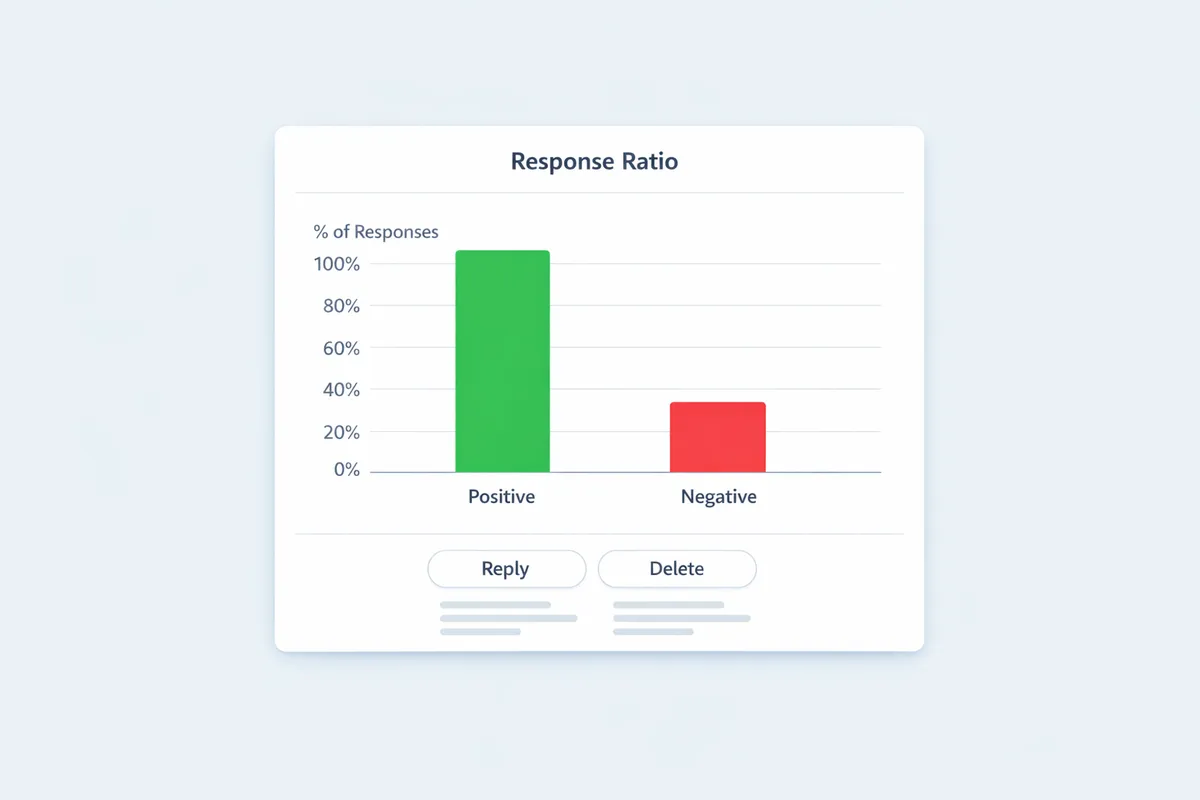
Reading the audit: In this example, positive response rate is below target, making the overall ratio skewed toward negatives. Action: batch-respond to recent positive reviews to rebalance.
Word Count Considerations
Long responses to negative reviews can seem defensive or over-explained. Keep negative responses concise and action-oriented:
- Negative review responses: 50-100 words (acknowledge, apologise, offer resolution)
- Positive review responses: 30-50 words (thank, personalise, invite back)
If your negative responses consistently exceed 150 words, you're likely over-explaining.
When Fixes Actually Matter: Responses Without Action Are Just PR
The ultimate backfire: apologising repeatedly for the same issue without fixing it. Readers notice patterns.
The Pattern That Destroys Credibility
March: "Sorry about the wait time. We're working on it."
April: "We apologise for the long wait. Improvements coming."
May: "So sorry you waited. We're addressing this."
June: "I apologise for the wait. This isn't acceptable."
Four months of apologising for the same problem with no apparent change. At this point, responses become evidence of incompetence rather than care.
The Fix-First Approach
Before you respond to a recurring complaint, ask:
- Have we actually fixed this issue?
- If not, when will we?
- Can we describe a specific action we've taken?
If you can't answer these questions, your response is performative. Sometimes the honest answer is: "We're aware of this issue and are working on a solution." But that only works once or twice before readers expect results.
How ReviewSense Helps Avoid Response Pitfalls
Crafting effective responses consistently is challenging. ReviewSense helps you avoid common mistakes:
- Tone Analysis – AI flags responses that may come across as defensive before you post
- Template Guidance – Pre-approved templates prevent common pitfalls
- Response Ratio Tracking – Monitor your balance between positive and negative engagement
- Consistency Checks – Alert when recurring themes receive similar apologies without improvement
- Draft Review – Pause before posting to ensure responses meet quality standards
With ReviewSense, you maintain professional, effective responses across all your reviews without the risk of emotional or poorly-considered replies damaging your reputation.
Respond Thoughtfully, Not Just Frequently
The goal of review responses isn't to respond—it's to build trust with future customers. Every response is a signal about who you are as a business. Defensive, unbalanced, or empty responses undermine that goal.
Focus on these principles:
- Balance your response ratio (respond to positives, not just negatives)
- Keep negative responses concise and action-oriented
- Never argue, never blame, never sound defensive
- Back up apologies with actual fixes
- Review responses before posting, especially when frustrated
The best response strategy makes every reply feel genuine, proportionate, and constructive.
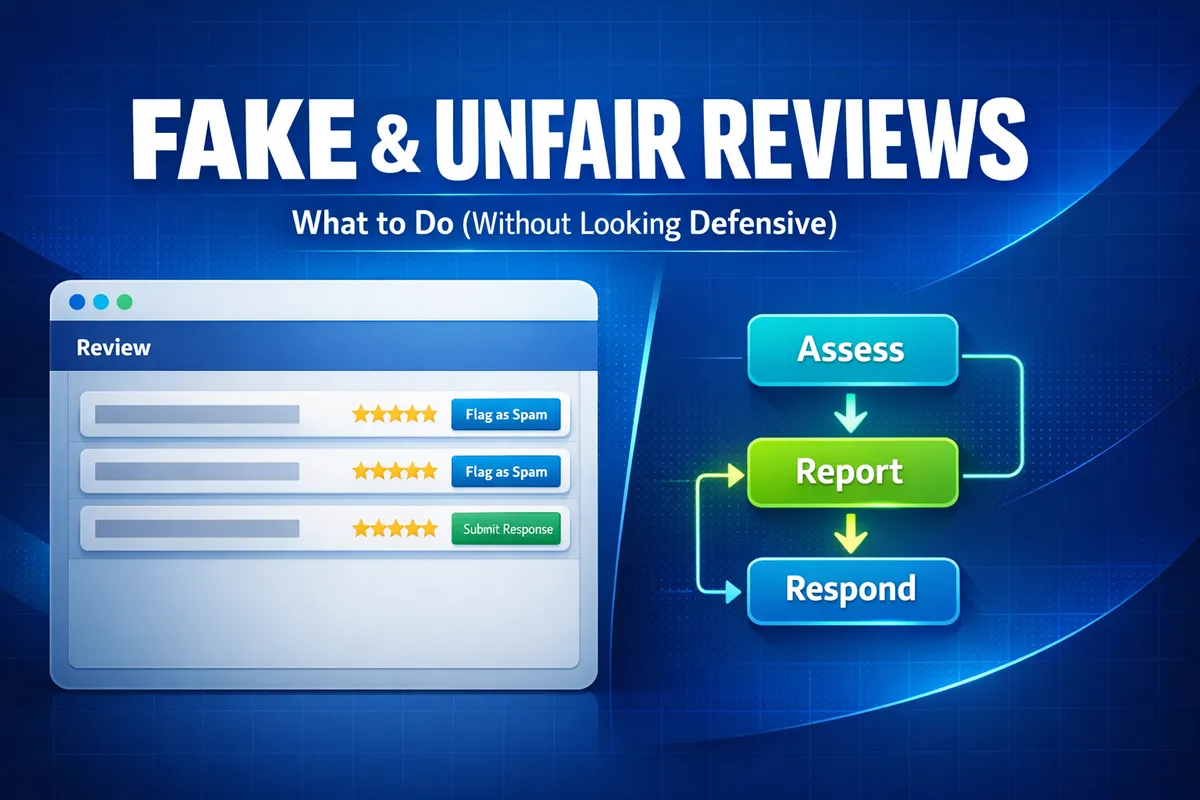
Dealing with reviews you suspect are fake or unfair? Our guide on responding to fake and unfair reviews shows you how to handle these situations without looking defensive.
![10 Best Review Management Software for 2026 [Expert Comparison]](/_next/image?url=%2Fimages%2Fposts%2Fbest-review-management-software-2026-featured.webp&w=3840&q=75 "10 Best Review Management Software for 2026 [Expert Comparison]")