
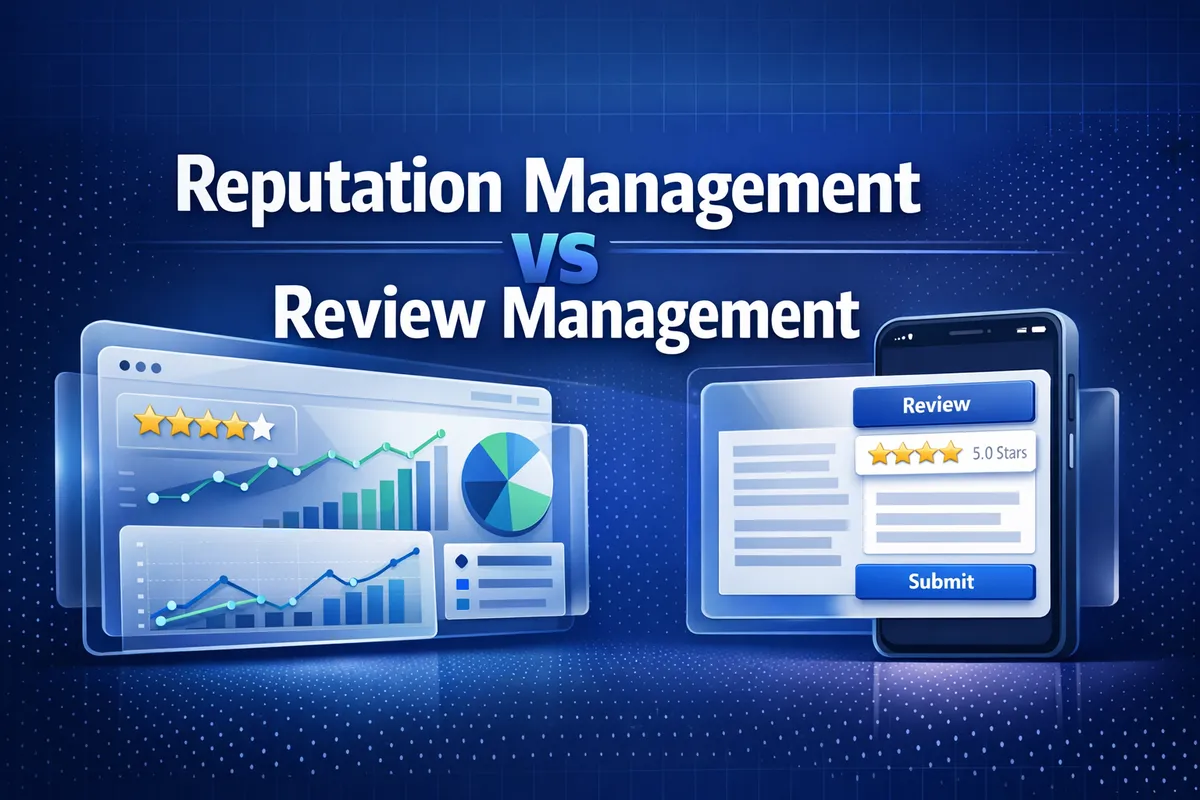
When looking for tools to improve their online presence, business owners often use the terms reputation management software and review management interchangeably. While they overlap, they are not the same thing.
Understanding the difference can save you time, money, and frustration. Buying a full-suite reputation platform when you just need to handle Google reviews is like buying a semi-truck to commute to the office. Conversely, trying to manage a PR crisis with a simple review tool won't work.
This guide breaks down the key differences to help you decide what your business actually needs.
The Core Difference
At a high level:
- Review Management is a subset of reputation management. It focuses specifically on monitoring, generating, and responding to customer reviews on platforms like Google, Facebook, and Trustpilot.
- Reputation Management Software is a broader category. It includes review management but adds social media monitoring, PR crisis management, brand mentions tracking (even where you aren't tagged), and sometimes local SEO listings management.
What is Review Management?
Review management is operational. It’s about the day-to-day handling of customer feedback.
Core Features:
- Aggregation: Pulling reviews from multiple sites into one dashboard.
- Response: Replying to customers (often using AI response generators to save time).
- Generation: Sending email or SMS campaigns to ask happy customers for reviews.
- Analysis: Tracking star ratings and sentiment trends.
Who Needs It? Most small to mid-sized businesses (SMBs), local service providers, restaurants, and retailers primarily need review management. If your main goal is to get more stars and reply to customers faster, this is your lane.
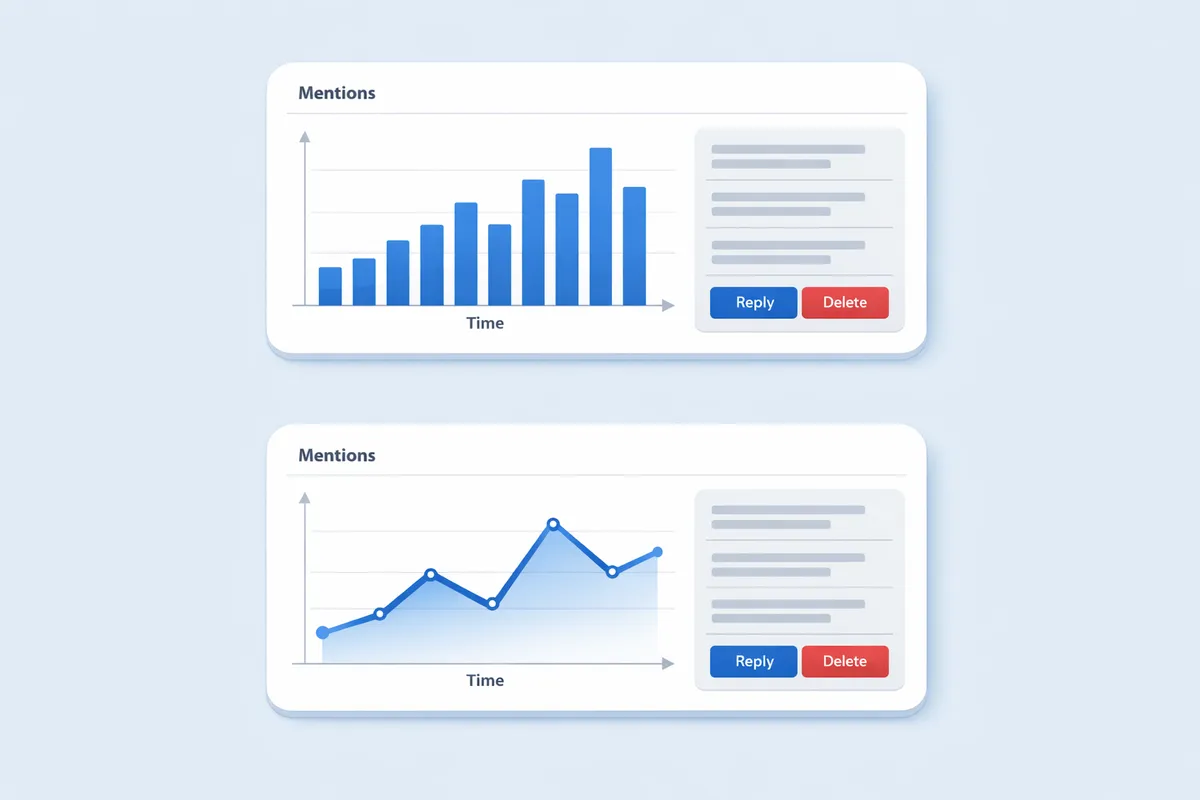 Figure 1: Reputation management software tracks brand mentions over time, even when you aren't tagged.
What is Reputation Management Software?
Reputation management is strategic and defensive. It’s about the broader public perception of your brand beyond just star ratings.
Core Features:
- Everything in Review Management, plus:
- Social Listening: Tracking mentions of your brand name on Twitter, Reddit, forums, and blogs.
- Crisis Monitoring: Alerts for viral negative sentiment or PR issues.
- Listings Management: Ensuring your NAP (Name, Address, Phone) is consistent across 50+ directories.
- Competitor Intelligence: deeply analyzing how competitors are perceived in the market.
Who Needs It? Enterprises, large multi-location brands, hospitals, and public figures often need full-suite reputation management software. If a negative news article or a viral tweet can hurt your stock price, you need this level of protection.
Feature Comparison: At a Glance
| Feature | Review Management | Reputation Management Software |
|---|---|---|
| Monitor Google/FB Reviews | ✅ | ✅ |
| Respond to Reviews | ✅ | ✅ |
| Ask for Reviews (SMS/Email) | ✅ | ✅ |
| Track Brand Mentions (No Tag) | ❌ | ✅ |
| Monitor News/Blogs | ❌ | ✅ |
| Crisis Alerts | ❌ | ✅ |
| Cost | Low ($20-$100/mo) | High ($200-$1000+/mo) |
Which One Should You Choose?
Choose Review Management If:
- You are a local business (dentist, plumber, restaurant, shop).
- Your primary marketing channel is Google Business Profile.
- You struggle to keep up with replying to customer comments.
- You want to increase your star rating.
- You have a limited budget.
Tool to try: ReviewSense focuses strictly on the review management side, giving you powerful AI response tools and monitoring without the enterprise bloat.
Choose Reputation Management Software If:
- You are a large brand with a PR department.
- People discuss your brand on Reddit, Twitter, or news sites.
- You need to monitor for compliance or legal risks.
- You manage 50+ locations and need complex access controls.
Tools to consider: Platforms like Brandwatch or Reputation.com are built for this broader scope.
Conclusion
Don't overpay for features you won't use. For 90% of businesses, the battle for reputation happens in the review section of Google Maps. Mastering that with a dedicated review management tool is often the most ROI-positive move you can make.
Start by getting your reviews under control. If you find your brand is part of larger online conversations later, you can always upgrade to a full reputation suite.
Get started with simple, effective review management today →